Foreign embassies showcase sartorial heritage in South Korea
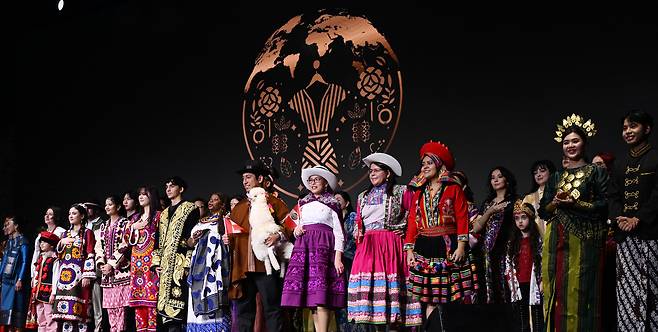
More than a dozen foreign embassies in South Korea came together to celebrate global cultural diversity at the inaugural World Traditional Dress Show, co-hosted by The Korea Herald, the Seoul Metropolitan Government and Yedang Media.
Diplomats, models, broadcasters and cultural representatives walked the runway in traditional garments from their home countries, turning the venue into a living exhibition of world heritage.
“The event provided us a valuable opportunity to share and connect our cultures through such a representative cultural expression as traditional attire,” said Peruvian Ambassador to Korea Paul Duclos.
Peru showcased traditional clothing from several regions, including Cusco, Ayacucho, and Arequipa.
“These were proudly modeled by our own diplomatic staff, who themselves come from different cities of Peru,” Duclos told The Korea Herald, underscoring the personal and inclusive nature of Peru’s participation.
Morocco captivated the audience with its elegant caftan, modeled by Rajae Lakhdar, a cultural counselor at the Moroccan Embassy.
“The caftan was recently inscribed on UNESCO’s Representative List of the Intangible Cultural Heritage of Humanity,” Lakhdar explained, noting the recognition was granted on Dec. 10.
This recognition points to the cultural significance of traditional dress, in each of which is embedded stories about history, identity and artistry.
Tanzania presented the kanga, a colorful garment known for its symbolic printed messages.
“The kanga is a representative dress used by all Tanzanians, regardless of age, gender or tribe, from the moment one is born,” said Debora Mukwenda, a representative from the Tanzanian Embassy.
Kenya showcased traditional attire from the Turkana community.
“We featured Turkana traditional attire — beaded dresses, necklaces and small beaded purses,” said a Kenyan representative, drawing attention to the intricate craftsmanship that reflects the identity and heritage of Kenya's Turkana people.
Delegations from Kazakhstan, Uzbekistan and Tajikistan attended, while Turkmenistan participated through curated content and photographs.
“The International Fashion Show beautifully showcased the richness of Kazakh traditional dress and strengthened cultural ties between Kazakhstan and Korea,” said Kazakhstan Ambassador Nurgali Arystanov.
Kazakhstan introduced the shapan, a national robe adorned with symbolic patterns.
Tajikistan featured a chakan dress, adorned by a UNESCO-listed embroidery tradition recognized for its ornamental floral motifs stitched with vibrant threads on cotton or silk.
“Inscribed in 2018 on UNESCO’s Representative List of the Intangible Cultural Heritage of Humanity, chakan represents the deep-rooted embroidery culture of Tajikistan,” said a Tajik diplomat.
“Women and girls wear the chakan during traditional festivals and holidays.”
Kirom Salohiddin Amriddinzoda, Tajikistan's ambassador to Korea, expressed his appreciation for the broader message of the event: “This event was far more than a simple showcase of beautiful garments; it was a powerful testament to the value of cultural diplomacy and exchange. By facilitating such dialogue, you have advanced mutual understanding and respect across diverse cultures.”
Uzbekistan presented a vibrant collection of traditional women’s dresses reflecting the country’s rich textile heritage and regional diversity.
“It was a memorable show that beautifully captured Uzbekistan’s cultural legacy, timeless elegance and craftsmanship,” said Uzbek Ambassador to Korea Alisher Abdusalomov.
"We have had a wonderful opportunity to get to know other cultures through the traditional dresses," he added.
European cultural heritage also made its mark.
“We showcased the costume of the Polish Highlanders from the Podhale region,” said a diplomat from the Polish Embassy, noting the strong sense of regional identity expressed through the traditional dress.
Organizers created the event as a platform for cultural exchange between Korea and the international community, spotlighting mutual understanding and respect among global citizens.
They said they hoped the festival would play a role in enhancing Seoul’s identity as a global cultural hub.
Sudanese Ambassador to Korea Amira Agarib thanked The Korea Herald for bringing together many countries across continents on one stage.
“The traditional dresses of Korea and the world were very impressive,” she added.
Opening and congratulatory performances blended traditional and contemporary artistry. A diverse lineup of artists — including multinational idol groups, celebrities and a pansori master — underscored the festival’s aim of bridging cultures and generations.
Other attendees included representatives from the embassies of Indonesia, Thailand, Venezuela, Laos, Rwanda, Georgia, El Salvador, Hungary, Cambodia, Latvia and Azerbaijan, alongside foreign residents and members of the Korean media.
Copyright © 코리아헤럴드. 무단전재 및 재배포 금지.