Meet Tiffany's beau: Byun Yo-han, Korean cinema's sleek shape-shifter
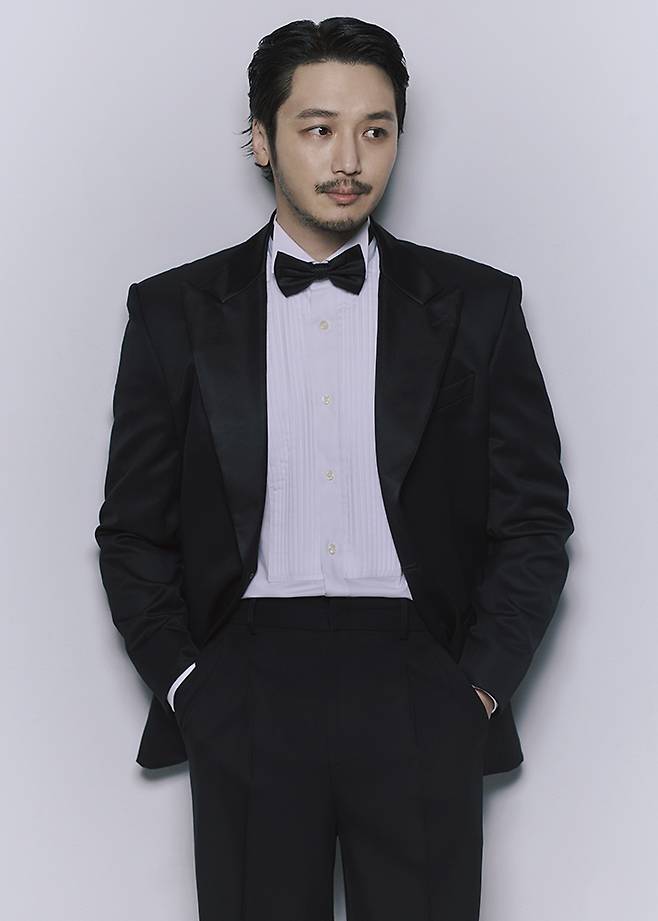
When Tiffany Young of Girls' Generation — the girl group under SM Entertainment that essentially wrote the K-pop playbook in the late 2000s — announced Saturday that she was dating actor Byun Yo-han with marriage in mind, the international response was telling.
Fans of the California-born singer, who stands poised to become the first married member of the legendary eight-member group, had one burning question: Who is this guy?
The answer depends on where you've been looking. For starters, the two crossed paths on 'Uncle Samsik,' a 1960s-set political drama that dropped on Hulu last year. Byun played an ambitious military academy elite; Tiffany showed up as a Korean American foundation director. She reportedly served as his ad hoc English dialogue coach between takes, and apparently, those sessions led to more than just improved accents.
That said, if you've spent any time with Korean historical dramas — the lavish, meticulously detailed productions known locally as "sageuk" — you've almost certainly seen Byun's face. His turn as a slick, philandering socialite hiding a desperately devoted heart in 2018's "Mr. Sunshine" remains a touchstone of the genre.
But that role represents only one facet of an actor who has spent over a decade moving between intimate indie provocations and massive period spectacles, collecting major awards and a devoted domestic fan base along the way. Here is an actor who brings a particular tension to nearly every role — a face perpetually caught between accommodation and rebellion, between surface pleasantness and something more unsettling underneath.
Byun was born in 1986 in Incheon, and his path to acting began as a form of speech therapy. He's shared in various interviews over the years that he was painfully shy as a child and prone to stammering. A friend of his father suggested theater might help. It did. By the time Byun decided to pursue acting professionally, his parents' objection had hardened into something irreconcilable.
What followed was an elaborate workaround. Byun told his family he was heading to China to study business, spent 2 1/2 years on an extended language program, completed his military service and secretly attended audition prep academies while on leave. He eventually enrolled in the prestigious Korea National University of Arts in 2009 at age 23, getting a late start compared to many of his peers.
"After the military, I barely asked my parents for help except when absolutely necessary," he told Elle Korea in 2015. "If I wanted to live doing what I loved, that's how it had to be."
Byun's college years proved formative in the most practical sense. Between 2011 and 2013, he appeared in over 30 short films and student productions, accumulating experience through sheer volume. The breakthrough arrived in 2014, a year that would define his trajectory in two distinct directions.
On television, he landed a supporting role in "Misaeng: Incomplete Life," a cable series that became a cultural phenomenon for its candid portrait of corporate life — the grinding hierarchies, the quiet humiliations and the unexpected friendships forged in the trenches. Byun played Han Seok-yool, the office busybody: charming, perpetually nosy, always materializing wherever something interesting was happening. The show resonated immensely with exhausted office workers across the country. Suddenly, Byun was a recognizable face.
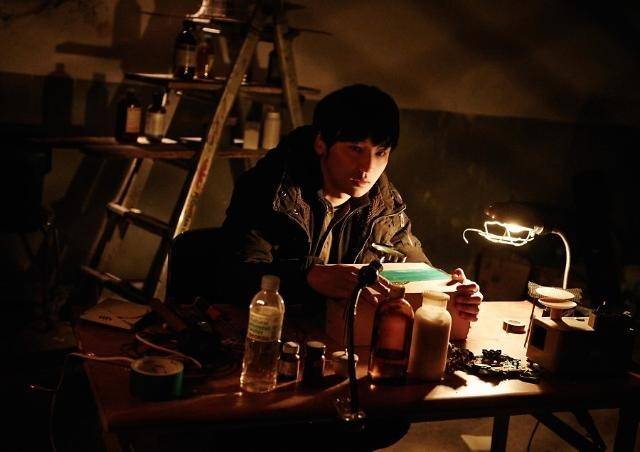
But 2014 also marked his arrival as a serious screen actor willing to take on difficult material. "Tinker Ticker," directed by Kim Jung-hoon, cast Byun alongside classmate Park Jeong-min in a psychological drama about disaffected youth who channel their rage into terror attacks. Byun played Jung-gu, a disgruntled young man who once bombed his abusive teacher's car and now drifts through degrading job interviews while crafting explosives in his apartment.
There's an interesting irony here: The same year Byun became famous for navigating office politics with a wink, he made a film where his character rebels against that same culture in an explosive way. His performance in "Tinker Ticker" established something that would become a signature of his for years to come — a capacity to embody internal contradiction and let meekness and menace coexist in the same frame. After all these years, certain film fans remember that early rawness with real affection.
The next few years found Byun toggling between crowd-pleasers and artistic provocations in a prolific run.
In 2015, he appeared in "Socialphobia," a thriller about online mob justice that feels uncomfortably relevant a decade later, and Shin Su-won's "Madonna," which screened at Cannes and offered a searing examination of inequality and the marginalization of women. Both films were lean, propulsive and socially pointed — the kind of work that showed Byun was not interested in just playing it safe.
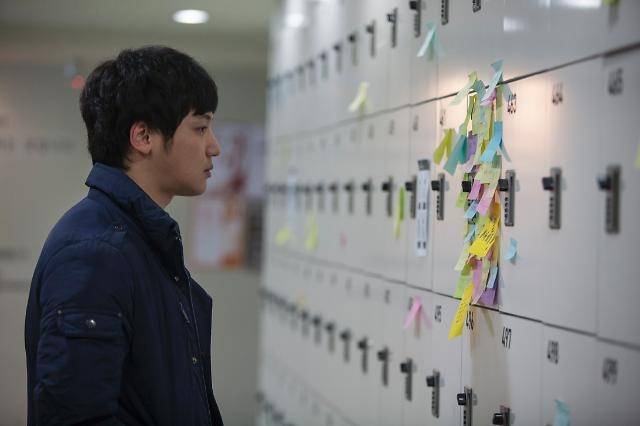
It was also during this stretch that Byun discovered sageuk — historical dramas set during Korea's medieval Goryeo Kingdom or Joseon era, often complete with elaborate costumes, court intrigue and carefully choreographed sword fights.
His entry point was "Six Flying Dragons" (2015-16), a sprawling television epic about the tumultuous founding of Joseon. His portrayal of a quiet, lethal swordsman there left a lasting impression and opened doors to the period roles that would come to define his filmography.
Director Lee Joon-ik's "The Book of Fish" (2021) might represent Byun's finest work. Shot entirely in black-and-white, the film follows an exiled scholar (Sul Kyung-gu) of the Joseon era banished to a remote rural island, where he forges an unlikely friendship with a fisher named Chang-dae.
What Byun does with Chang-dae quietly upends the conventions of Korean period cinema. Rather than the usual street-smart pragmatist that peasant characters tend to be, Chang-dae is revealed to be an idealist — a lowly born man with genuine intellectual hunger, simultaneously questioning and striving within an oppressive caste system. Byun embodies that paradox with a stubborn dignity, letting the character's ambition and naivete exist in productive tension.
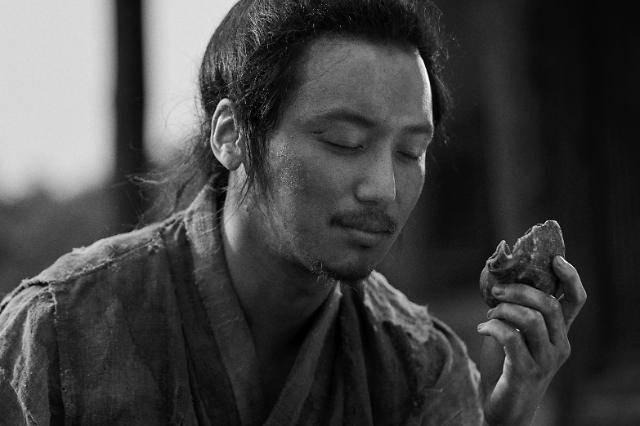
The film swept the 2021 awards season and proved one of the few bright spots when the COVID-19 pandemic had basically shut the industry down. It landed Byun multiple nominations, marking his first real stamp of approval from critics as a leading man. That year, he lost the prize for best actor at the Baeksang Arts Awards by a single vote to Yoo Ah-in.
The following year brought "Hansan: Rising Dragon," a massive naval epic chronicling Adm. Yi Sun-sin's campaigns against Japanese invasion in the late 16th century. Byun played the archantagonist, Japanese general Wakizaka — a remarkably demanding role that required him to deliver every line in old Japanese. He threw himself into the part with gusto, reportedly even pinning photos of his on-screen rival Park Hae-il to his wall and glaring at them while drinking. The effort paid off: He won for best supporting actor at both the Blue Dragon and Daejong film awards.

"I made a conscious decision to tackle period pieces in my 30s," Byun told Esquire Korea in 2024. "It's a demanding genre. There's so much you need to master. I figured if I avoided it now, I'd keep avoiding it forever. I wanted to be able to take on anything later."
Apart from practically tying the knot with a K-pop icon, what's next for Byun?
His recent choices suggest he hasn't lost his taste for leaner, riskier projects — the kind of films that prize ideas over spectacle, much like those early indie works where he first made his name.
The 2024 thriller "Following" cast him as a real estate agent with a deeply unsettling hobby: using his professional access to stalk clients, collecting small trophies from their homes. Beneath the whodunit mechanics, the film traffics in familiar anxieties about social media's corrosive potential, echoing "Socialphobia" nearly a decade earlier. True to form, Byun occupies that uncomfortable space between polite and predatory, keeping audiences perpetually uncertain about what or who they're rooting for.

Byun also appears in "Run to the West," Korea's first artificial intelligence-assisted feature film. The 60-minute fantasy experiment that used AI to render much of its visual spectacle was released in October.
In the coming years, Byun has a few more engagements on his slate, including the lead role in the fourth installment of the "Tazza" franchise, Korea's sleek, long-running gambling saga that's developed a devoted following over two decades.
Copyright © 코리아헤럴드. 무단전재 및 재배포 금지.