Kaesong-linked logistics project in Paju resumes with military approval after 9 years
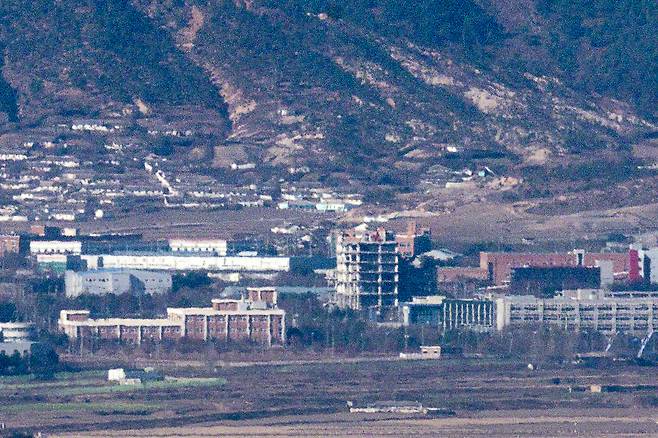
A long-stalled plan to build a logistics complex in Paju, Gyeonggi Province, linked to the now-shuttered inter-Korean industrial park in Kaesong has resumed after receiving conditional approval from the South Korean military, clearing a key hurdle nearly nine years after the project was first put on hold.
According to a group of South Korean owners of factories and businesses in Kaesong on Wednesday, the proposed Kaesong Industrial Park Integrated Logistics Complex in Paju recently received conditional consent following a military facilities protection review. The project site covers 212,663 square meters and lies near the border with North Korea.
The approval allows the project to move forward after repeated delays stemming from a lack of military consent, which is required due to the site’s proximity to the border and the Imjin River.
The group said in a statement the project can now resume for the first time since efforts began following the closure of the Kaesong industrial park in February 2016.
“After nine years of preparation, we have secured conditional consent from the military, allowing the project to restart,” the statement read. “We will hold further consultations with the military over the next three months, finalize a district unit plan, and conduct environmental impact assessments through Paju City and Gyeonggi Province. Construction could begin by the end of 2027 at the latest.”
The logistics complex is designed to support companies operating in the Kaesong industrial park by providing storage facilities for raw materials and finished goods. It also plans to include exhibition and sales spaces to promote products manufactured in Kaesong, as well as North Korean industrial goods and regional specialties. The site is located about 16 kilometers south of the Kaesong park.
The project was originally conceived to minimize potential losses to South Korean firms in the event of future disruptions to inter-Korean cooperation, after companies suffered heavy losses following the suspension of operations at Kaesong in April 2013 and its eventual shutdown in 2016.
However, strained inter-Korean relations, the COVID-19 pandemic and prolonged difficulties in securing military approval repeatedly delayed the initiative.
In August 2019, Gyeonggi Province, Paju City and the project consortium signed an agreement to facilitate the development of the logistics complex. Under the agreement, local governments pledged to expedite administrative procedures, including designation of the logistics site and approval of implementation plans, while jointly working to improve convenience for tenant companies.
Then-Gyeonggi Governor Lee Jae Myung, now president, said at the signing ceremony that expanding inter-Korean exchanges and economic cooperation was essential to finding new growth engines for the Korean economy. He emphasized that restarting economic cooperation, including the Kaesong industrial park, was a responsibility South Korea must pursue.
The Kaesong industrial park, located just north of the inter-Korean border in North Korea’s Kaesong, was a flagship symbol of inter-Korean economic cooperation. Launched in 2004, the park combined South Korean capital and technology with North Korean labor, at its peak hosting more than 120 South Korean firms and employing over 50,000 North Korean workers.
Operations were suspended in February 2016 following North Korea’s nuclear and missile tests, with Seoul citing the need to block funds from flowing to Pyongyang’s weapons programs. Since then, the park has remained shut, despite periodic calls from businesses and civic groups to reopen it as part of broader efforts to revive inter-Korean engagement.
Copyright © 코리아헤럴드. 무단전재 및 재배포 금지.