Culture Ministry tasked with balancing K-culture’s booming, lagging sectors
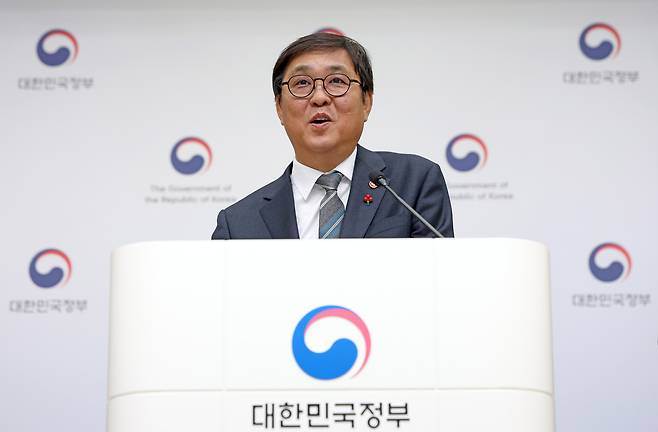
SEJONG — For K-pop, building a dome capable of hosting 50,000 concertgoers represents a major long-term goal for the government. For the film industry, however, simply getting audiences back into movie theaters has become a pressing challenge. Tasked with bridging the gap between booming and lagging cultural sectors, the Ministry of Culture, Sports and Tourism on Tuesday announced its work plans during a year-end briefing to President Lee Jae Myung.
In the briefing, Culture Minister Chae Hwi-young, who took office five months ago as the first head to come from the private sector, said the ministry will continue its recalibrated approach to culture and the arts, positioning the sector as a new engine of growth.
“To strengthen the industrial side of culture, the government appointed a minister from the business sector, but there are concerns that the fine arts could be neglected as a result. What are your plans to address this?” Lee asked Chae.
“We view the fine arts as the foundation of K-culture and as an area for continued investment, not merely as something to be subsidized. From an investment perspective, we are actively supporting the foundational arts of K-culture,” the minister replied.
The overall budget for the arts sector rose to 759.5 billion won ($512 million) for 2026 from 638.6 billion won in 2025, an on-year increase of 18.9, the ministry explained. The total budget for the ministry rose 11.2 percent to 7.85 trillion won.
To expand the scope and economic potential of the "K-culture" lable, the government plans to redefine the industry through research into its economic impact and spillover effects, and to establish a comprehensive growth strategy by 2026 that includes sector-specific goals and implementation measures. It will also strengthen efforts to link K-culture with three everyday lifestyle sectors — food, beauty and fashion — to generate broader economic synergies.
The work plan lays out the government’s assessment of each cultural sector.
In the case of K-pop, officials believe that opportunities have not been fully capitalized on and plan to expand performance infrastructure to better meet global demand, including the construction of a major dome stadium and upgrades to lighting and sound systems at existing venues.
Regarding the proposed dome, Chae said the project would take time, noting it must begin with a feasibility study next year. He added that he expects Korean culture to be even more popular by the time the venue is completed.
The film industry, however, is in a state that could be described as “needing CPR” due to a sharp decline in investment, production and theater attendance, according to the ministry.
The minister said it is considering a range of measures, including revising outdated regulations to recognize films released on streaming platforms as films. Under the current Film and Video Promotion Act, only works intended for theatrical release are recognized as “films,” while movies released on streaming platforms are classified as “online video content.”
It will also provide 40 billion won in support for independent and midbudget films, while expanding policy-based financial support for the production of big-budget films.
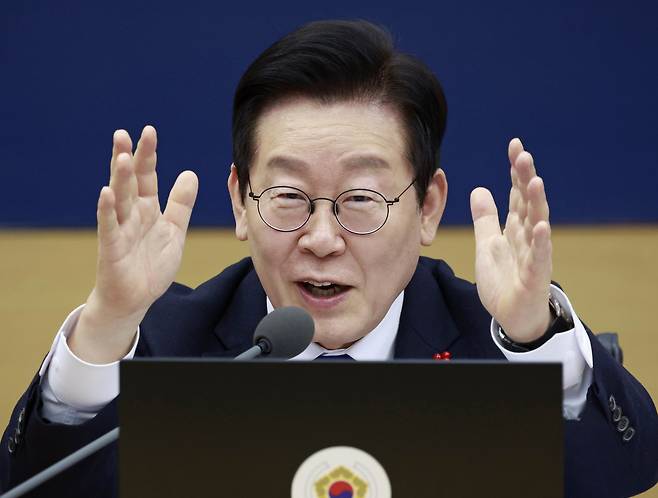
While pushing Korean culture’s global expansion, the ministry is also grappling with a long-standing issue of regional imbalance. Rather than focusing on building new infrastructure, Chae said the government would prioritize making better use of existing facilities.
“Singer Psy goes on a nationwide tour with his signature show, and that alone shows it’s possible to hold large-scale concerts without building new venues,” Chae said. “Many local governments are eager to build this or that, but content matters more than construction. By upgrading and better utilizing what is already in place, much more can be done."
Under this approach, support will be expanded for regional touring programs featuring high-profile, large-scale content, including concerts by major K-pop artists, performances by national arts organizations, major musical productions and headline exhibitions.
Also, to disperse inbound tourism away from the Greater Seoul area, which currently accounts for nearly 80 percent of foreign visitor arrivals, the government will develop regional inbound tourism hubs that comprehensively link and support all aspects of regional tourism, from destination choice to on-site visits, mobility, lodging, dining and experiences.
Enhancing the appeal of regional destinations will be key to achieving the goal of 30 million inbound tourists by 2029, up from an estimated 18.7 million foreign visitors in 2025.
The strategy emphasizes developing tourism products based on experiences unique to Korea, from K-content infrastructure and events to K-food, K-beauty and traditional culture programs such as temple stays.
To bring forward the target from the original 2030 timeline, the government will mobilize a pangovernmental effort involving immigration authorities, the Ministry of Justice, the Ministry of Land, Infrastructure and Transport, agencies overseeing accommodation and welfare and the Ministry of Agriculture, Food and Rural Affairs.
The initiative is to be coordinated under the National Tourism Strategy Council, the government’s top decision-making body for tourism policy. The 2026 budget for tourism is up 10.8 percent to 1.48 trillion won.
Copyright © 코리아헤럴드. 무단전재 및 재배포 금지.