Korean study finds how COVID-19 affects memory, suggests a possible treatment
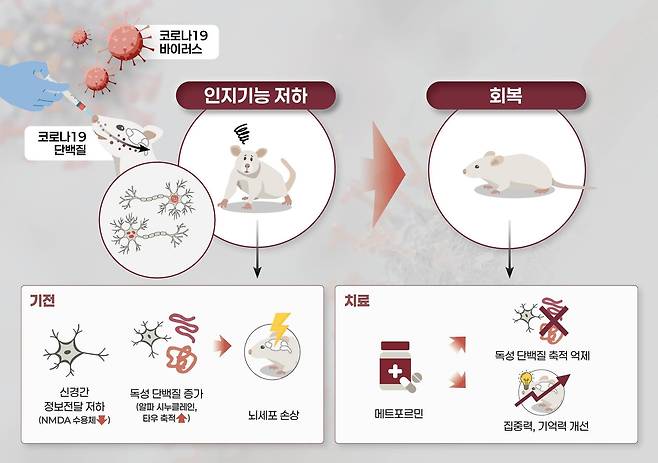
The Korea National Institute of Health announced Wednesday that it has identified a possible cause of cognitive disorders linked to COVID-19 infection and has proposed a potential treatment method.
A KNIH research team led by Dr. Koh Young-ho found that a spike protein of the COVID-19 virus, called S1, directly affects nerve cells by blocking their connections and reducing the activity of NMDA receptors, which transmit signals in the brain.
The team reported that mice exposed to the protein exhibited reduced learning and memory abilities, as well as increased anxiety in unfamiliar environments — symptoms that mirror those observed in some humans after COVID-19 infection.
The protein is also suspected of increasing toxic proteins in the brain, potentially raising the risk of long-term neurodegenerative diseases such as dementia and Parkinson’s disease.
However, when metformin, a widely used diabetes medication, was administered under the same experimental conditions, it helped restore nerve cell function and lowered toxic protein levels.
“Through future clinical studies, these results suggest the need to explore the potential of diabetes medications in treating chronic COVID-19 symptoms, such as cognitive impairment and memory loss,” Koh said.
The KNIH, the research arm of the Korea Disease Control and Prevention Agency, has been studying the mechanisms behind post-COVID-19 symptoms in Korea and testing potential treatments since August 2022.
Copyright © 코리아헤럴드. 무단전재 및 재배포 금지.