LG Innotek halves emissions in next-gen smart card substrate
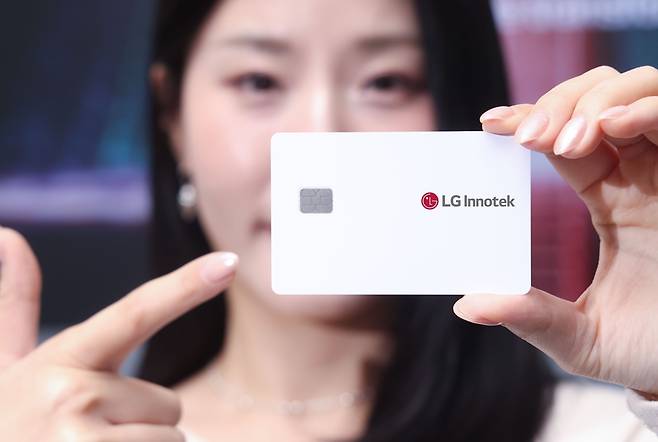
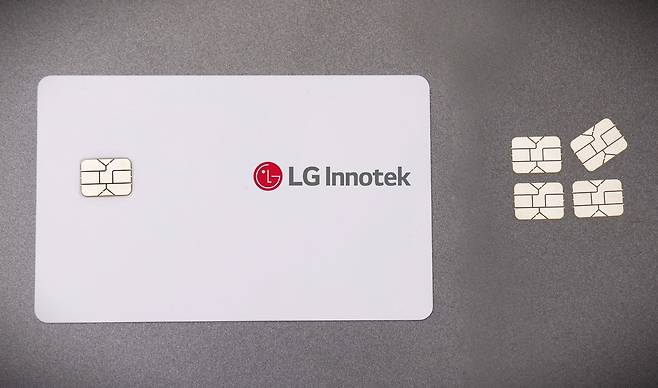
LG Innotek said Wednesday it has developed a next-generation smart IC substrate that cuts carbon emissions by about half and boosts durability threefold — a breakthrough the company says positions it at the forefront of sustainable smart card components.
Smart IC substrates are essential layers that allow IC chips containing users’ personal data to be embedded in credit cards, e-passports and USIM cards. When a card makes contact with an ATM or passport reader, the substrate transmits the chip’s data to the device through electrical signals.
“The next-generation smart IC substrate addresses both the ESG requirements for our customers and the need for technological competitiveness,” said Cho Ji-tae, head of the company’s Package Solution Business division. “We will continue to deliver differentiated value and support our clients’ long-term vision.”
LG Innotek said it is the first in the world to apply a new high-performance material that delivers the same functionality without precious metal plating. Conventional IC substrates are plated with palladium and gold for stable signal transmission and to prevent corrosion, but the precious metal process generates large volumes of greenhouse gases, the company explained.
The newly developed substrate reduces carbon dioxide emissions by 8,500 metric tons annually, equivalent to planting around 1.3 million trees, according to the company. The substrate’s durability has also been improved by three times, reducing read errors caused by frequent contact and prolonged card use — a key demand from financial institutions and government agencies that rely on smart card authentication.
LG Innotek said it began mass production in November for a major global smart card maker and plans to accelerate overseas marketing to secure additional customers. The company has filed more than 20 domestic patents related to the new substrate, and is seeking registration in the US, Europe and China.
According to Mordor Intelligence, the global smart card market is projected to grow from $20.3 billion in 2025 to $30.6 billion in 2030, driven by rising adoption of dual-interface cards and expanding credit-card issuance in emerging markets such as Africa and India.
Copyright © 코리아헤럴드. 무단전재 및 재배포 금지.