The many faces of Cho Jin-woong: A career built on menace, now undone by the past
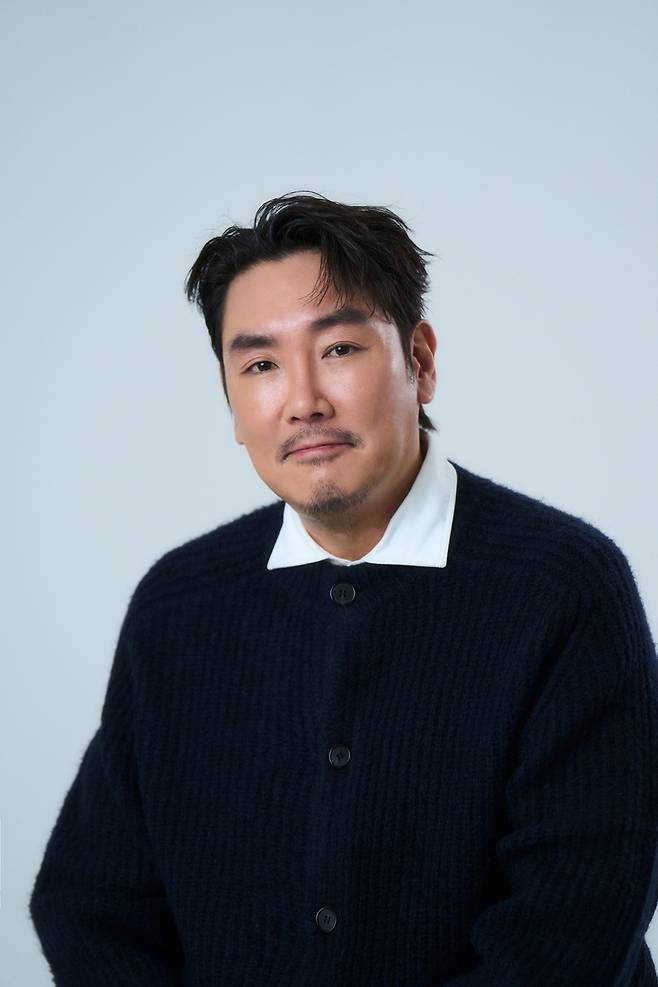
On Friday, local entertainment outlet Dispatch published allegations that would bring one of South Korea's most recognizable character actors to his knees. Cho Jin-woong, the hulking 49-year-old who had become a familiar face across Korean film and television, had reportedly served time in a juvenile detention facility during high school for car theft and, more gravely, sexual assault — charges he has partially denied through his agency. Within a day, Cho announced his retirement, stating he would "accept all criticism" and end his 21-year acting career effective immediately.
The incident ranks among the swiftest and most dramatic falls from grace in modern Korean entertainment, and the fallout has been predictably messy. Broadcasters scrambled to scrub his presence from ongoing projects, including tvN's "Second Signal," the long-awaited sequel to the 2016 hit drama in which Cho starred, already filmed and slated for release next year. Some have rushed to his defense, invoking principles of juvenile rehabilitation; others have called for complete cancellation. The dispute has taken on a partisan dimension as well, with the actor's apparent ties to progressive causes drawing fire from the political right.
Among the grievances leveled at Cho, one stands out for its peculiar sting: the roles he played. Through a diverse career, he's taken on a handful of righteous cops and celebrated independence fighters -- figures representing justice and moral clarity. Many expressed betrayal that an actor who cultivated such an image now stands exposed as something far less noble. But this reading, while emotionally satisfying, oversimplifies a career that was never quite so neat.
Cho Jin-woong, born Cho Won-jun, didn't arrive on screens as a leading man. After enrolling at Kyungsung University's theater program in Busan in 1996, he spent nearly a decade grinding away in the city's local theater scene -- a period during which, it now emerges, he allegedly assaulted a fellow troupe member, an incident that resulted in a fine.
In 2004, Cho landed a bit part in "Once Upon a Time in High School," a cult favorite that channeled Bruce Lee kitsch through a portrait of school brutality in 1970s Korea under authoritarian rule. Cho played a lumbering sidekick to the school's bully, all bark and brass knuckles. The role was minor, but it established a template that would stick for years: the massive frame, the gruff swagger, a man more brawny than brainy.
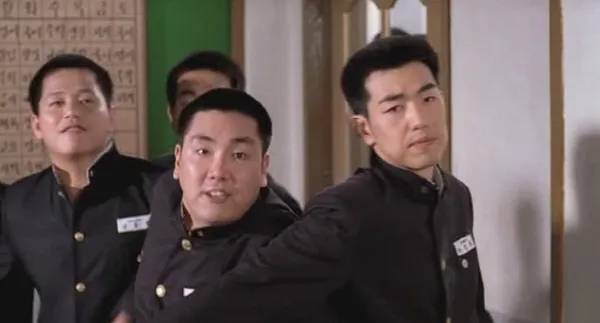
He cycled through supporting gigs in mid-2000s genre fare. In "A Dirty Carnival" (2006), director Yu Ha's follow-up to "Once Upon a Time," he played muscle for a crime syndicate; in "Gangster High" the same year, more of the same. These were B-movie exercises in noir machismo, and Cho fit the mold as the reliable heavy, methodical in his menace and his violence.
The 2010s proved transformative for Cho. His journeyman tenure finally paid dividends in a string of films that would become touchstones of the decade's Korean cinema. In Yoon Jong-bin's "Nameless Gangster: Rules of the Time" (2012), Cho played Pan-ho, the perpetually second-place mobster in Busan's criminal underworld -- ambitious but forever outmaneuvered, seething with resentment beneath a veneer of loyalty. The film became an instant reference point for the country's noir genre, distinguished by its granular, hyperrealist depiction of 1980s Korea alongside its gangster machinations. Cho's pitch-perfect Busan dialect, honed through years of theater in the region, lent authenticity to the milieu.
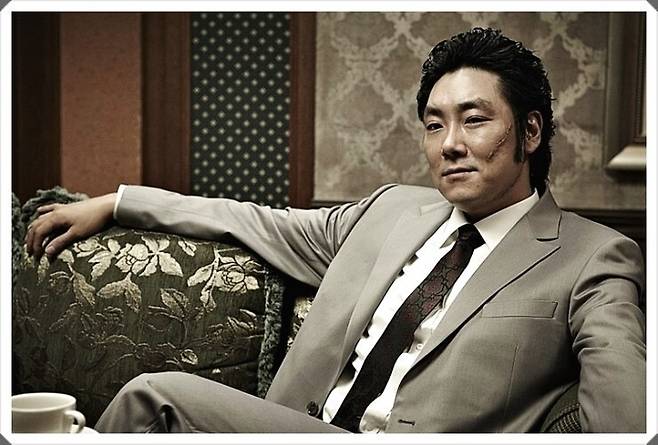
But it was 2014's "A Hard Day" that truly catapulted Cho into the spotlight. Director Kim Seong-hun's hardboiled thriller pitted Cho against the late Lee Sun-kyun in a cat-and-mouse game of escalating dread. Cho played Park Chang-min, a corrupt cop whose entrance -- arriving halfway through the film yet dominating every frame thereafter -- remains one of Korean cinema's most chilling reveals, rivaled perhaps only by Lee Jung-jae's Grand Prince Suyang in "The Face Reader" a year prior.
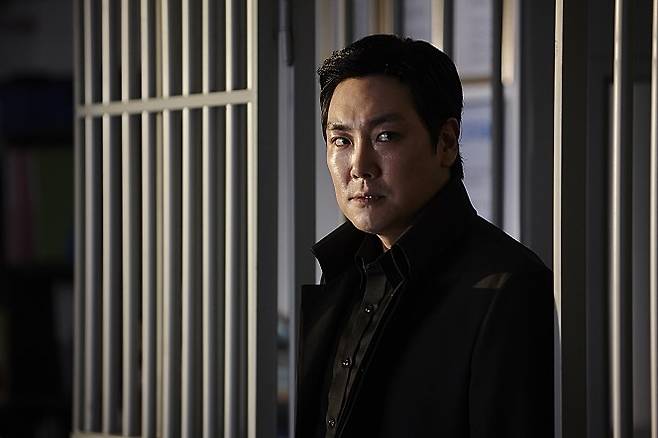
The film was a masterclass in sustained tension, the kind of lean, propulsive thriller that set the standard for where Korean genre filmmaking could go. At the Baeksang Arts Awards, Cho shared Best Actor honors with Lee Sun-kyun, an unprecedented dual win that spoke to the film's searing impact.
Post-"A Hard Day," Cho ascended to mainstream stardom and expanded his range, becoming a more or less ubiquitous presence across Korean cinema. In 2014's historical epic "The Admiral: Roaring Currents," he played the Japanese general Wakizaka without uttering a single line of Korean. Two years later, Park Chan-wook's "The Handmaiden" cast him as the creepy patriarch Kouzuki, a man of twisted appetites who reduces women to objects of fetish and display.
He averaged three to four films annually through the mid-to-late 2010s -- a prolific run by any measure. Parts during this stretch included a businessman concealing drug secrets in "The Sheriff in Town" (2017), an intelligence officer orchestrating Cold War-style espionage in "The Spy Gone North" (2018), and even a plastic surgeon navigating marital turmoil in the risque comedy "Intimate Strangers" (2018).
The roles that now haunt his legacy emerged from this prolific stretch. In 2018's "Believer," a bloody, somewhat overstuffed noir about dismantling a drug cartel, Cho played Detective Won-ho -- technically law enforcement, though hardly a paragon. The film grossed over five million admissions and spawned a 2023 sequel. In "Black Money" (2019), he portrayed a prosecutor investigating large-scale financial fraud inspired by the so-called Lone Star scandal -- a decadeslong legal saga that only recently reached resolution when international arbitrators ruled in South Korea's favor. On the small screen, meanwhile, his turn as the time-crossing detective Lee Jae-han in tvN's "Signal" (2016) cemented his association with righteous law enforcement in the public imagination.
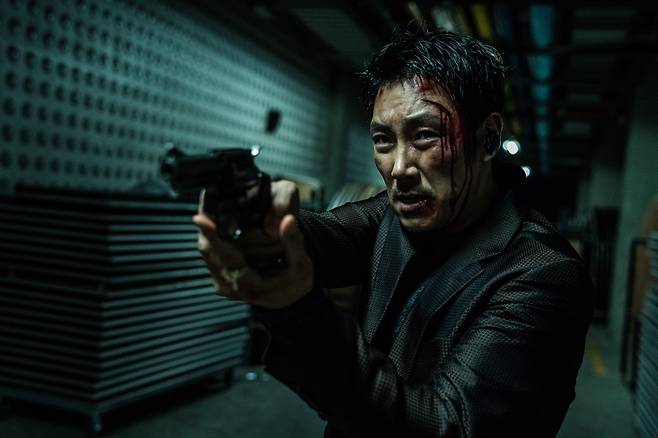
Yet it was Cho's pivot to colonial-era heroism -- embodying Korea's celebrated freedom fighters -- that would leave the most lasting impression on viewers. In the 2015 blockbuster "Assassination" -- which went on to become one of the country's highest-grossing films with 12.7 million admissions -- Cho played Sang-ok, a machine gun-toting freedom fighter alongside A-listers Lee Jung-jae and Jun Ji-hyun (also known as Gianna Jun).
"Assassination" marked his first unambiguous good guy in a major feature, and its box office triumph likely paved the way for his lead two years later in "Man of Will," where Cho played the legendary statesman and anticolonial resistance leader Kim Ku. The film aimed to dramatize a towering historical figure but stumbled badly, leaving the actor stranded in a muddled production. Cho's performances, while commanding, could veer theatrical, occasionally tipping into showiness -- a tendency that left his roles feeling interchangeable at times.
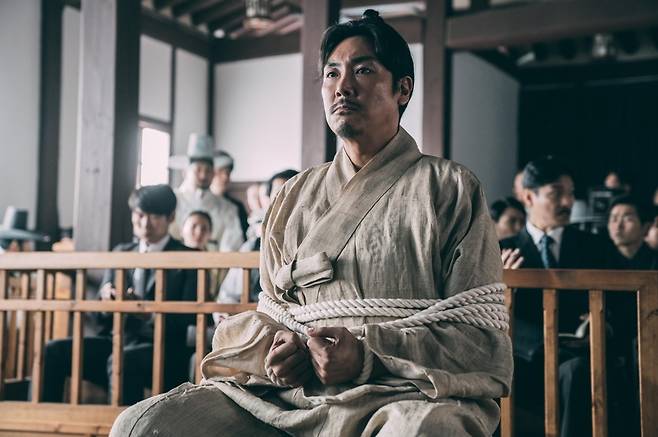
Regardless of how well he inhabited these figures, roles carrying such historical weight drew Cho closer to real-world politics. In 2021, Cho served as a national envoy accompanying the repatriation of independence hero Hong Beom-do's remains from Kazakhstan -- a ceremony widely broadcast and promoted by the Moon Jae-in administration as a patriotic milestone. He later narrated a documentary about Hong's life, "La Resistance," released this August. Whether by design or circumstance, Cho found himself becoming something of a poster figure for progressive-nationalist causes -- a perception he reinforced through his public criticism of Yoon's martial law and his appearances on progressive YouTube channels and alternative media circuits.
Now, with his career abruptly concluded, the debate rages on. Cho Jin-woong built a filmography too varied to reduce to a single type — thugs and detectives, villains and patriots, all rendered with his characteristic barrel-chested bravado. The screen, it turns out, couldn't outrun the record.
Copyright © 코리아헤럴드. 무단전재 및 재배포 금지.