Three indie standouts of the year
For Korean cinema, 2025 has been nothing short of brutal. Not a single film cracked 10 million admissions — traditionally the threshold for mega-hit status here — with the year's top homegrown performer, the horror comedy "My Daughter is a Zombie," topping out at 5.6 million.
Even much-anticipated heavyweights fell short of expectations. Bong Joon-ho's $120-million Warner Bros. production "Mickey 17" limped to just over 3 million admissions, a disappointment by any measure for the "Parasite" director. Park Chan-wook's "No Other Choice" barely managed 2.9 million despite generally favorable reviews.
While major commercial releases continue to stumble, the country's indie filmmakers carry on. This year brought a handful of indie works that deserve recognition — modest in scale, perhaps, but sharp in execution and quietly affecting in ways big-budget productions often aren't.
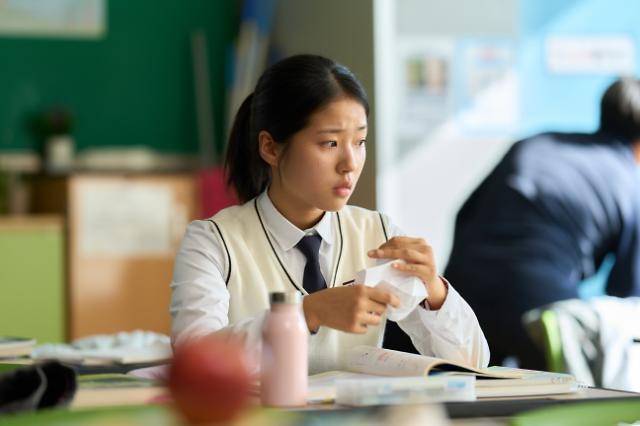
Director Yoon Ga-eun has built a reputation for getting down to a child's eye level to show what the adults have learned to unsee. Her debut, "The World of Us" (2016), observed shifting friendships among schoolchildren with documentary-like patience; "The House of Us" (2019) explored what holds a family together. With "The World of Love," she shifts her gaze to adolescence, a messier and more morally fraught terrain.
Seventeen-year-old Jooin (Seo Su-bin) comes across as spirited and well-liked — boyfriends cycle through, friends cluster around her. But when she refuses to sign a schoolwide petition against a released sex offender, her own buried history spills out, and the fallout spirals from there. Yoon peels back the story in reverse, letting audiences form judgments that the later scenes quietly undo.
If Yoon's earlier work observed from a careful distance, here she's more pointedly engaged, placing her characters in service of a thesis about how trauma survivors are perceived. There's a touch more contrivance and didacticism than in her previous works, but the performances, particularly Seo's striking first big-screen role, carry it through. She won the new actress award at the Korean Film Producers Association Awards, where the film took best picture.
Hopeful signs abound: 150,000 admissions and climbing make it the year's top-performing indie feature. High-profile endorsements arrived swiftly upon release, with directors Bong Joon-ho and Yeon Sang-ho among those calling it a "masterpiece."
"The World of Love" is currently screening in theaters nationwide.
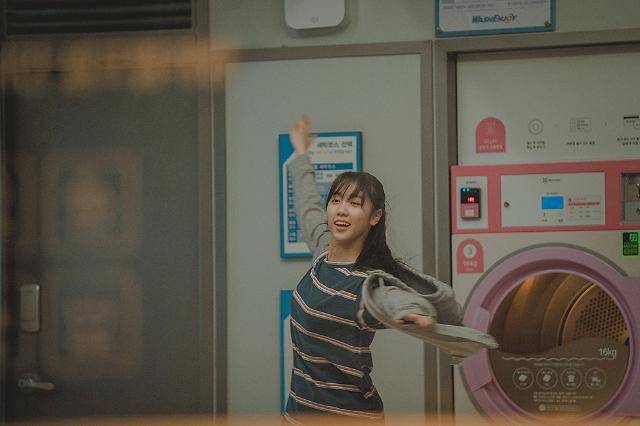
Kim Hye-young's directorial debut claimed the Crystal Bear for best feature in Berlinale's Generation Kplus category — a section for audiences up to 14 — in 2024, but took another twelve months to secure a domestic release. The wait proved worthwhile: "It's Okay!" is a bracing, magnificently buoyant piece of work.
In-young (Lee Re) is an orphaned teen scraping by on her own, secretly camping out in her dance school after her mother dies in a car accident. When the stern, hard-as-nails teacher Seol-ah (Jin Seo-yeon) discovers her arrangement, she reluctantly takes the girl into her fortress-like home. What follows is the gradual collision of two opposing temperaments: In-young's restless cheer against Seol-ah's austere self-control.
The setup sounds like a perfect recipe for melodrama on paper, but Kim never lets it tip over. Instead, she leans into zippy, sitcom-tight dialogue filled with snappy comebacks and well-timed beats. Lee Re, who made a striking impression in Netflix's "Hellbound," proves herself a natural comic presence, her spirited defiance sustaining the film's optimism without ever feeling forced.
Following its February release, the film drew 118,000 admissions — a solid performance by indie standards here. It also won Kim the new director award at the 2025 Blue Dragon Awards in November.
Available on Netflix in select regions with English subtitles.
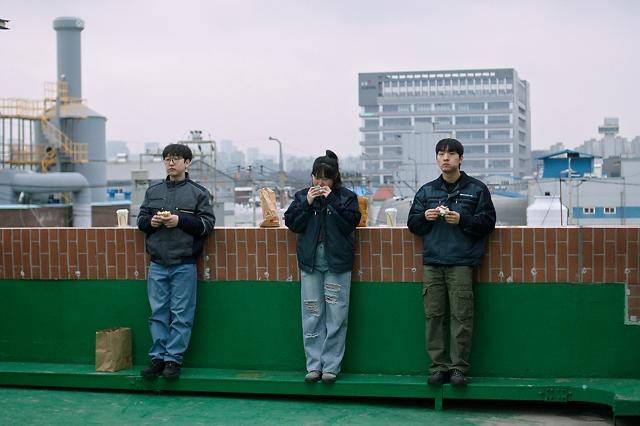
If you assume all Korean teens are locked in hagwon's study halls, Lee Ran-hee's sophomore feature may offer a striking corrective. Released Sept. 3, "The Final Semester" follows two vocational high school students as they enter factory work through the country's industrial apprenticeship system.
It is a world rarely glimpsed on screen, and one that proves unexpectedly riveting. Chang-woo (Yoo Lee-ha) and Woo-jae (Yang Ji-woon) get placed at a manufacturing plant that seems, at first, decent enough: a nice cafeteria, a manager who seems to have their back and so on. But Lee slowly surfaces the rot, capturing the subtle mistreatment and pressure to accept inadequate working conditions without speaking up.
The film proceeds with restraint, almost ascetic in its refusal to sensationalize. There are no tragedies engineered for emotional payoff, no obvious bad guys to blame, just the daily hazards that come with any blue-collar job in which safety takes a backseat, and two young workers learning that adults don't always have their interests at heart.
"The Final Semester" grips not through spectacle but through what we already know: The statistics on industrial accidents, numerous headlines about workers who never made it home. Lee's debut, "A Leave" (2020), followed a middle-aged carpenter grinding through precarious gigs — this one cements her as something of a chronicler of working-class life, following in Ken Loach's footsteps.
Admissions were modest — under 10,000 — but recognition came from the circuit that matters. "The Final Semester" swept the Busan Vision Awards at the Busan International Film Festival, picking up three prizes in total. It is a quiet film that watches young workers without exploiting their pain and finds, in the ordinary daily grind, something worth honoring.
Copyright © 코리아헤럴드. 무단전재 및 재배포 금지.