Korea, Japan trace 80 years of artistic exchange
Japan has long been seen by many Koreans as a country that feels close yet distant — geographically near, yet politically strained.
Culturally, however, the two countries have always influenced each other.
Two public museums from both countries are marking t he 60th anniversary of the normalization of diplomatic relations between the two sides with and exhibitionon their shared postwar cultural history.
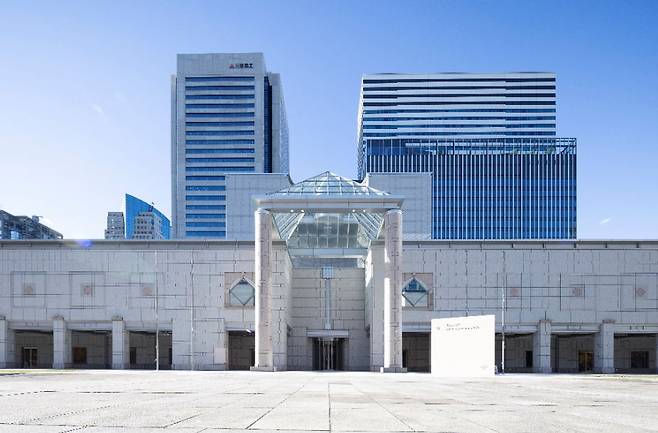
The exhibition “Art between Korea and Japan since 1945” at the Yokohama Museum of Art in collaboration with the National Museum of Modern and Contemporary Art, Korea will kick off Saturday, examining 80 years of artistic exchanges.
“The (joint exhibition) offers chance to revisit the historical moments the two countries have experienced, and to rediscover the significance and potential of contemporary art in Korea and Japan,” said Kim Sung-hee, director of MMCA.
Featuring more than 160 works by 50 artists and collectives, the exhibition traces the development of cultural exchanges through painting, sculpture, photography and new media.
The exhibition follows key historical turning points — Korea’s liberation in 1945, Japan’s defeat in World War II, and the 1965 normalization of diplomatic ties — exploring how artists responded to, reflected on, or transcended these shifting geopolitical contexts.
The show highlights not only historical narratives but also personal trajectories — such as Paik Nam-june’s exchanges with Japanese artists before and after 1965, and the role of Lee U-fan who is a Korean-born dansaekhwa artist that influenced Japan’s avant-garde movements — as a bridge between the two art worlds in the late 20th century.
“We are proud to open a new page in the history of Korea–Japan artistic relations through this collaborative exhibition,” said YMA Director Mika Kuraya.
The exhibition will move to MMCA’s Gwancheon venue in Gyeonggi Province next year, running from May 14 to Sept. 27, 2026.
Copyright © 코리아헤럴드. 무단전재 및 재배포 금지.