Samsung nears HBM4 approval as profit outlook surges
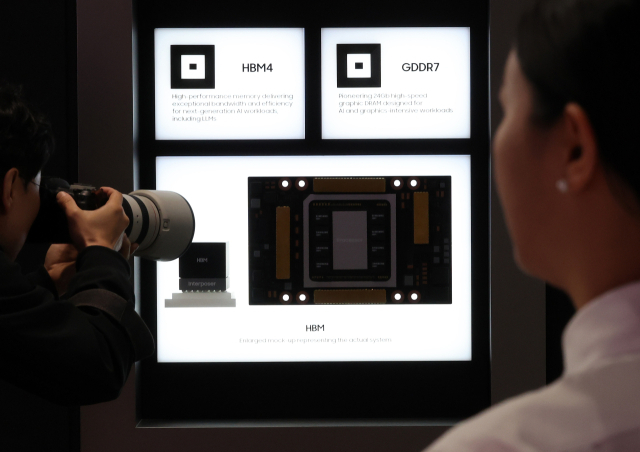
Samsung Electronics has entered the final stage of certifying its sixth-generation high-bandwidth memory, HBM4 — with industry watchers now looking to Nvidia for a year-end approval.
According to industry sources on Thursday, Samsung has completed production readiness approval for its HBM4 chips — considered the final internal hurdle before mass production. As the company is currently supplying HBM4 samples to major customers for quality testing, analysts expect the chips could clear final verification as early as this month.
"Samsung has already provided HBM4 samples using 1c DRAM technology and a 4-nanometer logic die to major tech companies, and no quality issues have been identified so far," Kim Dong-won, head of Research at KB Securities, said.
"Samsung appears capable of meeting both the higher specifications and volume requirements from Google and Nvidia, raising the likelihood of approval within this year."
The analyst also said HBM4's market share will surpass HBM3E in the second half of next year, once the next-generation chip is fully adopted in Google's eighth-generation TPU and Nvidia's next-generation GPU chips in 2026.
The approval window is closely tied to Nvidia's next-generation GPU lineup. Nvidia's next-generation AI processor Rubin is scheduled for mass production in the second half of next year. The chip will use eight HBM4 units, and the model coming after that in 2027, Rubin Ultra, will use 12 units of the HBM4 chips.
Given the complexity of the HBM4 technology, some remain cautious, expecting the approval could slip into next year.
"Delays are possible given the higher process complexity of HBM4. Samsung had initially projected approval for early next year," an industry official said.
SK hynix has already secured supply contracts with Nvidia. If Samsung wins approval this year and begins shipment in early 2026, analysts say it could narrow the gap created from HBM3E more quickly.
As the market is expected to shift rapidly from fifth-generation HBM3E chips to the sixth-generation HBM4 in the second half of next year, Samsung's success in HBM4 is expected to drive earnings. Analysts estimate that the company's operating profit in 2026 could approach 100 trillion won ($75 billion), marking the highest level in its history.
The tech giant's operating profit for this year is projected at around 40 trillion won to 42 trillion won, but forecasts for next year range from 84 trillion won to as high as 105 trillion won.
Consensus outlook for Samsung's 2026 results stands at 384 trillion won in sales and 80 trillion won in operating profit. The company's semiconductor division alone is expected to deliver between 77 trillion won and 93 trillion won in operating profit.
Park Yu-ak, analyst at Kiwoom Securities, offered one of the most aggressive forecasts, raising his estimate for Samsung's operating profit next year to 100 trillion won, citing a visible increase in the company's HBM4 market share and a sharp rebound in the broader DRAM market, where prices are projected to jump 56 percent.
"With PRA approval confirming its manufacturing capability, if Samsung joins HBM4 mass production next year, it could validate its technology and use its scale to capture profitability," an industry official said.
Sharpening its edge in the HBM market, Samsung has reorganized parts of its memory operations. In a recent restructure, the company created a new organization overseeing both DRAM and NAND flash development, and folded its dedicated HBM team into the unit. The HBM team was established in July 2024 to bolster competitiveness in the fast-growing high-performance memory market.
Samsung has also resumed construction of the Pyeongtaek Campus P5 production plant, which had been on hold. The company plans to produce cutting-edge chips for high performance computing at the facility.
Copyright © 코리아헤럴드. 무단전재 및 재배포 금지.