Korean ‘Life of Pi’ premieres in Seoul, challenging theatrical boundaries
전체 맥락을 이해하기 위해서는 본문 보기를 권장합니다.
"While preparing this production, I realized it was nearly impossible to fit 'Life of Pi' into the conventional definitions of a musical or a play as we know them," Shin noted. "The show brings together all aspects of live stagecraft to create a performance driven entirely by imagination and sensory experience. In that sense, it already existed outside established boundaries — and I felt we needed an entirely different set of criteria to define it."
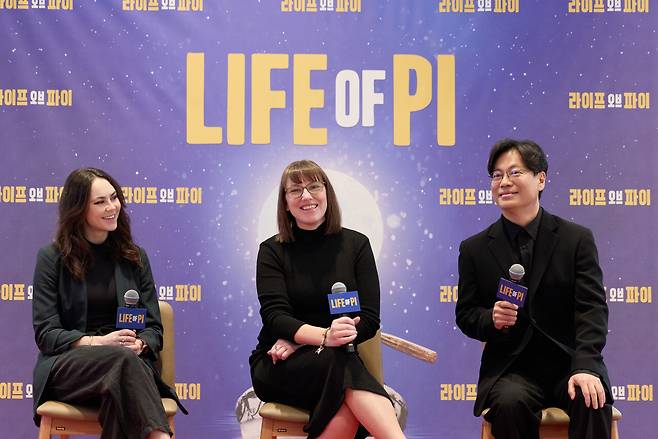
"It's a sort of hyper theatrical experience," said Leigh Toney, the production's international director. "The video designed by Andrzej Goulding with Andrew Mackay composing the score is visually and aurally immersive, and I think that combination of all of those elements really elevates that storytelling."
이 글자크기로 변경됩니다.
(예시) 가장 빠른 뉴스가 있고 다양한 정보, 쌍방향 소통이 숨쉬는 다음뉴스를 만나보세요. 다음뉴스는 국내외 주요이슈와 실시간 속보, 문화생활 및 다양한 분야의 뉴스를 입체적으로 전달하고 있습니다.
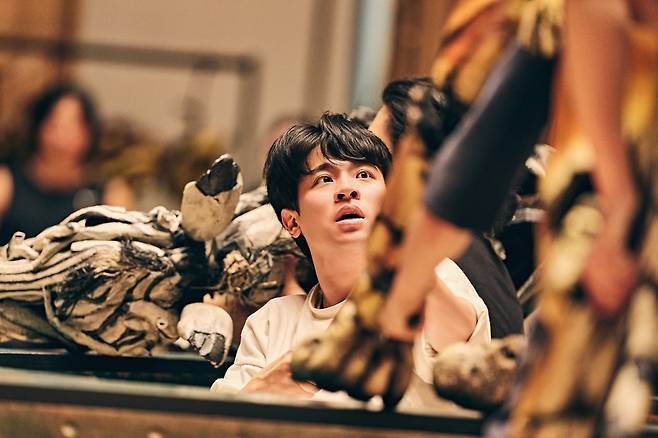
The stage production of “Life of Pi,” a story of survival and imagination, arrived in Korea this week with a Korean-language version, marking the first non-English rendition of the show.
“The moment I first saw the production, I couldn’t help but think that it needed to be performed in Korean with Korean actors, because I believed the philosophical messages embedded in this work would resonate far more deeply with audiences when delivered in Korean and through our own performers,” said Shin Dong-won, S&Co’s chief producer.
Two actors alternate in the role of Pi: Park Jeong-min and Park Kang-hyun. Park Jeong-min has built a reputation for his versatility on the screen, whereas Park Kang-hyun is regarded as one of the most in-demand performers on Korea’s musical stages.
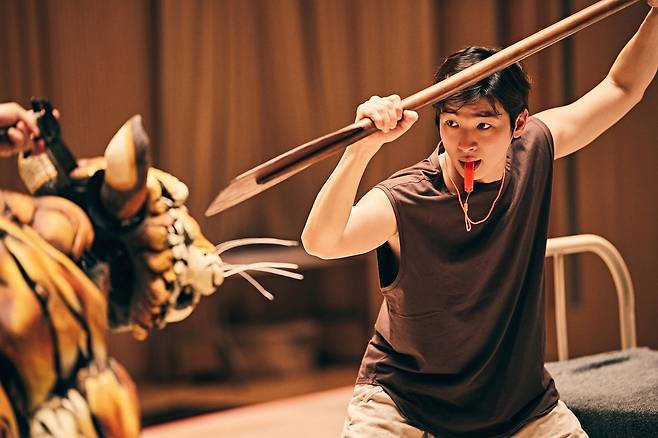
Despite having won major honors in the play category at the Laurence Olivier Awards and the Tony Awards, the Korean producing company refuses to define the production as either a play or a musical — although local ticketing platforms continue to list it under the section for musicals.
“While preparing this production, I realized it was nearly impossible to fit ‘Life of Pi’ into the conventional definitions of a musical or a play as we know them,” Shin noted. “The show brings together all aspects of live stagecraft to create a performance driven entirely by imagination and sensory experience. In that sense, it already existed outside established boundaries — and I felt we needed an entirely different set of criteria to define it.”
“It’s a sort of hyper theatrical experience,” said Leigh Toney, the production’s international director. “The video designed by Andrzej Goulding with Andrew Mackay composing the score is visually and aurally immersive, and I think that combination of all of those elements really elevates that storytelling.”
At the heart of this production is Richard Parker. The tiger is operated by three performers in full view of the audience, yet never once breaks the illusion of a living creature, becoming the central force that drives both the narrative and the audience’s emotional investment. Each puppeteer is responsible for a different part of the tiger — the head, heart and hind legs. For the Korean premiere, nine puppeteers bring Richard Parker to life.
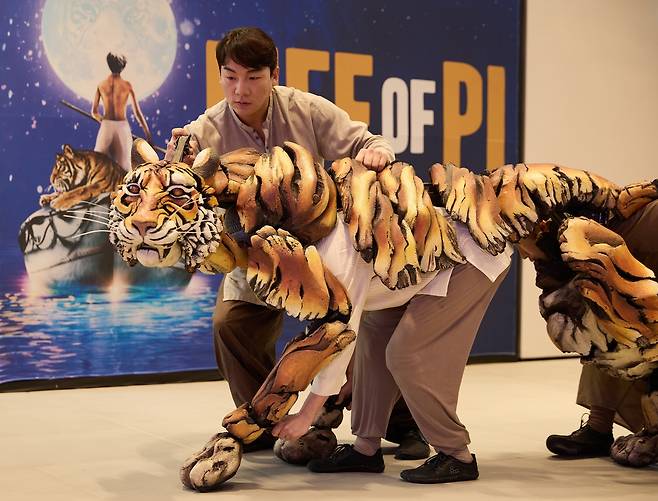
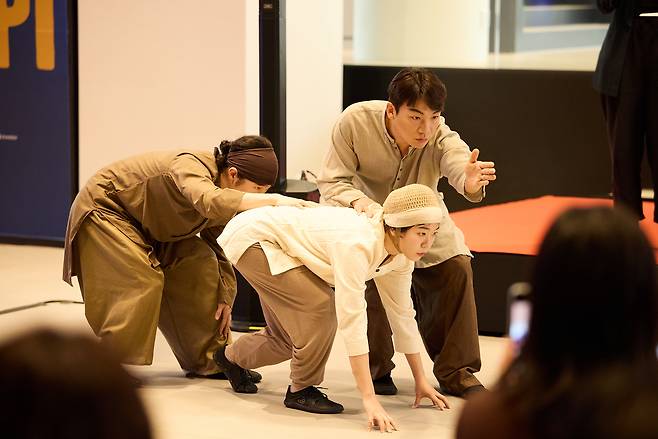
The art of puppetry in “Life of Pi” has been recognized with major awards. In 2022, the Laurence Olivier Awards presented the honor for best supporting actor to the seven actors who operate the tiger puppet — the first time a puppet-operating ensemble was so recognized.
“To manipulate an object between three people at the same time requires a lot of connection, a lot of understanding of each other’s rhythms, impulses, signals and breath, and coming together to create the same thing. It takes a long time to learn, and so we spend a lot of time in connection games and team building,” Kate Rowsell, the associate movement and puppetry director, said as she introduced the Korean puppetry team.
Adapted from Yann Martel’s 2001 novel “Life of Pi,” the production tells the story of a 16-year-old Indian boy stranded on a lifeboat with a Bengal tiger for 227 days — a journey that challenges his faith, instincts for survival and perception of truth.
Since its 2019 premiere under the direction of Max Webster, “Life of Pi” has grown into a global hit, moving from London’s West End to Broadway and touring the UK, Ireland, North America, and major cities across Canada, the United Arab Emirates, India, China and Taiwan.
The story was also made into a 2012 film of the same title directed by Ang Lee, who received the Academy Award for best director for his work.
The Korean edition of the stage performance runs to March 2, 2026, at GS Arts Center in Gangnam, Seoul. Ticket prices range from 60,000 won to 160,000 won.

Copyright © 코리아헤럴드. 무단전재 및 재배포 금지.