Hyundai Motor turns to local CEOs in high-stakes Asian reset
Hyundai Motor Co. is undertaking its most sweeping overhaul of Asian leadership since appointing Jose Munoz as its first foreign CEO last year — a move that reflects a broader strategic pivot toward deeper localization, as the automaker confronts intensifying US tariff risks and mounting pressure from Chinese EV competitors.
By naming new local chiefs in China, Japan and India, Hyundai aims to accelerate decision-making in three of its most complex and strategically sensitive markets. But the shift also raises a defining question for the company’s global trajectory: How much control is Hyundai prepared to decentralize as it seeks to transform its historically Korea-centric management model into a more globally distributed structure capable of withstanding geopolitical, regulatory and technological disruption?
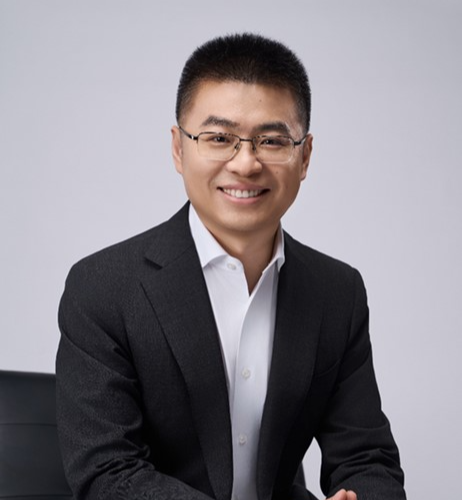
Among the three Asian markets, China marks the most dramatic change, with Hyundai appointing Li Fenggang as CEO and general manager of Beijing Hyundai — the first local chief in the joint venture’s 23-year history with BAIC Group.
Li had served as deputy general manager at FAW-Audi, the German brand’s long-running joint venture in China, until recently — a background industry officials say gives him deep familiarity with China’s regulatory environment, dealer ecosystems and the policy-driven structure of the country’s auto market.
Since its establishment in 2002, Beijing Hyundai had always been led by a Korean general manager dispatched from Seoul headquarters, with BAIC naming the deputy general manager. This long-standing leadership structure reflected Hyundai’s desire to retain tight control of the joint venture in a strategically vital, yet geopolitically sensitive market.
According to Kim Pil-su, a car engineering professor at Daelim University, the leadership reshuffle is part of Executive Chair Chung Euisun’s push to shift Hyundai’s historically “Korea-centric management approach” toward a more “globally distributed structure.”
“Chung has been steadily advancing globalized management — first by elevating Peter Schreyer in 2013, then by taking an even bigger step with Munoz as CEO,” Kim said. “Hiring local heads in China, Japan and India shows this strategy is gaining momentum as Hyundai confronts global pressures, including US tariff risks.”
With China aggressively supporting its domestic electric vehicle brands, Kim noted that global automakers must work closely with local policymakers to gain credibility and access government incentives. Appointing a Chinese CEO, he added, positions Hyundai to navigate China’s relationship-driven business culture — often described as "guanxi" — which is crucial for securing regulatory clarity and policy support.
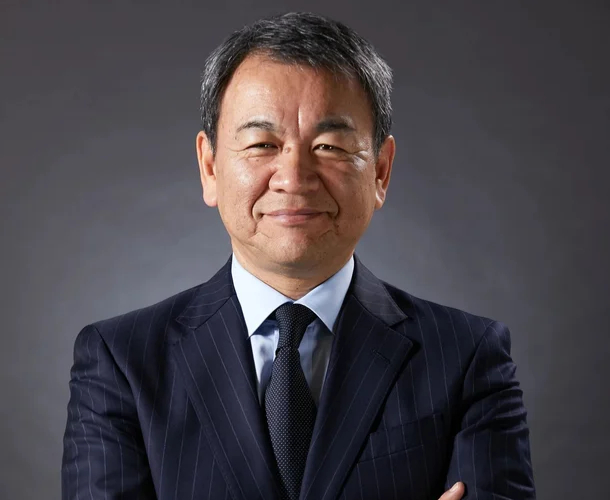
Japan is often regarded as a “graveyard for foreign automakers” due to consumers’ deep loyalty to domestic brands. Hyundai’s sales have remained under 1,000 units annually since its 2022 reentry, underscoring the difficulty of cracking the market.
To reboot its strategy, Hyundai appointed Toshiyuki Shimegi — former president of Porsche Japan — as its first Japanese CEO earlier this year. His extensive knowledge of Japan’s regulatory system, dealer networks and consumer behavior is expected to help Hyundai overcome its near-invisible brand presence.
Because Japan has been slow to adopt EVs — with battery electric vehicles accounting for just 2 percent of sales — Hyundai has shifted away from an Ioniq-centered rollout. Instead, it is prioritizing the Kona and Inster (Casper) compact vehicles, which better match Japanese demand for smaller, practical cars.
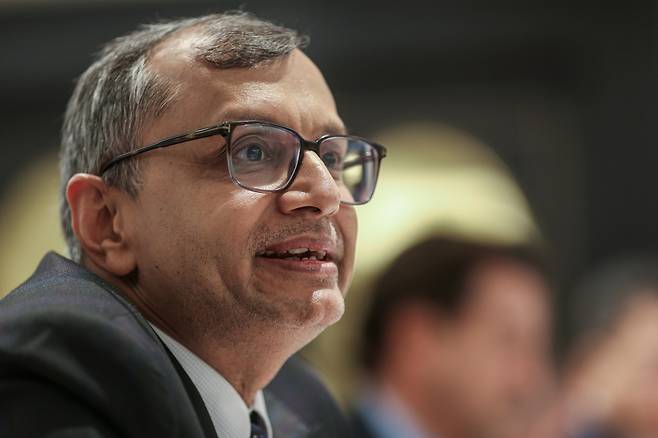
India offers a contrasting story.
It is now one of Hyundai’s largest global markets, even surpassing Korea in sales volume. Last year, Hyundai sold 605,433 vehicles in India, and together with Kia it now controls more than 20 percent market share — making India the group’s third-largest global base, after the US and Europe.
But profitability remains tight.
Hyundai plans to invest 450 billion rupees ($5 billion) by 2030 to launch 26 new models, aiming to make India its second-largest market after the US. As part of this expansion, Tarun Garg, currently chief operating officer, will become Hyundai Motor India’s first Indian CEO next year — a milestone in the company’s 29-year presence in the country.
Kim noted that strong India sales cannot fully offset US tariff pressures, but they do help diversify Hyundai’s global risk portfolio. Hyundai is prioritizing higher-margin SUVs and EVs, with its January-September sales of 425,330 units driven by the Creta, including its new EV variant, and the Venue.
Copyright © 코리아헤럴드. 무단전재 및 재배포 금지.