AI reshapes labor markets in U.S., Korea
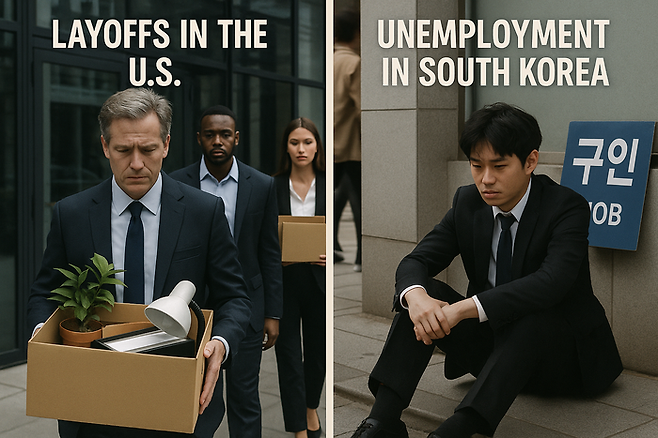
According to Bloomberg and U.S. Bureau of Labor Statistics on Sunday, the share of unemployed Americans with a four-year college degree reached 25 percent As of September, the highest on record since data collection began in 1992.
Layoff announcements from large corporations, such as Amazon, Target, and Starbucks, citing AI adoption have been clearly reflected in these numbers.
The U.S. unemployment rate for young adults aged 20-24 climbed to 9.2 percent in September, up 2.2 percentage points from a year earlier.
Korea is also experiencing AI-driven labor market shocks.
According to the Ministry of Data and Statistics, the share of unemployed people with a college degree or higher rose from 37.7 percent in 2010 to 47.8 percent in 2024. It reached 49.6 percent during the first three quarters of this year.
Although the total number of unemployed is declining due to a shrinking population, the proportion of college-educated unemployed continues to rise steadily.
Young people, in particular, are bearing the brunt of the impact. As strict labor laws make mass layoffs difficult in Korea, companies are cutting back on new hires for young workers instead of firing existing staff as U.S. companies do.
In contrast, employment among workers in their 50s rose by 209,000 during the same period, with nearly 70 percent of those gains also in AI-exposed industries.
Economists describe the trend as “seniority-biased technological change,” where AI displaces junior, routine-focused roles while increasing demand for experienced workers with domain expertise.
The shift comes as the government and ruling party push to raise the statutory retirement age.
In its latest report on Korea, the International Monetary Fund (IMF), recommended that any extension — such as raising the retirement age from 60 to 65 — be paired with pension reform and changes to seniority-based wage systems to mitigate labor-market distortions.
Authorities have also flagged growing concern over youth employment. The jobless rate among those aged 15 to 29 has been trending downward only slowly, while more than 400,000 young Koreans remain classified as “idle” — neither employed, in training, nor seeking work.
Copyright © 매일경제 & mk.co.kr. 무단 전재, 재배포 및 AI학습 이용 금지
- “이재명 대통령, 내게 형이라고”…‘200억 기부’ 이 가수, 어떤 인연이길래 - 매일경제
- “‘아침밥 달라’하면 헤어질 결심한다”는 돌싱녀들…남성은? - 매일경제
- 용산 뺀 전 지역 매물 급감…살수도 팔수도 없는 서울 주택시장 - 매일경제
- 비트코인 죽을때까지 안 판다던 ‘이 남자’...급락 못 버티고 매도 버튼 손 올렸다 - 매일경제
- 고개숙인 日관료 앞에 손 찔러넣은 중국...‘오만한 태도’ 논란 일자 해명했다는데 - 매일경제
- 김장배추에 검은깨가 ‘다닥다닥’…곰팡인 아니라는데, 먹어도 될까 - 매일경제
- “10만원에 30분 레슨, 효과 없었는데”…골프스윙도 제미나이가 봐준다 - 매일경제
- ‘정보유출’ 의혹 쿠팡 중국인 前직원, 고객에 협박 메일 보냈다고? - 매일경제
- “여보, 월급 가지고 부족한거 알지?”…직장인 부업자 40만명 넘어 - 매일경제
- 기적 없이 ‘강등 엔딩’, 모범 시민구단 대구의 추락과 약속…“구단 운영 시스템 전반을 재검