Treasury share disposal is to back China factory expansion: Samyang Foods
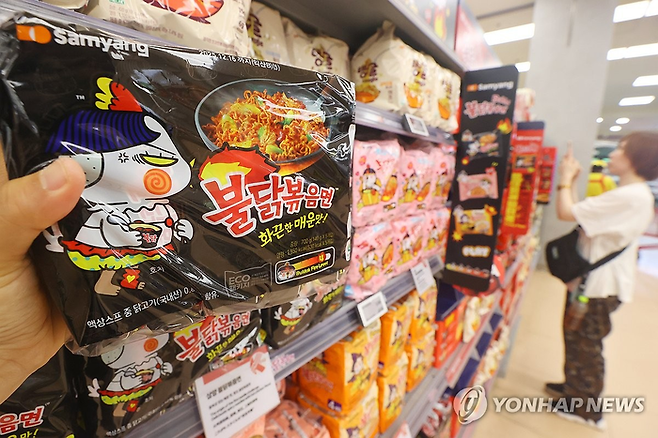
The remarks come as the recent sale prompted market speculation that the move was intended to ease financial pressure or respond to potential regulatory changes.
The company sold 74,887 treasury shares on November 20 at 1.3 million won per share, totaling 102.7 billion won. The shares were purchased by three foreign institutional investors.
Some analysts suggested that Samyang moved to dispose of the shares ahead of proposed amendments to the Commercial Act that would overhaul treasury share rules or that the sale was aimed at improving the financial sheet.
Samyang Foods dismissed the speculation, saying the sale was “a strategic move to secure long-term growth drivers, including expansion of our China factory.”
The facility is expected to expand from six to eight production lines, boosting annual capacity by 37.8 percent from 820 million units to 1.13 billion units.
The global popularity of Buldak Bokkeum Myeon, a spicy instant noodle, has continued to rise sharply.
Industry officials note that overseas demand is growing and that “supply is struggling to keep up.”
Although China’s instant noodle market is valued at $16.7 billion, Samyang’s market share remains only around 2.5 percent, leaving significant room for expansion.
Samyang Foods emphasized that although U.S. sales have already surpassed those in China, the Chinese market still accounts for a substantial share of its global revenue.
The company also emphasized that interpretations suggesting the sale was for financial stability lack merit.
The company’s end-of-quarter debt ratio is just 89.7 percent and its cash flow remains solid.
Copyright © 매일경제 & mk.co.kr. 무단 전재, 재배포 및 AI학습 이용 금지
- “이어지는 결혼식, 축의금 5만원으로 통일”…9월이 힘들었다는 직장인들 - 매일경제
- 차에 매달린 채 1.5km 끌려가 숨진 대리기사…경찰, 만취 차주 구속 송치 - 매일경제
- “무조건 여기부터 오른다”…월가 큰손들 줍고 있다는 ‘이 종목’은 - 매일경제
- “올 연말부터 국민연금 추납 잘못하면 손해”…돈 아끼려면 이 방법 ‘딱’[언제까지 직장인] -
- “삼성전자 목표가 또 올랐네”…구글 TPU 수혜 기대감 확산 [오늘 나온 보고서] - 매일경제
- “공급이 수요 못 따라가”…‘불닭’ 삼양식품, 자사주 전량 매각한 이유는 - 매일경제
- 고환율·집값 들썩…한국은행, 결국 4연속 2.5% 금리 동결 - 매일경제
- 거주지 무단이탈 조두순, 국민참여재판 질문에 “국민카드요?” - 매일경제
- “한국 사회 인권침해 전형적인 가해자는 ‘4050 남성 직장 상사’” - 매일경제
- “손흥민 12월 토트넘 복귀 확정”…‘레전드의 귀환’ 런던에 고별 알린다, 12월 21일 리버풀전