Korea's lonely deaths climb again as isolation deepens
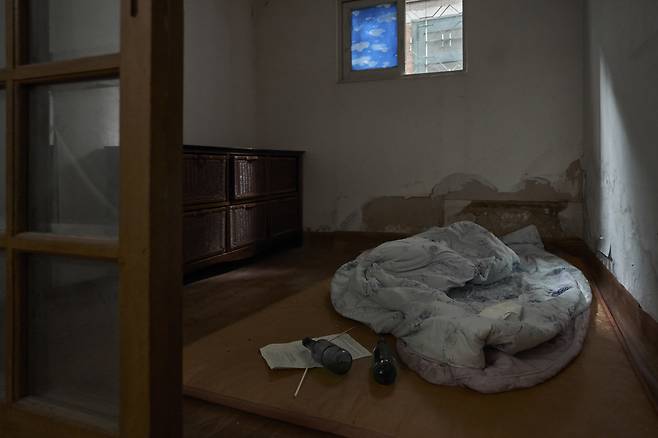
The number of people dying alone in South Korea rose to nearly 4,000 last year, extending a steady upward trend driven largely by middle-aged men, government data showed Thursday.
According to the Ministry of Health and Welfare, 3,924 solitary deaths, defined as deaths in social isolation discovered only after some amount of time had passed, were recorded in 2024, up 7.2 percent from a year earlier. The tally has risen every year since 2020, climbing about 20 percent over five years.
Men made up the vast majority of cases. Some 81.7 percent were male, at 3,205 cases. This was over five times the 605 cases for women.
By age, those in their 60s made up the largest share at 1,271 cases, followed by people in their 50s and 40s. Considering gender and age, men in their 60s were most at risk, followed by men in their 50s.
“Middle-aged men appear to be the most vulnerable group,” said Woo Kyung-mi, head of community welfare at the ministry.
"Not like women who tend to socialize with people at deeper levels, experts point out that middle-aged men often find it hard to share their difficulties due to social burden or pride," Woo added.
The ministry analyzed 57,145 police case files to identify deaths that met the criteria of deaths of socially isolated individuals who had little or no contact with family or acquaintances.
Last year, the solitary death rate stood at 7.7 per 100,000 people, up from 7.2 a year earlier.
Lonely deaths among people in their 30s and 20s also rose slightly, continuing an upward trend. “Economic difficulties and job instability are increasingly contributing to social isolation, especially among people in their 30s,” she explained.
Most solitary deaths occurred in residential spaces, including detached homes (1,920 cases), apartments (774) and one-room units or studio apartments (769). The number of deaths in small lodging facilities such as motels and gosiwon, monthly paid rooms as small as 3 square meters, continued to grow.
Landlords, building managers and security guards discovered the bodies in 43 percent of cases, a share that has steadily increased as family and acquaintances account for a shrinking portion of first discoveries.
Suicides accounted for 13.4 percent of all solitary deaths, slightly down from the previous year. The suicide proportion was highest among people under 30, at more than half of cases in that age group.
About 39 percent of those who died alone were basic livelihood security recipients, a ratio that has remained stable around 40 percent over the past five years.
"Experts warn that a combination of demographic and social shifts — including the rapid rise of single-person households, weakening community networks, declining face-to-face interactions and the expansion of gig-based platform labor — is worsening the risk of isolation and unattended deaths," Woo explained.
To respond, the government plans to launch a nationwide survey on social isolation next year and expand its solitary-death prevention program to include broader at-risk groups.
The ministry said it will provide tailored support for unemployed or socially disconnected middle-aged individuals through job assistance services and programs to rebuild social networks.
Beginning next year, a new response system will assist local authorities in identifying high-risk individuals early and providing coordinated counseling and case management.
“As solitary deaths continue to rise, addressing social isolation across all life stages is now a national priority,” said Park Jae-man, director of welfare administration at the ministry.
"We aim to detect at-risk individuals earlier and provide customized support to prevent further tragedies.”
Copyright © 코리아헤럴드. 무단전재 및 재배포 금지.