Who is the CSAT for in the age of AI?
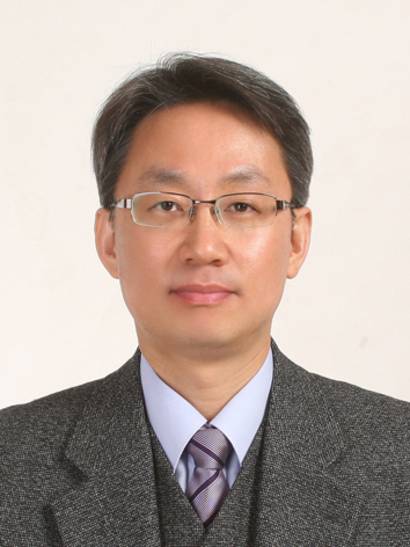
Kim Hyun-cheol The author is a former Seoul Metropolitan Office of Education spokesman and head of the Seoul Education Autonomy Citizens’ Forum preparatory group.
More than 550,000 students sat for the 2026 College Scholastic Ability Test (CSAT) on Nov. 13, an exam that will shape their academic paths and, for many, their lives. Yet this year’s test left an especially bitter aftertaste. In the days before the exam, cases of cheating using ChatGPT and other forms of AI surfaced outside classrooms. Watching AI replace human reasoning — and seeing students use it for misconduct — raises a simple question: Who is the CSAT really for?
![Students make final preparations before the 2026 College Scholastic Ability Test at Sapa High School, the second testing site in the Changwon district of the South Gyeongsang Office of Education, on the morning of Nov. 13. [YONHAP]](https://img4.daumcdn.net/thumb/R658x0.q70/?fname=https://t1.daumcdn.net/news/202511/26/koreajoongangdaily/20251126000617351ndwr.jpg)
The problem in Korean education goes well beyond cheating or ethics. The CSAT has long functioned as a massive conveyor belt that reproduces inequality. Competition in elementary schools becomes middle-school grade competition, which then turns into rankings in high school and finally into the hierarchy of universities. A child’s birthplace in Seoul or a parent’s income is effectively converted into a score. That is the structure of Korean education today. The exam itself is not the problem; its role as the singular gatekeeper that determines social status is.
Yet even as AI becomes faster and more accurate at finding answers than humans, we continue to train students to do exactly that. Students try to avoid detection when using AI-generated answers, and teachers develop tools to catch them. It is a pointless contest of sword and shield. A society trapped in an exam culture that rewards answer-hunting will only generate the very workers who are most easily replaced by AI.
The controversies surrounding fairness and AI-assisted cheating reveal not a crisis of education but a breakdown of the system itself. The old structure has abandoned its purpose of cultivating talent and now produces only inequality and hollow competition. Education reform is no longer optional but essential. Answer-focused students will not survive the competition of the AI age, and a country that trains them will lose its competitiveness. Education reform must be a foundation of social reform, not a narrow administrative project.
Who, then, can break this cycle of mistrust? The core of education reform is restoring trust, not rearranging institutional mechanisms. Parents do not trust schools, universities do not trust student records and students do not trust the system. This collective distrust supports the outdated belief that the CSAT is still the fairest method available. But this fairness merely institutionalizes inequality. Reform must correct a system that justifies inequality in the name of fairness and strengthens competition in the name of equality.
What Korea needs now is a broad social agreement. Provincial and metropolitan education superintendents could play the role of objective mediators. They lack the authority to command university admissions, but that very absence of authority allows them to act objectively. While the government and universities are both targets and stakeholders in reform, superintendents represent public education and are responsible for thousands of schools and students. They are well placed to bring key universities to the negotiating table and lead a public platform for reform.
![As university admissions continue after the College Scholastic Ability Test, students leave the test site at Sungkyunkwan University in central Seoul on Nov. 15 after completing the school’s essay-based admissions exam for the 2026 academic year. [YONHAP]](https://img4.daumcdn.net/thumb/R658x0.q70/?fname=https://t1.daumcdn.net/news/202511/26/koreajoongangdaily/20251126000618850czzd.jpg)
The Seoul Metropolitan Office of Education, for example, could offer a model such as a “Seoul Public Education Trust Certification System,” a transparent evaluation framework that could serve as a starting point. Using such a system as leverage, the capital could build a “Seoul Education Reform 10-Year Social Pact,” involving parents, teachers, universities and industries. A successful model of trust-building in Seoul could become a national standard, which would finally enable meaningful changes to the CSAT and weaken the country’s entrenched inequality.
Political leaders must also elevate this issue from a five-year policy to a long-term national commitment. Education reform must continue regardless of administration changes. Education is not a subsidiary variable of politics but the foundation for Korea’s future.
The CSAT is more than a test; it is a mirror reflecting how deep and rigid structural inequality has become in Korean society. That image must change. In an era of AI-driven cheating, an exam that rewards pure memorization of answers can no longer nurture future talent. Reforming the CSAT is the first step in breaking the cycle of inequality, and education reform cannot wait any longer.
This article was originally written in Korean and translated by a bilingual reporter with the help of generative AI tools. It was then edited by a native English-speaking editor. All AI-assisted translations are reviewed and refined by our newsroom.
Copyright © 코리아중앙데일리. 무단전재 및 재배포 금지.
- Subway halts distribution of new lobster sandwich promo plate after discovering possible quality issues
- Multibillionaire Mukesh Ambani arrives in Korea for meeting with Samsung chief Lee Jae-yong
- Dodgers' Kim Hye-seong apologizes for publicly dismissing man owed $82,000 by his father
- Japanese animation 'Demon Slayer' becomes No. 1 movie in Korea in 2025
- Lee Soon-jae, veteran actor, dies at 91
- Tokyo soba chain removes sign asking tourists to avoid lunchtime
- Old flames, new sparks: Director of Tving's 'EXchange' delves into the stories behind this season's exes
- Korea faces early flu wave as new variant spreads among children
- From allegations to lost sponsorships: How things fell apart for Kim Soo-hyun
- U.S. Reaper drone based in Korea crashes into Yellow Sea, cause yet unknown