LG Elec CEO highlights “Made in India, Made for India” strategy in interview
Since its debut on the Indian stock market, the company’s stock price has surged, pushing its market capitalization to 1.12 trillion rupees ($12.49 billion) as of Friday.
This figure exceeds the market capitalization of its South Korean parent, LG Electronics Inc., which stands at about 14.9 trillion won ($10.14 billion).
The company also ranked top in market share across major home appliance categories such as washing machines and refrigerators in the first half of this year in India.
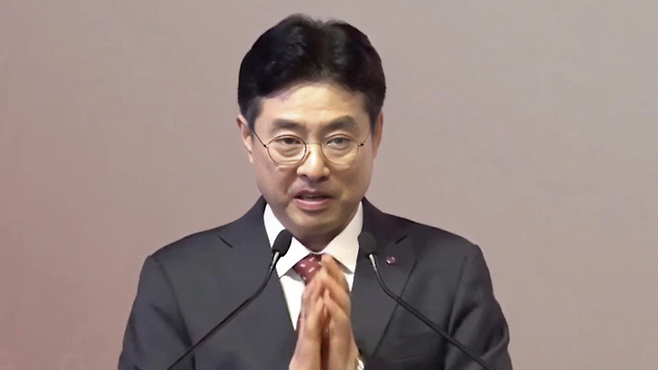
In a recent interview with Maeil Business Newspaper, LG Electronics India Chief Executive Officer (CEO) Jeon Hong-ju noted that the secret behind the company’s popularity in the local market is that “we have executed a Made in India, Made for India strategy under the core principle of thinking like an Indian.”
LG Electronics India’s locally tailored products embody that philosophy.
The company addressed barriers such as the social perception that using appliances like refrigerators – seen by some as lazy because they preserve food – was unnecessary, instead offering practical, lifestyle-oriented solutions.
“A good example is washing machines and dryers designed to address the problem of clothes not drying well because of high humidity during India’s rainy season, as well as microwave ovens customized for Indian cuisine,” Jeon said.
The momentum for this strategy came not only from operating production plants in the Noida and Pune regions of India but also from launching a program to foster local component suppliers and setting up a product research and development (R&D) team.
Through these initiatives, the company designed and produced new products that align with the usage habits of local consumers, taking into account factors such as India’s electricity conditions, water pressure and hardness, and food-storage practices.
The company also raised consumer satisfaction by introducing to the Indian market services that were naturally expected in the Korean market.
“We built a differentiated infrastructure such as 68 service-parts warehouses, rather than simply expanding service centers,” Jeon said. “Through AMC, a subscription model tailored to India, we are expanding our service reach not only in major cities but also in tier-3 and tier-4 cities and rural areas.”
Under these circumstances, LG Electronics India has been largely insulated from global protectionist policies that prioritize domestic industries.
It is currently accelerating policies to secure leadership in the Indian market, which is projected to grow at an annual average rate close to 7 percent through 2030.
“We are currently pursuing strategies to address the potential expansion of product demand, including the establishment of a third plant and increased investment in R&D,” Jeon said.
Copyright © 매일경제 & mk.co.kr. 무단 전재, 재배포 및 AI학습 이용 금지
- 대통령실도 “엄정 조치하라”…양양군 7급 공무원 갑질 논란 확산 - 매일경제
- 강남 50억 아파트 사는 세가족 1인분 주문하고 버럭…갑질에 직원 퇴사 - 매일경제
- [단독] “한은의 공포마케팅, 진짜 위기 부른다”…원화 스테이블코인 미루면 ‘혁신 지체’ -
- “입주민 나갈 때까진 못나가”…아파트 출구 이용 ‘갑질’에 결국 담넘은 배달기사 - 매일경
- 드디어 ‘돈방석’ 앉는거야…조폐공사, 진짜 돈 담긴 굿즈 출시 화제 - 매일경제
- 정유라, 한동훈 등 상대 전방위 소송 예고…“결혼도 미루고 10년간 칼 갈았다” - 매일경제
- “내가 떨어진다고 했지?”…잘나가던 팰런티어 하락베팅 결과 ‘대박’ - 매일경제
- 환율 치솟고 집값은 들썩이고…올해 기준금리 동결, 내년엔 금리인하 종결? - 매일경제
- “시험에서 챗GPT 쓴 학생? F입니다”…대학가 확산되는 AI 부정행위 - 매일경제
- ‘리그 1호골’ 이강인, 벤치신세->“눈부신 기량” 극찬->챔스 선발까지? - MK스포츠