Teen's death after 14 hospital rejections exposes ER crisis
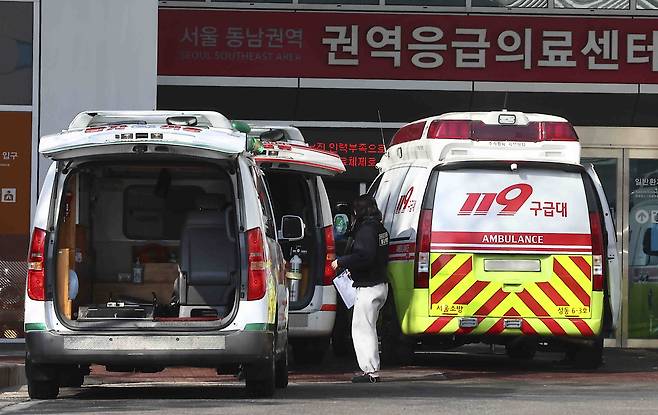
A South Korean student died in Busan last month after reportedly being turned away by several hospitals over the course of more than an hour, intensifying alarm over the country's worsening shortage of emergency-care specialists.
Despite early signs of a medical emergency that later progressed to cardiac arrest, more than a dozen hospitals refused to admit the 18-year-old, citing either a lack of pediatric neurological services or restrictions on treating minors in cardiac arrest.
In Korea, pediatric care typically covers patients up to age 18.
According to emergency call logs released Sunday by Rep. Yang Bu-nam of the Democratic Party of Korea, paramedics contacted as many as 14 hospitals before securing a bed.
The first four major hospitals in Busan all declined to take the patient, while eight additional hospitals in Busan and nearby cities such as Changwon, South Gyeongsang Province, also rejected the request, Yang said.
After nearly an hour inside the ambulance, the student entered cardiac arrest. Only on the 15th attempt did paramedics secure admission, but the student was pronounced dead on arrival.
The case has renewed scrutiny of Korea’s fragmented emergency-care system, an issue that has drawn repeated criticism amid chronic shortages of pediatric and critical-care specialists.
A bill passed during a Cabinet meeting earlier this month revised the Emergency Medical Services Act to give paramedics greater authority in deciding where to transport patients.
Under the revision, regional emergency dispatch centers would be in charge of designating destination hospitals for emergency patients, a role traditionally managed in consultation with doctors and specialists present in the hospitals.
While intended to streamline urgent care access, the proposal has been met with pushback from emergency physicians, who warn that bypassing existing triage coordination could lead to system overload and jeopardize patient outcomes.

On Nov. 19, the Korean Society of Emergency Medicine issued a statement saying the bill “risks creating a backlog of ambulances at emergency room entrances” and “could delay care for other patients.”
The society also warned that choosing the nearest hospital instead of the most clinically appropriate one, such as a facility with cardiac intervention capabilities for heart attack patients, could prove fatal.
Emergency doctors argue that the legislation fails to address the underlying bottleneck — a lack of specialists and postadmission treatment capacity, which they say is the root cause of ER refusals.
Copyright © 코리아헤럴드. 무단전재 및 재배포 금지.