'We want representation': SNU's foreign student body speaks out
전체 맥락을 이해하기 위해서는 본문 보기를 권장합니다.
"In the department, you have MTs and freshmen welcome events. There are probably five international students in one batch per department, maximum, and that might make them feel nervous. They may not have anyone to go with, or they just might not relate to the Korean students," the 21-year-old said. "We hold similar events that they can enjoy with other fellow international students."
"Some people are lucky enough that they come to Korea when they already have a Korean friend but some come here, and they don't know anyone. And it's quite difficult."
이 글자크기로 변경됩니다.
(예시) 가장 빠른 뉴스가 있고 다양한 정보, 쌍방향 소통이 숨쉬는 다음뉴스를 만나보세요. 다음뉴스는 국내외 주요이슈와 실시간 속보, 문화생활 및 다양한 분야의 뉴스를 입체적으로 전달하고 있습니다.
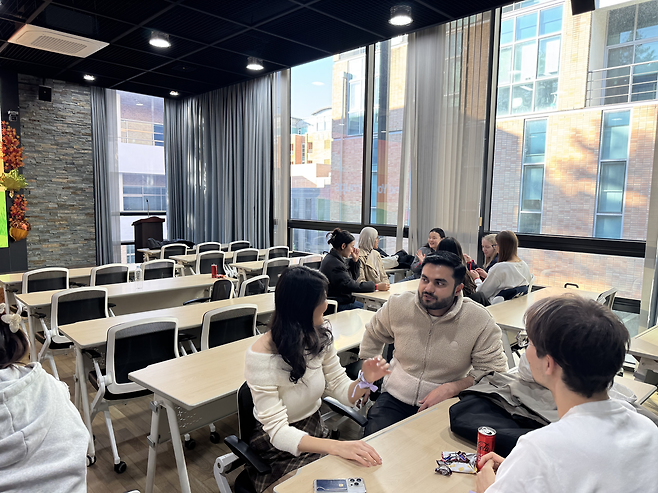
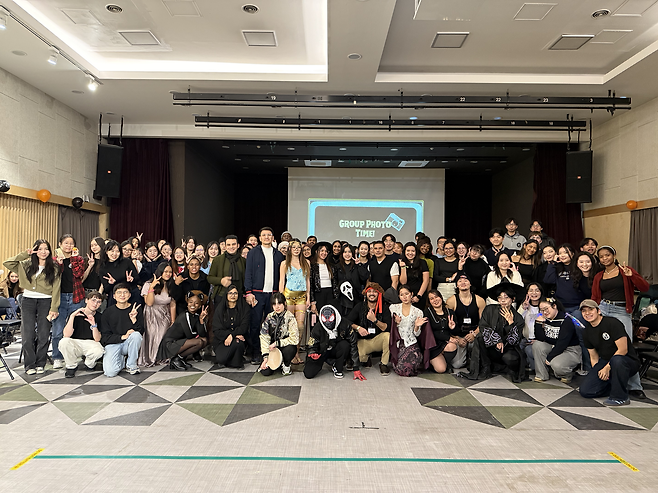
A cheerful atmosphere filled a large hall at Seoul National University on Friday as students roamed the aisles in search of their assigned groups. Korean students mingled with their peers from abroad, exchanging hellos, holas and bonjours.
The Language and Culture Exchange event paired international students with Korean students based on their language interests. Through on-campus missions and group activities, participants helped each other learn their native languages while building personal connections along the way.
“If international students think Korean students are uninterested, and Koreans are hesitant to take the first step, we thought, then maybe we should put them in a room together and let them talk,” said Keity Rose Mendes, a 22-year-old engineering student from Mozambique and president of the Seoul National University International Students Association, which organized the event.
Founded in 2007, SISA is funded by the school’s Office of International Affairs, and all international students enrolled at SNU automatically become SISA members.
“Until now, most of our work has been in accommodating international students,” said Josephine Linfred, an international student from Indonesia and a member of SISA’s leadership.
“In the department, you have MTs and freshmen welcome events. There are probably five international students in one batch per department, maximum, and that might make them feel nervous. … They may not have anyone to go with, or they just might not relate to the Korean students,” the 21-year-old said. “We hold similar events that they can enjoy with other fellow international students.”
MTs, short for the Konglish phrase "membership training," are socializing events held by students in Korea, often lasting for two days at a remote location.
This semester alone, SISA has hosted a welcome party, held a Halloween celebration, and distributed midterm gift packs -- while offering English-language guidance on SNU student clubs, scholarships, internships and campus life.
Representing a growing community
South Korea is increasingly turning to foreign students to offset shrinking university enrollments and a rapidly aging society. The Education Ministry aims to attract 300,000 international students by 2027 -- equivalent to 10 percent of national university enrollment. As of July 2025, 253,000 international students were already studying in the country, according to the Ministry of Justice.
SNU -- South Korea’s top university -- is known for enrolling relatively few international students, but it has gradually increased its intake. In October 2024, it had 1,795 international students -- around 4 percent of its student body -- up from 1,269 students (roughly 3 percent) in 2019, but still far below its peers. Yonsei University has 5,449 international students (16 percent), and Korea University has 5,421 (16.8 percent).
Yet students say that despite the welcome mat, the house is still hard to live in.
“Korea is getting an inflow of international students, but keeping them is also very important,” said Mendes.
Since arriving from Mozambique in 2023, Mendes said she has witnessed widespread struggles among international students -- from everyday logistics to navigating university requirements.
“As an international student, if you don’t have a system that is supporting you, it’s very hard to navigate things like ordering food online or having a Korean bank account,” she said. She pointed to institutional hurdles including securing housing, accessing health insurance and obtaining the Alien Registration Card -- which can take weeks to process and delay basic things like opening a bank account.
“Some people are lucky enough that they come to Korea when they already have a Korean friend … but some come here, and they don’t know anyone. And it’s quite difficult.”
SISA’s vice president, Hugo Adam from France, spoke to academic accessibility issues. Many administrative tasks remain difficult because university websites often lack full English-language support.
The language barrier deepens once coursework begins. Graduate students must pass the Thesis Submission Qualification Exam -- typically offered only in Korean -- before writing their thesis.
“I know a lot of students who request more English classes, especially those that are required to get your degree,” said Linfred. “There is this paradox of having not enough international students because there are no English classes, but there are no English classes because there are not that many international students.”
As of 2022, only 8 percent of SNU courses were taught in English.
SISA’s expanding role
With SNU expected to enroll even more foreign students, SISA says its mission is shifting.
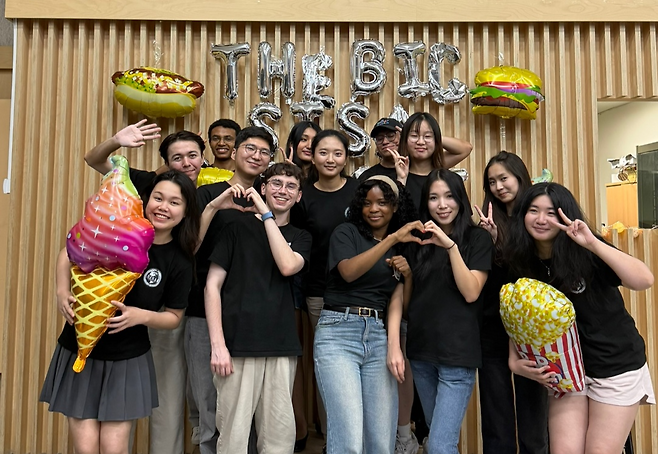
“We are trying to create a bridge (between international and local students) so that we are able to cooperate,” said Mendes.
Adam echoed that sentiment. “People reach out to us whenever they have a problem,” he said, noting cases of students struggling with dormitory rules or joining clubs. “Ultimately, we are trying to be the bridge between Koreans and international students.”
The group is increasingly working with SNU’s student government bodies. Recently, the Student Council asked SISA to outline key concerns for international students -- including a shortage of English-language courses, limited career and academic support, few opportunities to socialize with Korean peers, and insufficient halal or vegetarian dining options.
Though SISA leaders say they are encouraged by this outreach, they argue that real progress requires international student voices in decision-making.
“Their main problem was that they had no foreigners on their team. They didn’t know what problems there were,” said Mendes. “(We told the student council) you can keep coming to us to ask questions, but it would be better if we actually collaborated.”
SISA is preparing to pursue more formal engagement with administrators next year.
“Before I became SISA president, I thought SISA could solve all of the international student’s problems. It wasn’t until I realized that SISA was limited to what the OIA can do, and they are only in charge of international affairs,” Mendes said. “We want to start negotiating (with the administration) next semester.”
“Until now, most of our work has been more in accommodating international students,” said Linfred. “(But we want to) actually represent international students towards making change.”
"(We are) trying to work hard to gain more recognition," Linfred added.
Copyright © 코리아헤럴드. 무단전재 및 재배포 금지.