Walks, talks, and turning pages: The special book club that drew 2,300 readers
이 글자크기로 변경됩니다.
(예시) 가장 빠른 뉴스가 있고 다양한 정보, 쌍방향 소통이 숨쉬는 다음뉴스를 만나보세요. 다음뉴스는 국내외 주요이슈와 실시간 속보, 문화생활 및 다양한 분야의 뉴스를 입체적으로 전달하고 있습니다.
Following novelist Han Kang’s receipt of the Nobel Prize in Literature in 2024, a “text hip” craze, where reading books is seen as culturally stylish, has swept through Korea. At the Seoul International Book Fair in June, all 150,000 early-bird admission tickets sold out in advance. Events across the country, including the Seoul International Writers’ Festival and Literature Week, drew huge crowds. Amid this unprecedented surge in interest in books, a nationwide book club involving more than 2,300 participants has drawn significant attention: the “Reading Korea Book Club.”
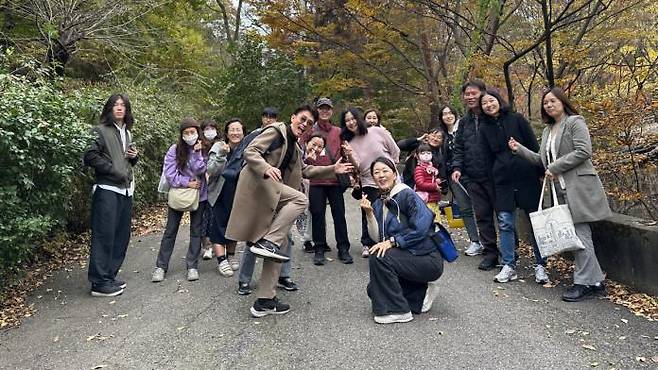
The Reading Korea Book Club is a program hosted by the Ministry of Culture, Sports and Tourism and organized by the Publication Industry Promotion Agency of Korea. Under the slogan “Reading is a journey, and book clubs are your companions,” the program ran from April to October, bringing together 2,307 participants across the country. Applicants were grouped into 10 themes, work life, arts and literature, entrepreneurship and challenges, science and big data, and more. Each group was assigned a mentor, including cognitive psychologist Kim Kyung-il for the work life section, producer Kim Min-sik for entrepreneurship, poet Jeong Ho-seung, and announcer Jeong Yong-sil.
Mentors recommended reading lists for their respective categories. Writer Song Gil-young, author of “Forecast for an Era: The Age of the Hyper-Individual,” recommended books such as “Thinking Machine: Jensen Huang, Nvidia, and the World's Most Coveted Microchip” and “Don't Trust Your Gut: Using Data to Get What Your Really Want In Life.” Poet Jeong Ho-seung suggested works including “Dawn of Labor” and “Words of Lee O-young.” Book club members completed reading challenges inspired by the mentors’ selections, verifying their participation through reading journals, handwritten excerpts, reviews, photos, and other formats. Participants received “Book Coins (B),” which could be exchanged for rewards such as digital gift cards. On average, members recorded 30 challenge submissions each, indicating remarkably active engagement.
Within the community, members freely shared reading impressions, book recommendations, and feedback on mentor lectures through open chat rooms and online forums, forming a reader-led community. Because the program aimed to make reading a natural part of daily life rather than a formal academic discussion, mentors and participants interacted in an easygoing, welcoming atmosphere.
Mentors also held monthly lectures and engaged with citizens directly. Producer Kim Min-sik, for example, led a “literary trail tour,” visiting the Yoon Dong-ju Literature Museum, Cheongun Literature Library, and other literary sites with participants. Members said the program helped them reflect on the importance of reading. “When you want to learn and grow, the easiest path is reading,” Kim said. “People learn many things through YouTube, but videos don’t give you time to think. Reading gives you space to pause and organize your thoughts. I’ve always been concerned about the decline in reading, so I’m glad this program gave people a chance to return to books.”
At the “Reading Korea 2025” event held in September at Seoul Children’s Grand Park, outstanding book clubs and individual participants were recognized. Over the three-day event, an outdoor library stocked with about 1,000 books was set up, and booths connected to various fields, including webtoons, web novels, gaming, and storytelling, were installed. Programs such as the “Book Mentor Relay Lectures,” “Meet-the-Writers,” “Reading Olympics,” and “Book Tower Challenge” drew enthusiastic participation.
Although the book club program concluded last month, several Reading Korea events remain open to the public. One is “Book Talk Wednesdays,” a mileage campaign encouraging people to communicate around books every Wednesday. Participants who log in through the campaign website and verify activities, such as visiting a library or submitting reading impressions, earn mileage points. The first 4,000 people to reach 10,000 points will receive book vouchers. The campaign runs until November 30. The free digital reading service “Onbookbang” will be available until December 31. Registered users can borrow up to three e-books and two audiobooks per month through its website.
While Korea has had one-off reading campaigns in the past, this year’s multi-month book club program was unprecedented in scope. As a pilot program with strong public interest, Reading Korea is expected to continue in various formats in the coming years. A Ministry of Culture official said, “Based on the results from this year, we plan to work with the publishing industry next year to create programs that allow even more people to enjoy reading.”
※This article was translated by an AI tool and edited by a professional translator.
Copyright © 경향신문. 무단전재 및 재배포 금지.
- 31세 명문대 공학도, 왜 총을 들었나···트럼프 만찬장 총격 사건 용의자는 누구?
- 행사 30분 만에 ‘탕, 탕’…트럼프, 대피 중 바닥에 주저앉기도
- ‘순방 복귀’ 하정우, 다가온 결단의 시간…평택을 조국 대항마는 이광재냐 김용남이냐
- 동해서 승용차끼리 충돌···모닝 탑승 70대 운전자·80대 남편 사망
- ‘협상의 달인’ 이란엔 안 먹혔다···트럼프의 ‘윽박지르기 기술’ 한계 드러내
- 1시간59분30초···케냐 사웨, 마라톤 인류 역사상 첫 '꿈의 기록' 밟았다
- 29명 목숨 앗아간 제천 화재 참사 29억 위로금···우여곡절 끝에 지급
- [오토 차이나 2026]“봐도 봐도 끝이 없다”…축구장 50개 크기 공간서 펼쳐진 전기차 기술의 향연
- 낚시·조개잡이 관광용 전락한 ‘인천공항 자기부상열차’···타는 승객도 없다
- 김병민 정무부시장 등 오세훈 참모들 서울시 떠난다···“본격적인 선거운동 돌입”