Korea’s digital competitiveness falls nine notches in 2025
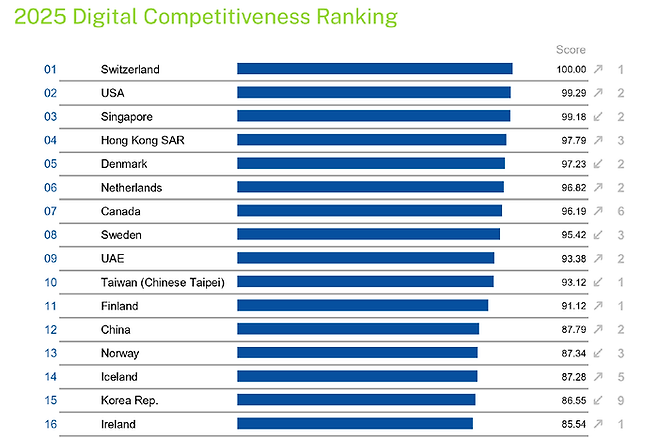
The Institute for Management Development in Switzerland released its 2025 World Digital Competitiveness Ranking on Sunday, placing Korea at 15th. The country tumbled 9 spots from 6th the previous year.
Korea had climbed into the top 10 in 2022, rising from 12th in 2021 to 8th, and held 6th place in both 2023 and 2024. This year’s assessment, however, showed the country near the bottom among 69 surveyed economies in talent and regulatory conditions.
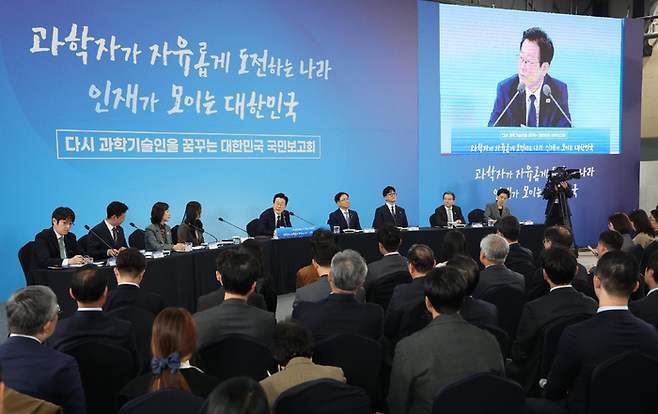
In 2022, the Korean government announced a national digital strategy and pledged to raise the country to 3rd place in the IMD index by 2027. This year, it set goals to become one of the world’s top 3 AI powers and top 5 science and technology nations and rolled out regulatory and talent development measures. The latest decline, however, is seen as a major setback that calls those ambitions into question
Switzerland topped the global ranking, up one notch from last year. It was followed by the U.S., Singapore, Hong Kong and Denmark. In Asia, Taiwan placed 10th, down one spot, while China moved up two spots to 12th. Japan rose one spot to 30th.
The report also found that AI literacy skills considered essential for future generations, particularly creativity and problem solving among elementary and secondary students, were significantly low. The findings pointed to an urgent need for stronger education in those areas.
“The AI race is shifting from a technology contest to a competition between national systems built around talent,” said Yeo Yeong-jun, associate research fellow at the National Assembly Futures Institute. “Korea needs to move beyond short-term workforce programs and adopt sustainable talent policies that support long-term development.”
Copyright © 매일경제 & mk.co.kr. 무단 전재, 재배포 및 AI학습 이용 금지
- 오늘의 운세 2025년 11월 17일 月(음력 9월 28일) - 매일경제
- 125원짜리 동전주가 60만원 국민주로…역전 드라마는 계속된다 - 매일경제
- [단독] ‘658대 1’ 경쟁률 조작 의혹에 하자 논란까지…‘청라 아이파크’ 소유주들 집단 반발 -
- “20일 새벽잠 다 잤다”…‘이 회사 실적발표’에 전세계가 긴장한 이유 - 매일경제
- “중요 순간마다 돌발 메시지”...장동혁 대표 행보에 당내 ‘부글부글’ - 매일경제
- “처음엔 운동하는 줄 알았는데”…산책중 시신 발견한 배정남이 49일간 한 일 - 매일경제
- AI거품 논란에도 버핏은 6조원 베팅…엔비디아 실적이 ‘분수령’ - 매일경제
- 아파트는 ‘거래절벽’, 오피스텔은 ‘활짝’…10·15 대책 후 거래량 2.6배↑ - 매일경제
- “등산 중인데 갑자기 친구가 사라졌어요”…3시간만에 찾아냈지만 - 매일경제
- 끝까지 포기하지 않았다!…류지현호, 9회말 2사 후 김주원 동점 솔로포 앞세워 日과 7-7 무승부 - M