Koreans feel economy is at its worst since 2020, despite positive data
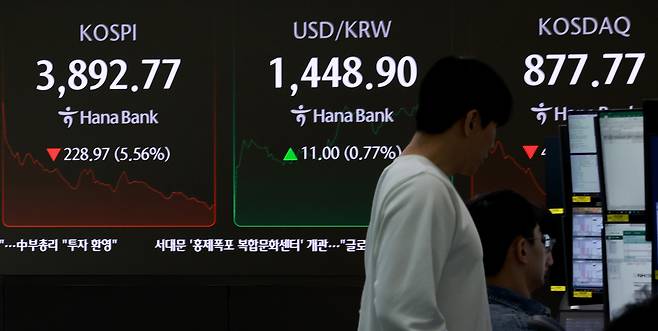
An annual survey released Thursday showed that South Koreans' assessment of the country's economy is at its worst since the inaugural study in 2020, despite the recent key indexes indicating growth.
The average score for the South Korean economy was 3.88 out of 10, in the annual survey conducted on 1,000 people by the non-government research facility Center for Social Value Enhancement Studies. It marked a significant decrease from 5.13 in 2020.
This was in contrast to the September report by the Bank of Korea that the country's gross domestic product marked a 0.7 percent growth in the second quarter of this year, compared to the same period in 2024. Gross national income marked a 1 percent on-year growth, which was the highest since Q1 last year.
The respondents' score on the "negative impact that social problems have on personal life" also was the highest-ever, at 6.97, compared to 6.54 in 2020.
While not as dramatic a change compared to other categories, the respondents' happiness index was 6.34, down from 6.54 in the previous year. But the percentage of those who said "I don't have anyone else to depend on" more than doubled from 4.1 percent in 2024 to 9.8 percent.
"Economic indexes are showing signs of recovery, but the learned helplessness (of Koreans) is not getting much better. There needs to be an expansion of social capital that can change the negative perception of the people," Na Suk-kwon, the president of CSES, said.
Social capital refers to the value derived from positive connection between people, involving effective functioning of social groups through interpersonal relationships, shared idea and values and such.
In addition to the perception on national economy, the report indicated that Koreans tended to underestimate their own wealth. Some 39.5 percent of respondents perceived themselves as middle-class, which was far less than the actual percentage of middle-class (59.3 percent) in 2023 announced by the Statistics Korea in May.
The Organization for Economic Cooperation for Development defines middle-class income households as earning between 75 percent and 200 percent of the median national income.
The tendency to undervalue one's own wealth has been observed persistently in Korea, including a 2022 report by the NH Investment and Securities that showed that 45.6 percent of the OECD-defined middle-class people thought that they were in the lower class.
Copyright © 코리아헤럴드. 무단전재 및 재배포 금지.