From prayers to photocards: The many rituals of Suneung season
With just a week left until South Korea’s College Scholastic Ability Test, or the notorious Suneung, anxiety is mounting nationwide.
On Nov. 13, over 550,000 will sit for the grueling eight-hour exam, widely regarded as a life-defining moment that would determine university admissions and, by extension, shape the course of many young Koreans’ futures. A total of 554,174 students, including repeat test-takers, have registered to take the exam, according to the Korea Institute for Curriculum and Evaluation.
As the countdown begins, stress is reaching its peak. But not all preparations involve late-night study marathons. From temple prayers to idol photocards, both students and parents are finding their own ways to cope before the big day.
Tokens of luck
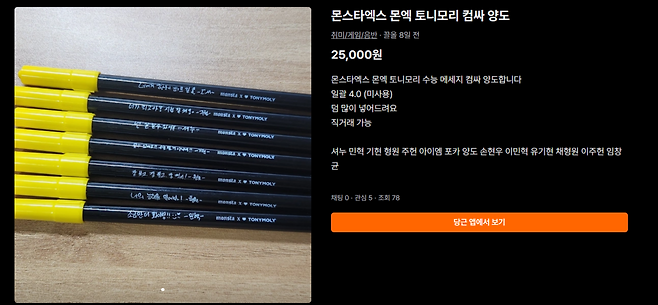
A post on Karrot, South Korea’s top peer-to-peer marketplace, recently sold a set of seven felt-tip pens — used to mark answers on the exam — for 25,000 won ($18). Each pen featured cheerful encouragements from members of the K-pop boy band Monsta X.
"You can do it! Suneung is nothing big. - Kihyun," read one message printed in the singer’s own handwriting.
On Bungaejangter, another secondhand sales platform, typing "Suneung" in Korean brings up dozens of posts offering idol photocards marketed as good-luck charms.
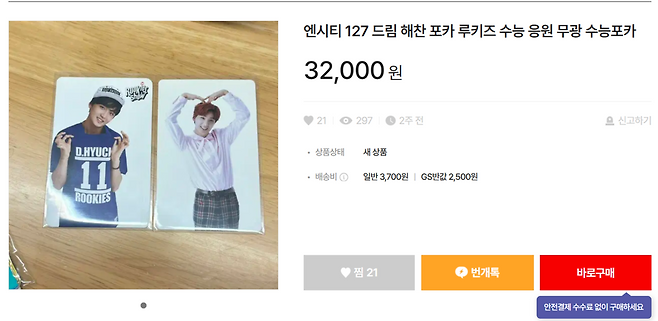
One listing showed NCT 127's Haechan, making a heart over his head, and dressed in a ribboned shirt and striped pants. On the back of the card was his signature and a message: "The answer you don't want to miss!" The single photocard was priced at 32,000 won.
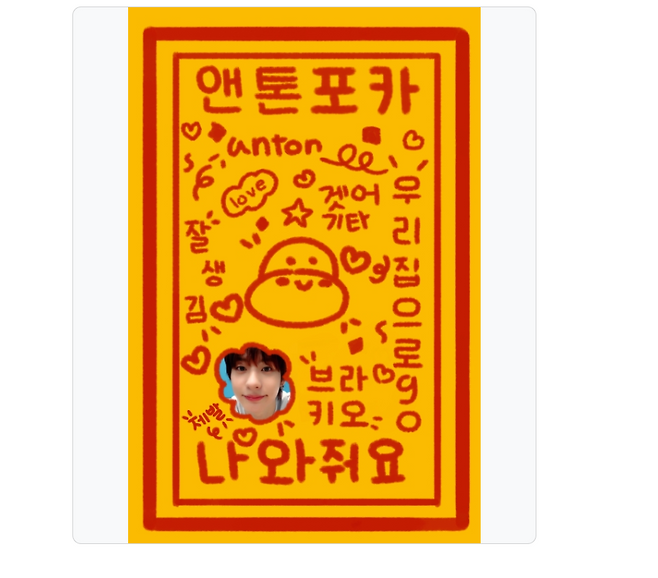
Some students have gone a step further, sharing printable photocards styled after traditional paper talismans, or bujeok, used by Korean shamans. These yellow amulets feature their favorite idol’s image surrounded by red lettering praising them as "handsome."
Others prefer idols with academic prestige. Cha Eun-woo of Astro, who graduated from Sungkyunkwan University, ranked fourth in Korea according to QS Rankings, is a popular choice among test-takers hoping his success rubs off.
The trend of carrying K-pop-themed charms and stationery as exam-day rituals has taken off since the early 2020s, serving as both superstition and stress relief.
"I’m dying because I love (NCT’s) Jaemin. I should probably get a photocard of him for Suneung," one test-taker wrote in an Oct. 27 post on X.
"If I take 5 million photocards of (SF9’s) Insung, maybe I’ll get into Kyunghee University," joked Kang Soo-min on X, referencing Insung’s alma mater.
Kang, a high school senior living in Jeju, has been a fan of SF9 since May. "We take photocards of idols who went to top universities because these are like our versions of talismans," Kang told The Korea Herald.
Kang said she had prepared seven SF9 Insung photocards for the exam. "Insung graduated from Kyunghee University's communication department. Looking at photocards of my favorite idol during Suneung and other tests takes the pressure off."
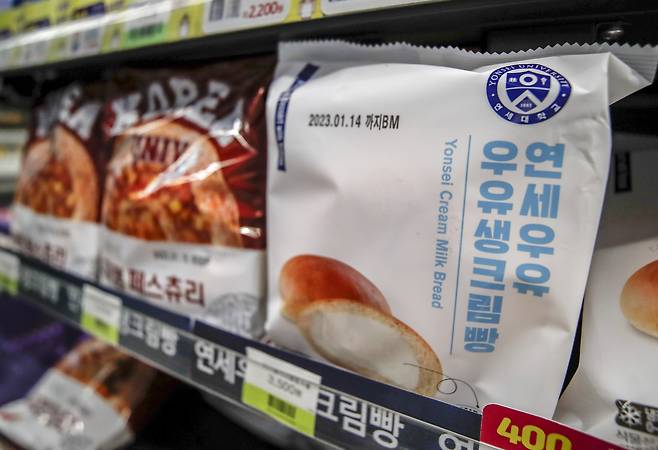
The enthusiasm for Suneung merchandise extends beyond K-pop. Chocolate bars bearing the Seoul National University logo and cream bread wrapped in Yonsei University branding have become popular snacks. Secondhand university letterman jackets from elite schools are another favorite. Worn as exam-day attire, they are believed to bring good fortune.
Prayers for success
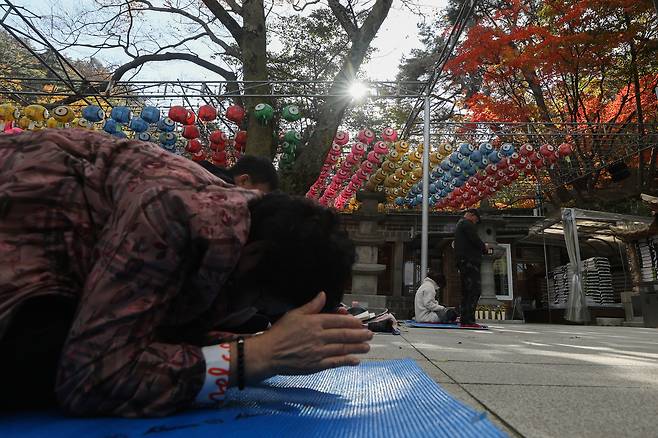
While students find comfort in pop culture, parents often turn to faith.
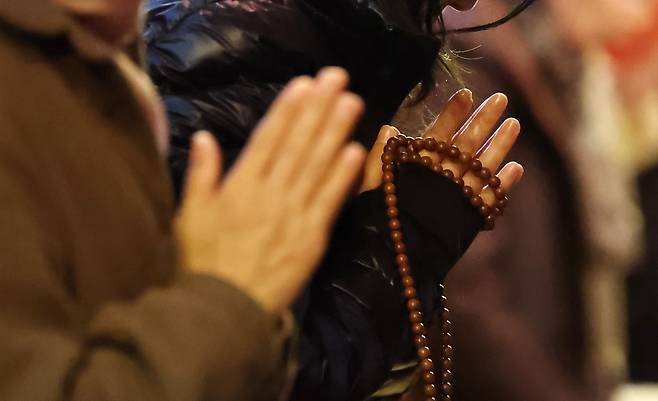
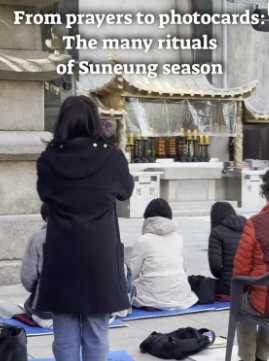
At Doseonsa in northern Seoul, lines of mothers and grandmothers gathered in Monday's chilly weather to bow, light candles and offer prayers for their children’s success.
Built in 862, the temple has become one of the country’s most popular sites for Suneung prayers, believed to rest on land with auspicious feng shui. Over the years, it has drawn figures such as former first lady Yuk Young-soo and Hyundai founder Chung Ju-young. Unverified tales of worshippers whose children went on to top universities only add to its mystique.
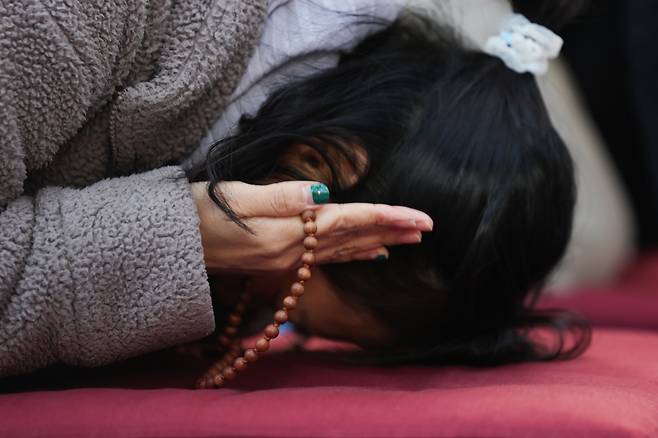
For 100 days leading up to the exam, parents hike up the mountain daily, bow 108 times before a Buddha statue, and light candles inscribed with their children’s names.
"I’ve been coming here since early August," said Kim Mi-hwa, a 47-year-old mother from Seongbuk-gu, northern Seoul, who had sat through a one-hour prayer session. "I pray that my son scores well and gets into a good university. I want him to live a life where he can do what he loves while fulfilling his duties."
Across the country, similar rituals unfold at Buddhist sites: from Daegu's Gat Bawi, a Buddha statue shaped like it wears a gat (a traditional nobleman’s hat), to a temple with 1,000 Buddha statues in Gongju, South Chungcheong Province.
Some pilgrimage sites carry historic weight. In Goesan, North Chungcheong Province, parents call out their children’s names as they walk a dirt path once trodden by Joseon-era scholars en route to the capital, then known as Hanyang, to take the state civil service exam.
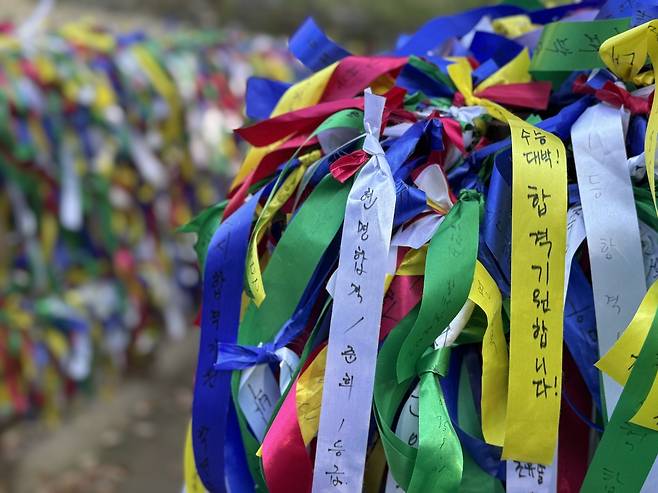
In Anseong, Gyeonggi Province, Chiljangsa draws crowds to its bridge, said to have been crossed by Park Moon-soo. The famed 18th-century scholar dreamed of Buddha revealing the exam questions after praying at the temple, and later passed with flying colors.
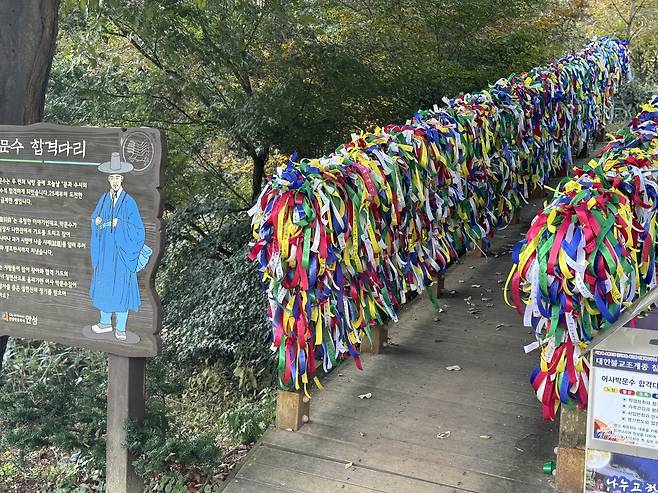
Centuries later, the legend still inspires parents who hope their children will follow in his footsteps. Parents write their wishes on ribbons, then tie them to the bridge. The ritual is only complete once they cross it, following Park's footsteps.
"I hope for a successful Suneung. Don't get nervous," one ribbon read.
"I hope my daughter just gets into any university," another read.
Lee Tae-heon, a 52-year-old father living in Seongbuk-gu, Seoul, visited Chiljangsa on Tuesday. Crossing the bridge with his wife, he tied a ribbon to cheer their daughter on.
"I came in the hopes that my daughter scores well in this year's Suneung," Lee told The Korea Herald.
Lee and his wife said they had been traveling all over the country, visiting popular prayer sites among parents.
"Last week, we were at Yongmunsa in Yangpyeong, (Gyeonggi Province). We also went to Daegu's Gat Bawi and Ganghwa's Bomunsa."
"We just hope the best for our daughter," Lee added.
Copyright © 코리아헤럴드. 무단전재 및 재배포 금지.