Tropical mosquito species found on Korean Peninsula for 1st time ever
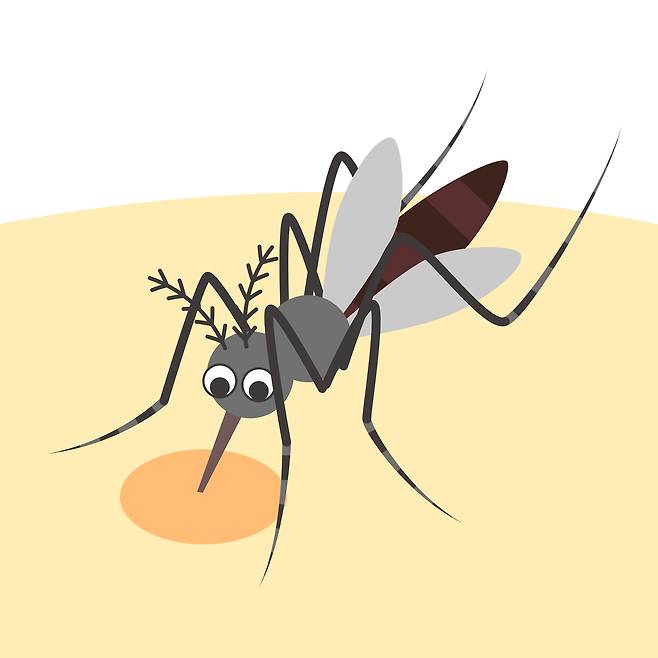
Commonly known as the southern house mosquito, the species Culex quinquefasciatus was recently found on Korea's southernmost island of Jeju, the first time this particular species has ever been found in the country.
The Korea Disease Control and Prevention Agency said Monday that the mosquito samples collected in August on Jeju Island included the southern house mosquito, a species that normally lives in tropical or subtropical regions of the world. It belongs to the C. pipiens species complex -- which includes the common house mosquito found in Korea, other parts of Asia, as well as Europe and Africa -- but live in areas that are warmer than Korea.
It had been listed as a Korea-dwelling species in a 1956 research paper, but this is the first time the presence of the southern house mosquito has been confirmed. The KDCA said the mosquito was found in several regions of Jeju, suggesting that it has established a viable habitat.
The samples were collected as part of the government's monitoring process for infectious disease transmission.
"Exactly how (the mosquito) came here is unclear, but it appears that Korea has now become a habitable environment for the southern house mosquito. We will check whether this species has reached territories other than Jeju Island in the next monitoring season," said a KDCA official.
The Ministry of Climate, Energy and Environment's 2023 report on climate change in Korea said that the country's average temperature rose by 1.6 degrees Celsius from 1912 to 2020 -- a faster rate than the approximate world average of 1.09 C in the same period.
The southern house mosquito is a vector of several human-affecting diseases, including West Nile virus. However, West Nile virus is already carried by other mosquitos living here, and no infections have been reported on Korean territory.
The KDCA said the presence of the new mosquito species does not necessarily mean a greater risk of West Nile virus, just that the authorities have one more vector to keep an eye on.
Copyright © 코리아헤럴드. 무단전재 및 재배포 금지.