Trump–Xi at Gyeongju APEC: The Search for a Trade Truce amid a Fortress Without Isolation
이 글자크기로 변경됩니다.
(예시) 가장 빠른 뉴스가 있고 다양한 정보, 쌍방향 소통이 숨쉬는 다음뉴스를 만나보세요. 다음뉴스는 국내외 주요이슈와 실시간 속보, 문화생활 및 다양한 분야의 뉴스를 입체적으로 전달하고 있습니다.
The much-anticipated Trump–Xi summit will soon take the stage at APEC in Gyeongju, Korea, overshadowing all other events. The eyes of the world will turn to this encounter not because of ceremonial diplomacy, but because the relationship between these two powers now defines every contour of the global political and economic order, touching nearly every person’s daily life on earth--a single hair pulls the whole body(牵一发动全身).
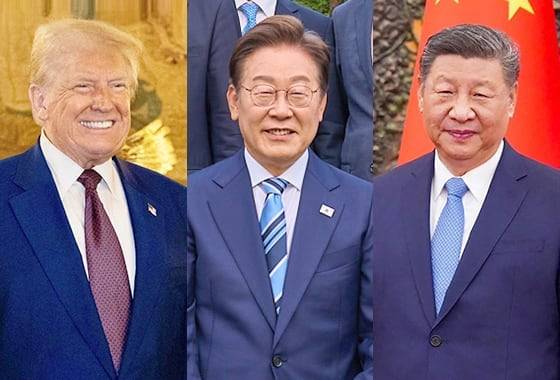
What is certain, however, is that the summit will not produce a grand bargain. The United States and China are locked in a deepening trade war and teetering at the edge of a cliff of escalation. Tariffs and counter-tariffs have become the new normal, while each side weaponizes critical resources and technologies. The precariousness is palpable: the U.S. threatens to extend its export controls on advanced semiconductors and AI-related hardware, while China’s response has been to tighten its rare earths export restrictions—a move that rattled not only Washington but also Japan, South Korea, and Europe. Both economies are under pressure at home: inflation and industrial contraction in the U.S., stagnation and unemployment among China’s youth. The world economy now stands like a tightrope walker between confrontation and collapse. Neither side can afford to jump, and both must find a way to pause. The APEC meeting, therefore, is less about reaching a “grand deal” and more about achieving a ceasefire—a trade truce to stabilize expectations and buy time until next year’s reciprocal state visits, when the political atmospherics might permit negotiations toward a grander, more comprehensive agreement.
President Xi comes to Gyeongju fresh from a milestone meeting in Beijing—the Fourth Plenum of the 20th Central Committee—which endorsed the broad outlines of China’s Fifteenth Five-Year Plan. The plan marks the institutional codification of a strategy Xi has been constructing since his consolidation of power: a model best described as a “fortress without isolation.” As articulated in the plan, this strategy rests on three interlocking priorities—high-level technological self-reliance, enhanced domestic circulation, and strengthened Party control coupled with national security enforcement. Together, these principles aim to make China shock-resistant while keeping its global engagements flexible and selective.
The “fortress” denotes the building of internal resilience: securing domestic supply chains, substituting imported technologies, and hardening political control to absorb external shocks. The “without isolation” clause means Beijing does not intend to close itself off from globalization but to reshape it, ensuring that openness serves Chinese interests rather than exposing vulnerabilities. Xi’s goal is not autarky but autonomy within interdependence—a China that cannot be easily coerced yet remains indispensable to the global economy.

In Xi’s logic, technological sovereignty equals regime security. U.S. export controls have turned chokepoints in semiconductor manufacturing, design tools, and rare materials into existential political challenges. Hence, the emphasis on “new-quality productive forces”—a phrase referring to frontier technologies and high-skilled human capital—and the drive for domestic innovation ecosystems. At the same time, the “enhanced domestic circulation” agenda aims to make the Chinese market itself the central engine of growth, capable of sustaining innovation and demand even when external conditions deteriorate. To support these ambitions, governance must be centralized and Party discipline intensified. Anti-corruption campaigns, data-security laws, and ideological education are all meant to ensure coherence and command. Beijing’s message is clear: China’s rise will no longer depend on Western benevolence but on its own mobilized system of control and innovation.
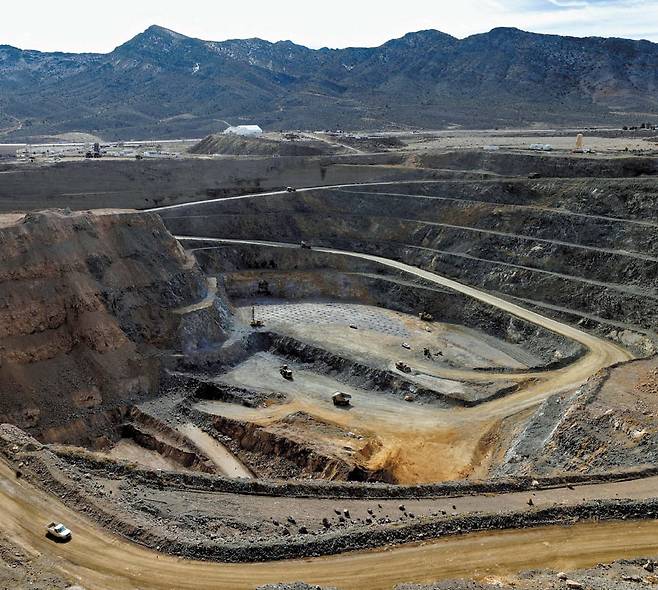
This grand strategic backdrop defines how Xi will approach his meeting with Trump. Unlike Washington’s fluctuating positions, Beijing plays the long game. Every concession, even a tactical one, must fit within the architecture of the “fortress without isolation.” The fortress Xi envisions is not a solid wall; it has gates—movable, adjustable, and calibrated to China’s strategic needs. To keep those gates open, Xi will likely make concessions on rare earth export controls. Doing so is not only a pragmatic gesture toward the U.S. but also a rational decision to prevent the fortress from turning into a self-imposed prison. China controls roughly 90 percent of the global supply of rare earth elements—materials essential to everything from smartphones and electric vehicles to missiles and satellites. When Beijing announced new export restrictions last month, panic rippled through APEC economies. Japan, South Korea, and even Australia scrambled to secure alternative supplies. India and Brazil saw opportunities to enter the market but acknowledged they would need years of investment to match China’s scale. If Xi were to insist on a hardline embargo, it would backfire, alienating trading partners and shrinking China’s own export revenues. Hence, a calibrated relaxation serves both economic and strategic interests: it signals flexibility without weakness, and it buys time for China’s technological and domestic-consumption transition.
That time is precisely what Xi needs. Building self-reliance in science, technology, and domestic demand cannot be accomplished overnight. During this transition, exports must remain a pillar of China’s economy, and access to foreign high-tech supplies—especially in chips, lithography, and precision tools—must not be completely severed. Therefore, Xi will use the APEC platform to exchange concessions: rare earth flexibility and renewed purchases of U.S. soybeans in return for tariff relief and easing of export controls. Soybeans may seem trivial, but their political symbolism is potent. China’s boycott hurt American farmers and triggered political backlash in key Midwestern states, while alternative suppliers such as Brazil struggled to meet China’s enormous demand. The interdependence is real; neither side can fully decouple without pain.
President Trump, for his part, arrives in Gyeongju with both opportunities and constraints. The tariffs he has vowed to impose on Chinese imports are politically popular but economically unsustainable. They raise costs for American consumers, strain manufacturers, and invite retaliatory measures that hurt U.S. exporters. Like Xi, Trump needs to buy time—time to stabilize supply chains, to attract investment into “friend-shored” production, and to show voters that his tough stance on China yields tangible gains. Despite recent agreements with allies such as Australia to secure critical minerals and rare earth supplies, experts estimate it will take at least one to two years before alternative supply chains can meet even a fraction of global demand. Until then, the United States remains dependent on Chinese materials for crucial technologies, from electric vehicles to F-35 fighter jets. A sudden cut-off would be disastrous.
Hence, Trump too must compromise. He can afford to moderate tariffs and relax certain technology restrictions in exchange for Chinese purchases and assurances. The irony is that both leaders, while posturing as strongmen, are constrained by economic realities that force them toward accommodation. Yet Trump now enjoys a few strategic advantages he lacked when he launched his all-out trade war earlier this year. First, U.S. markets have become more resilient to tariff fluctuations, giving him greater domestic leeway. Second, Washington has successfully negotiated trade agreements with several key partners—including Japan and Mexico—reducing the perception of U.S. isolation. Third, China’s rare earth restrictions have antagonized a wide range of APEC members, from Australia to Chile, making it easier for Trump to assemble a coalition supportive of coordinated countermeasures. These developments provide the U.S. with enhanced leverage to shape a collective response to Beijing’s economic coercion.
Still, America’s greatest vulnerability remains the personalization and transactionalization of its China policy. When decisions hinge on presidential moods rather than strategic frameworks, alliances become fragile. The U.S.–China rivalry is too consequential to be governed by impulse. Washington must avoid the pettiness that derailed past cooperation with Canada or alienated South Korea over minor disputes. At APEC, coalition-building should be the central task. After all, roughly 37 percent of the world’s population lives in APEC economies, whose combined GDP accounts for 61 percent of the global total. It is the very heart of Indo-Pacific integration. If handled wisely, this forum offers Trump a unique platform to turn ad-hoc bilateralism into a structured multilateral front.
The logic of coalition-building is straightforward: the stronger the alliance, the more effectively it can compel China to negotiate. If Xi were to persist in deploying the rare earth weapon, Washington’s most potent response would not be unilateral sanctions but coordinated, graduated actions with allies. These could include restricting sales of advanced technologies to key Chinese firms still dependent on Western suppliers; tightening scrutiny on Chinese energy imports from Russia to raise costs of the Sino-Russian partnership; and introducing selective limits on low-value Chinese consumer goods to pressure export-dependent regions in Guangdong and Fujian without provoking global inflation. Such calibrated measures, communicated clearly through coalition channels, would demonstrate unity of purpose without precipitating panic. In essence, the U.S. must turn Beijing’s strategy of “selective engagement” back on itself—using openness as leverage rather than retreating into protectionism.
For Xi, too, coalition dynamics matter. He will seek to prevent APEC from aligning too closely with Washington by courting middle powers—Indonesia, Malaysia, and Mexico—through promises of investment and infrastructure financing. The competition will therefore unfold on two levels: transactional concessions over trade and technology, and ideological persuasion over whose model of openness better serves the region’s prosperity. If Trump’s coalition is cohesive, he can negotiate from strength; if it fractures, Xi will fill the vacuum with his narrative of inclusive globalization under Chinese leadership.
Ultimately, neither side can hope to “win” this confrontation outright. The goal, at least for now, is to manage it—to transform an unstable confrontation into a stable rivalry. A stable rivalry is one in which competition is fierce but predictable, confrontation is tempered by communication, and cooperation remains possible in select domains such as climate, public health, and technology standards. For both leaders, the APEC meeting offers a chance to restore that equilibrium. A fragile truce emerging from Gyeongju would not solve the structural rifts, but it could prevent escalation while both countries recalibrate their domestic priorities.
Gyeongju may mark a modest but meaningful turning point. A world perpetually on the verge of decoupling cannot thrive. What the world needs, and what the Trump–Xi meeting may cautiously deliver, is a framework for stable rivalry: a contest sharp enough to drive innovation and discipline, yet stable enough to prevent catastrophe.
Such a balance would not end the U.S.–China struggle. But it would signal the beginning of a new phase—where power is measured not by how high walls are built, but by how wide gates remain open.
Dr. Jianli Yang is a Research Fellow at the Kennedy School of Government at Harvard University. He is the Founder and President of Citizen Power Initiatives for China and author of For Us, The Living: A Journey to Shine the Light on Truth and It’s Time for a Values-Based “Economic NATO.”
Copyright © 조선일보. 무단전재 및 재배포 금지.
- 강원랜드 사칭하니 4만명 모였다… 선 넘은 불법 도박 일당들
- U-17 여자배구, 이탈리아에 패해 세계선수권 최종 6위
- HD현대일렉트릭, 국내 최초 420㎸ 친환경 고압차단기 개발…“유럽 공략 나선다”
- “eSIM 판매해 고수익” 투자자 모은 업체 잠적, 피해자 1400명 넘어
- ‘주택 잠기고 가로수 쓰러지고’… 부산서 비피해 신고 50건
- 김정은, 李 ‘종전 다자논의’ 제안에 무반응…광복절 공연에 주애 대동
- 국내 증시 회귀 정책에 증권사들만 노났다
- “24년 만에 국민연금 나눠달라”… 법원이 전 아내 요구 기각한 이유
- 오늘부터 한미 UFS 연습…야외기동훈련 작년보다 줄어
- 李대통령 지지율 5주째 하락…취임 후 최저 43.0%