Decaf coffee surges in Korea amid wellness trend
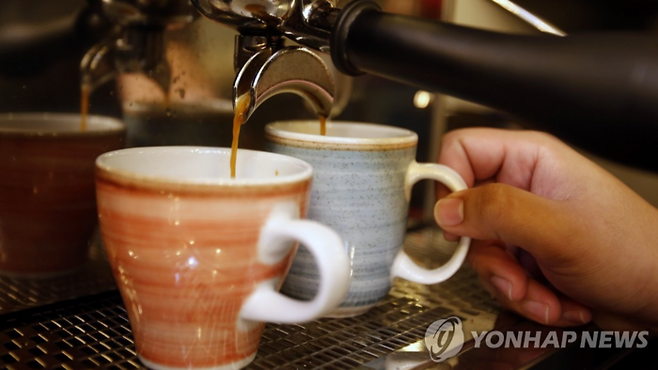
According to industry sources Monday, leading coffee franchises such as Starbucks Korea and Twosome Place have seen decaf coffee sales jump by more than 30 percent from a year earlier, while DongSuh Foods, which commands roughly 90 percent of the nation’s instant stick coffee market, expects its decaf coffee sales to surpass 40 billion won ($28 million) for the first time this year.
DongSuh reported cumulative decaf coffee sales of 29.2 billion won as of September, up 19.5 percent year-on-year. Based on the current pace, the company projects its full-year total to exceed 40 billion won, marking its steepest growth since the launch of its flagship decaf lines, including the Maxim coffee mix and Kanu instant coffee brand.
According to market tracker NielsenIQ Korea, decaf products accounted for 8 percent of Kanu’s total sales this year, up from 6.8 percent last year.
A company spokesperson said demand for decaf products “continues to outpace production,” adding, “as daily coffee consumption rises, more consumers choose decaf to manage caffeine intake and sleep better.”
Demand is equally strong at coffee chains. Starbucks Korea sold 21.5 million cups of decaf coffee in the first half of 2025, up 34 percent year-on-year. “As the number of customers drinking more than one cup of coffee a day increases, awareness and preference for decaf are also rising,” a Starbucks official said.
Twosome Place reported a 32 percent increase in decaf coffee sales during the same period, while budget chain Mega MGC Coffee saw its decaf sales soar 70 percent, reaching 7.5 million cups in the first half alone.
Government data also reflects the boom. According to the Korea Agro-Fisheries & Food Trade Corporation (aT), the value of decaf green coffee bean imports reached $93.1 million as of September, up 73.4 percent from a year ago. Despite higher coffee bean prices due to abnormal weather, import volume also climbed 47.2 percent, confirming genuine demand growth rather than price inflation.
To capture the surging market, brands are expanding product lines and promotions. Starbucks now includes decaf beverages in its “second-cup 60% discount” program, while Twosome Place has diversified its decaf cold brew range, launching Decaf Cold Brew Latte and Decaf Cold Brew Cream Latte in August.
Analysts attribute the trend to Korea’s soaring coffee consumption — averaging 416 cups per person annually, one of the world’s highest — and the growing wellness culture emphasizing sleep quality and balanced lifestyles.
Copyright © 매일경제 & mk.co.kr. 무단 전재, 재배포 및 AI학습 이용 금지
- 오늘의 운세 2025년 10월 28일 火(음력 9월 8일) - 매일경제
- “디카페인으로 할 거면 커피 왜 마시나”…이제 눈치없는 말 됐다 - 매일경제
- “이름부르자 눈 뜨고 눈물”…딸 구하려다 킥보드에 친 중태 엄마에게 일어난 기적 - 매일경제
- D램 1위만으론 만족 못한다…하이닉스, HBM 보완할 ‘괴물 낸드’ 공개 - 매일경제
- “사망 닷새 전 21시간 연속 근무”…‘베이글 성지’서 20대 직원 과로사 - 매일경제
- “안 간다 해도 갈 사람은 다 간다”…납치 불안에도 동남아 여행 인기 여전 - 매일경제
- “오늘만큼은 내가 불장 주인공”…APEC호재로 18%급등한 이 종목 - 매일경제
- 중동 하늘, 이쯤되면 K방산 놀이터…한화 1.5조 ‘만능 레이다’ 수출 - 매일경제
- “그돈에 왜? 쏘렌토·싼타페 사지” 깔봤는데…‘디자인 대박’ 호평에 가성비 굿 [카슐랭] - 매
- 손흥민의 프리킥 골, 2025 MLS 올해의 골 선정 - MK스포츠