Meet the publisher who revolutionized the way books were made and read
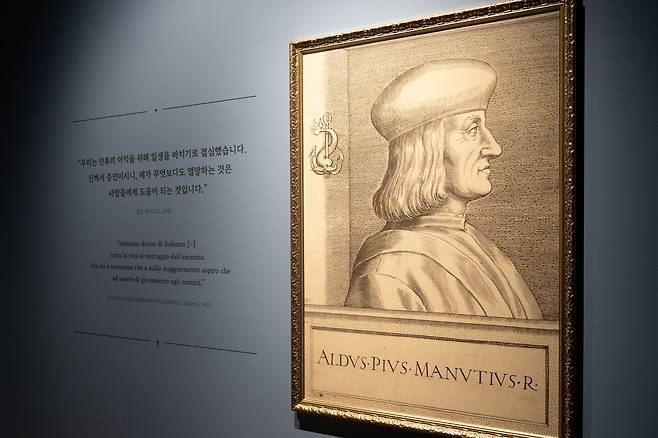
Have you ever wondered when books as we know them today first took shape?
An exhibition at the National Museum of World Writing Systems in Songdo, Incheon, sheds light on this question by introducing Aldus Manutius (1449-1515), the Renaissance publisher who revolutionized the way books were made and read.
Some 50 years after Johannes Gutenberg invented the movable-type printing press in the 15th century, Manutius made books more approachable to the public by reducing their size and improving their readability, Lee Jungyeon, curator of the museum, told reporters during a press conference Friday.
His innovations — including the italic typeface, the semicolon, the apostrophe and the octavo format — not only made books portable but also transformed publishing into a medium for mass knowledge, according to Lee.
Manutius founded the Aldine Press in Venice, where he published classical works and contemporary writings with exceptional craftsmanship, laying the foundation of modern printing. His legacy continued through his son and grandson, who operated the press under papal commission in Rome and the Vatican.
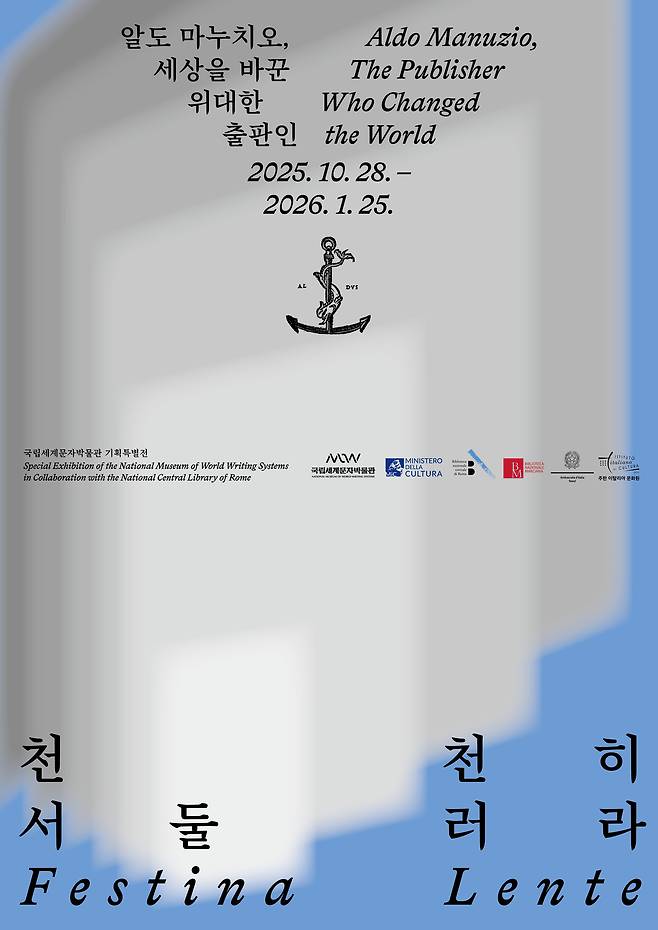
The exhibition, “Aldo Manuzio: The Publisher Who Changed the World,” brings together 53 rare works and artifacts, including the world’s first printed italic type, books with page numbers, and even counterfeit editions that attest to his influence across Europe. It also showcases some of the Renaissance’s most beautiful books, such as “Geography” and a revised edition of Dante’s “Divine Comedy.”
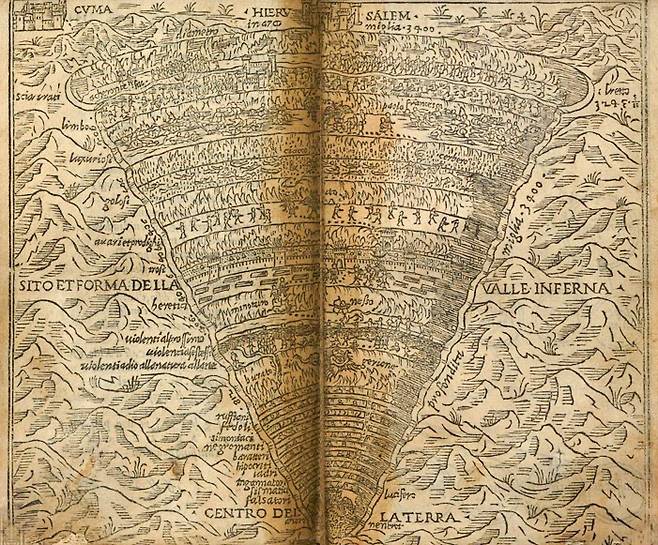
Featuring 53 rare works and artifacts, the exhibition has been organized in collaboration with the Biblioteca Nazionale Centrale di Roma and the Biblioteca Nazionale Marciana in Venice. It runs from Monday to Jan. 25.
Also at the exhibition is a special section curated by 23 Korean publishers, exploring how today’s publishing world continues to evolve.
“We wanted to connect the story that began 500 years ago with the present,” Lee explained. “The democratization of books that started in Aldus Manutius’s time continues to this day, and we wanted to ask whether it still holds meaning in our digital era.
"Rather than offering an answer about the future of books, the exhibition invites visitors to trace the history and influence of print, and then experience e-books and audiobooks side by side. Through this journey, we hope visitors will find their own answer to what the future of reading might be.”
Ahead of the exhibition’s opening, a special lecture titled “Books Across Time: Stories from Italy’s National Libraries” will be held Sunday at 2 p.m. in the museum’s auditorium. The directors of the Biblioteca Nazionale Centrale di Roma and the Biblioteca Nazionale Marciana in Venice will discuss Italy’s publishing heritage and the enduring legacy of Aldus Manutius.
Copyright © 코리아헤럴드. 무단전재 및 재배포 금지.