Korea's homegrown animated gems worth seeking out
Japanese anime has been steamrolling in Korean theaters lately. As of Wednesday, "Demon Slayer: Infinity Castle" sits at 5.47 million admissions through a remarkably resilient two-month run, poised to overtake "Suzume" as Korea's all-time highest-grossing anime. Meanwhile, "Chainsaw Man – The Movie: Reze Arc" has attracted 2.26 million viewers since its Sept. 24 release, maintaining the top spot on the charts for weeks.
The numbers tell a story of complete capitulation — one that has local animation fans yearning for the day when their own industry might produce works that capture audiences with similar force. While that day hasn't quite arrived, Korea's homegrown animations deserve more attention. These three films showcase what Korean animation can achieve as it continues to find its way forward.
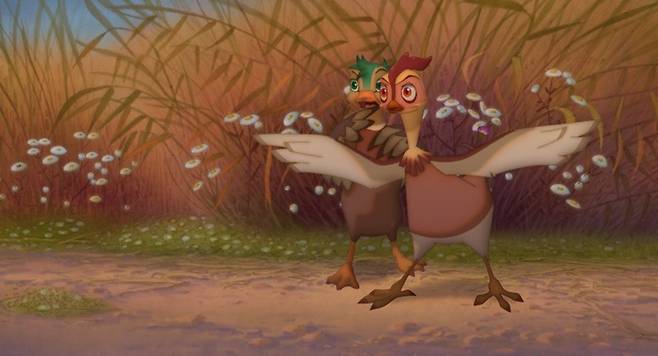
Adapted from Hwang Sun-mi's bestselling children's book, this warmly rendered tale follows a battery hen named Leafie who escapes her cage only to discover that freedom comes with its own steep price. After fleeing the farm, Leafie finds herself caring for an orphaned duckling whose parents have fallen victim to a one-eyed weasel prowling the wilderness.
What could have been treacly children's fare becomes something far more sophisticated and serious in director Oh Sung-yoon's hands. The film doesn't shy away from depicting the unforgiving logic of the wild — predators hunt, loved ones die, and not everyone gets their happy ending. Yet it manages all this without ever feeling preachy or grim, weaving genuine warmth through its meditation on motherhood, identity and belonging.
The film's signature watercolor-inspired visuals got a complete makeover earlier this year using AI technology, bringing new clarity to its already luminous pastoral landscapes. More than a decade after release, it remains Korea's most successful homegrown animation, having drawn 2.2 million viewers — a reminder that local stories can find their audience when they're given the chance.
Available on Netflix with English subtitles.
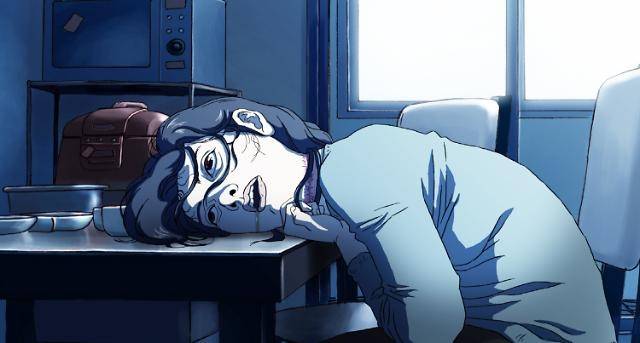
Before Yeon Sang-ho took off as the architect behind the zombie phenomenon "Train to Busan" and became Netflix's go-to for supernatural blockbusters, he was making smaller-scale, hyperrealist animated works grounded in the brutalities of everyday life. This early work of Yeon's, which was invited to screen at Cannes in 2012, marked his emergence as a creator worth watching on the international stage.
The film opens with two friends reuniting after fifteen years, their conversation spiraling into flashbacks of the relentless bullying they endured at school. In Yeon's hands, the classroom becomes a miniature totalitarian system where wealthy kids (the "dogs") terrorize their poorer classmates (the "pigs") with impunity. There's more than a hint of William Golding's classic "Lord of the Flies" in the way these power dynamics play out, though Yeon pushes the violence to genuinely disturbing extremes here.
The deliberately crude aesthetics — all harsh lines and muted colors — amplify the story's unrelenting bleakness. This is Yeon at his most uncompromising, using animation to distill reality into something almost unbearably concentrated. It's uncomfortable viewing by design, a reminder that animation can tackle subjects most live-action films wouldn't dare approach with such unflinching intensity.
Available on Apple TV in select regions with English subtitles.
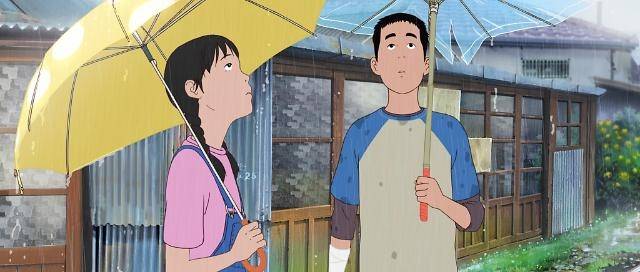
Set nominally in the 1970s but filled with anachronistic details that blur temporal boundaries, this hand-drawn feature operates less like a period piece than a hazy dream of adolescence itself. The story follows Yi-rang, a former relay runner who's given up competition as she navigates first love and friendship in rural Korea.
The retro hand-drawn style leaves an indelible impression. The watercolor palette creates a world that feels both specific and universal, while the deliberately jumbled period details capture how nostalgia operates — not as an accurate historical record but as an emotional collage. It reportedly took the team 11 years to complete the animation, and that patient craftsmanship shows in every lovingly rendered detail.
Co-director Ahn Jae-hoon, a central figure in the local animation scene, would go on to adapt Korean literary classics into animation, bringing works by Hwang Soon-won and Lee Hyo-seok to the screen. That literary sensibility permeates every frame here — the film moves at the unhurried pace of memory, finding beauty in the small, distinctly Korean moments that connect it to those same literary traditions he would later explore.
Available on Korea's local platform Wavve and Apple TV in select regions without English subtitles.
Copyright © 코리아헤럴드. 무단전재 및 재배포 금지.