Chilly like late fall, but trees are still green. What's going on?
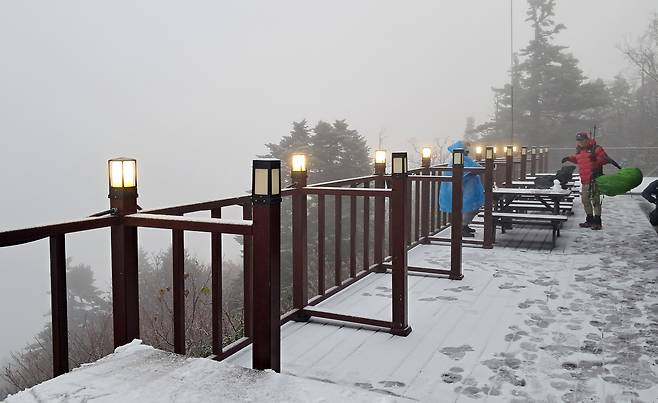
Seoraksan saw its first snowfall on Monday, with temperatures dipping below zero degrees Celsius.
In the cities, people bundled up in scarves and padded jackets as morning temperatures fell two to seven degrees below seasonal averages.
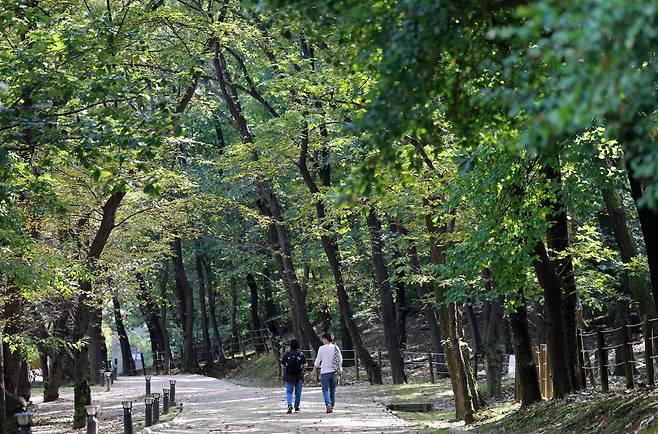
Yet along Seoul’s tree-lined streets, hints of summer still lingered. The maples and gingkoes that usually herald autumn remained stubbornly green.
Autumn in South Korea is famed for its fiery colors, when, by mid- to late October, crimson maples and golden gingkoes transform Seoul’s skyline. But this year, the transformation is running behind schedule.
According to a map released by the Korea Forest Service on Oct. 1, peak foliage on Surisan -- a mountain about 23 kilometers south of Seoul -- is forecast to arrive on Oct. 31, two days later than last year and nearly two weeks later than a decade ago. The agency defines “peak” as the point when 50 percent of the mountain is covered in autumn hues.
“Temperatures need to fall for the chlorophyll in leaves to break down, but that process hasn’t been happening properly,” said Kim Dong-hak, a research official at the Korea Forest Biodiversity Conservation Division, which helped compile the forecast map.
“We saw record-high temperatures this summer, and the heat lasted much longer than usual,” he added.
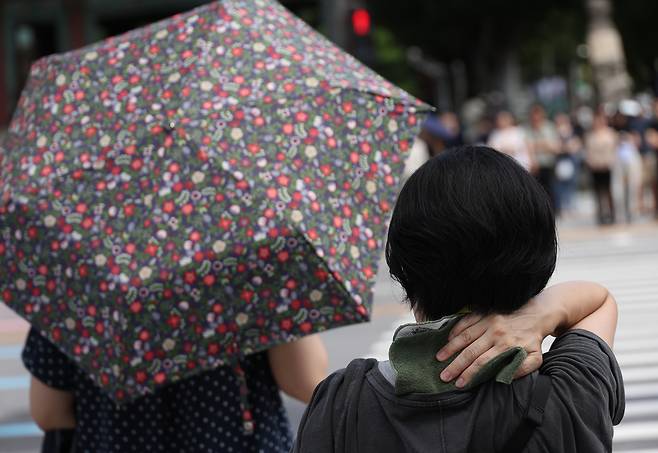
This year, South Korea saw its hottest summer since weather forecast data was first recorded in 1973. The average temperature between June and August was 25.7 degrees Celsius, up 0.1 degrees from last year. The country also saw 14.5 days of heat waves just in July.
Moreover, September was meteorologically classified as summer, as night temperatures did not fall below 20 degrees Celsius until Sept. 29.
According to Kim, these climate anomalies have delayed the autumn colors.
"As temperatures go down and the days get shorter in fall, green chlorophyll in leaves breaks down, and red and yellow pigments become accentuated," Kim explained. Longer summers and hotter autumn temperatures have stalled this process.
Kim said both the start and peak of the foliage season have been gradually shifting later each year, though unpredictable climate anomalies make the timing increasingly difficult to forecast.
“The general trend is that fall foliage is occurring later in the year, but as more abnormal climate phenomena occur, the variability (in when fall foliage appears) has increased,” he said.
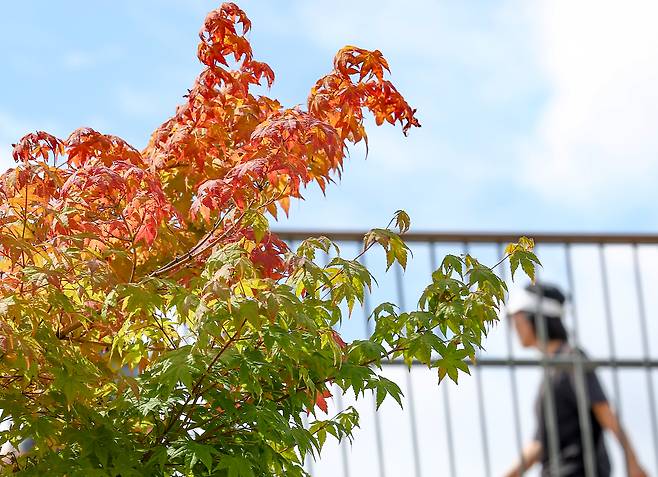
Most regions, he added, will likely have to wait until November to see their full autumn colors.
According to the Korea Forest Service, if mild weather persists through late October, the peak foliage period for southern regions such as Jirisan and Hallasan could be pushed back to mid-November, marking one of the latest starts in recent years.
Copyright © 코리아헤럴드. 무단전재 및 재배포 금지.