Shinsung Eng., KD Navien accelerate push into heat pump market
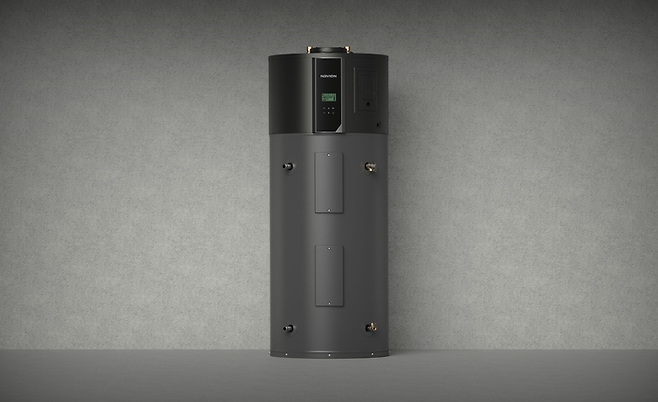
Unlike traditional systems that generate heat directly, heat pumps transfer heat from external sources into indoor spaces, achieving energy efficiencies exceeding 100 percent and earning attention as an eco-friendly technology. Reflecting this, the government plans to include “heat pumps” as an official emissions-reduction mechanism in the 2035 Nationally Determined Contributions (NDC) to be submitted to the United Nations later this year. The 2025 budget of the Ministry of Climate, Energy and Environment allocates 9 billion won for a new air-source heat pump promotion program.
Shinsung Engineering, a refrigeration and air-conditioning affiliate of Kiturami Group, has been focusing on geothermal and water-source heat pump systems, gaining prominence in public sector projects. The company supplied geothermal heating and cooling systems to Nowon Energy Zero House and Godeok Gangil Happy Housing, both zero-energy residential complexes in Seoul.
KD Navien, meanwhile, is targeting the more cost-competitive North American market. In June, the company launched its residential air-source heat pump line, the NAZ series, and began offering an integrated heating and cooling solution tailored to the region by combining the system with its Condensing Hydro Furnace. “The product allows piping connections on both the top and sides, minimizing installation space and earning strong feedback from local contractors,” a company official said.
However, high initial costs—ranging from 10 to 15 million won per household—remain a major barrier to adoption. The installation cost is roughly seven times higher than that of a conventional gas boiler, and under Korea’s progressive electricity pricing system, annual operating expenses are also higher.
According to the Green Energy Strategy Institute, the annual operating cost of a heat pump averages 850,000 won, about 150,000 won more than that of a gas boiler. Still, with heat pumps to be officially recognized as a carbon-reduction measure next year, the industry expects expanded government incentives and stronger market momentum.
Copyright © 매일경제 & mk.co.kr. 무단 전재, 재배포 및 AI학습 이용 금지
- 오늘의 운세 2025년 10월 14일 火(음력 8월 23일) - 매일경제
- “캄보디아에 준 돈이 얼만데” “군사작전이라도 해야”…연이은 범죄 강경 목소리 - 매일경제
- 결혼하면 내집마련 손해? 10쌍 중 2쌍 혼인신고 1년 이상 미뤄 - 매일경제
- [단독] “12시간 공항 노숙자 만들고 보상 없어”…대한항공 툭하면 ‘버드 스트라이크’ - 매일
- 직원들 십시일반 주인된 회사, 매출 2배 늘었죠 - 매일경제
- ‘영포티’ 혐오, 다 이유가 있다고? 정말 위험한 까닭은 [매경포럼] - 매일경제
- “까르띠에라 믿고 샀는데”…5년전 구매한 1800만원 반지, ‘불량품’ 판정 - 매일경제
- [속보] 중국, 한화오션 미국 소재 자회사 5곳 제재…“미국 301조 조사 대응” - 매일경제
- 간호사 2명 중 1명 인권침해 경험…가해자 1위는 이 사람이었다 - 매일경제
- 다저스, 김혜성 포함 26인 로스터 발표...투수 한 명 추가 [NLCS] - MK스포츠