'Theater can be solution to all our problems'
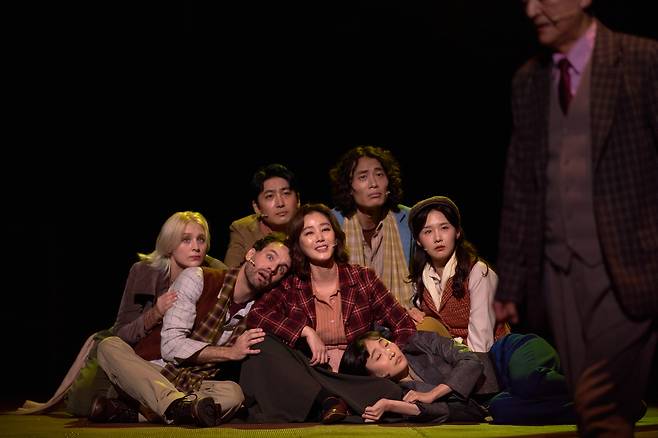
"Her name is Rosetta Sherwood Hall. My name is Emma Sue Harris. I'll be playing Rosetta."
“Her name is Rosetta Sherwood Hall. My name is Brad Burgess, and today I’ll be playing Rosetta!”
So begins “Rosetta,” the first production in Asia by The Living Theatre.
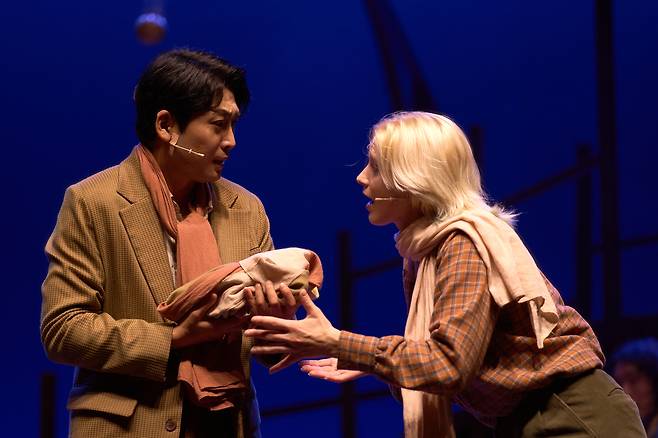
Onstage, all eight cast members — diverse in race, gender and age — take turns embodying the same woman: Rosetta Sherwood Hall, an American doctor and missionary who devoted her life to advancing medicine and education for women in Korea in the late 19th century.
The production ended its fourth Seoul run in August, went to Busan on Sept. 5-6, and now heads to the Tottori Prefecture Citizens’ Culture Hall in Japan for performances this weekend. It will mark the Japan debut of the US' oldest experimental theater troupe, now in its 78th year.
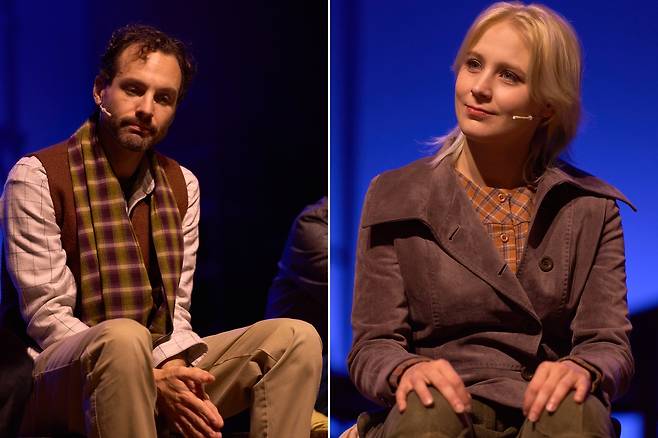
“The company is so old and has been so many places, but to have a first during my time as artistic director feels special,” said Burgess, artistic director of The Living Theatre, in an interview with The Korea Herald in Seoul last month.
“We’re an almost 80-year-old company still finding new places to go.”
Hall’s story is one of grit and persistence. She learned a new language, fought disease and prejudice, and insisted on “doing good” in a foreign land.
“When you leave the theater and see what Rosetta did 100 years ago without Google Translate, without toilets -- then your problems can feel more solvable,” said Burgess. “This play can help people feel empowered and go, ‘Look at what Rosetta did.’”
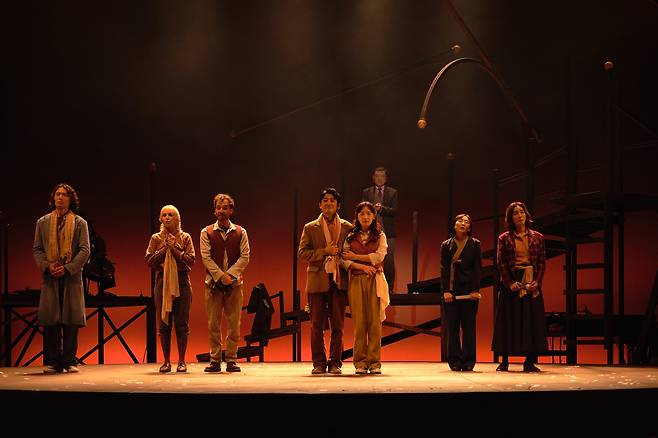
At the heart of the production is the idea that anyone could be Rosetta.
“Oftentimes, you have very singular actors playing leading roles and that makes people feel like it's not them. But when you see everybody in the ensemble being this person, you think, if I were in the play, they would have made me play Rosetta.”
He added that the rotating roles and Rosetta’s story reflect The Living Theatre’s founding philosophy: that “living” theater must change with time, and that in a troubled world, each person must ask, "who am I, and what can I do?"
For Harris, who made her Living Theater debut with “Rosetta,” performing partly in Korean offered a new layer of connection.
“The challenge of not knowing the language the others were speaking turned out to be joyful,” she said. “It made us feel closer to Rosetta — she, too, was working in a place where she didn’t know the language, except her circumstances were much more challenging as a doctor than being an actor in a play.”
Both actors said the production deepened their sense of ensemble. Some cast members left the show and returned later, bringing their own life changes with them — one scene references a character’s baby, while in real life five children have been born within the “Rosetta” community.
“The relationships with the other actors are so deep,” Burgess said. “That’s one of the great things about ensemble theater. We’re like adventurers on a quest, with a mission, a goal and a shared philosophy.”
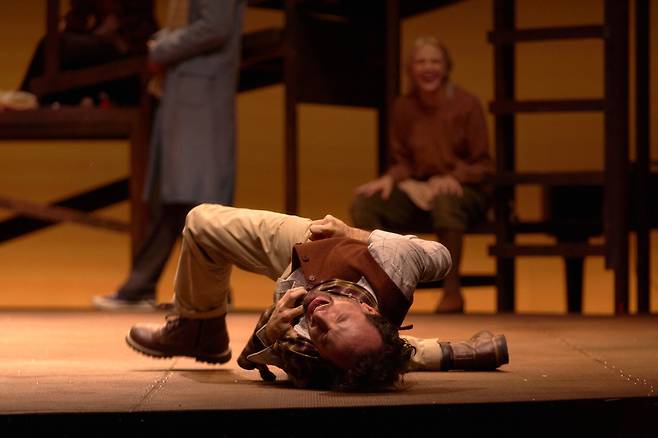
And this sense of shared community, both actors believe, points to solutions for many of society’s challenges. Theater, they said, can address loneliness, support mental health and, above all, bring people together.
“Theater is a cure for loneliness,” Burgess said, noting that in today’s high-tech, convenience-driven society, it has become all too easy for people to end up isolated.
“Theater is one of the only things in the future that people are going to keep doing together, and it gives people purpose, it gives people a sense of belonging, it builds community -- and you get to be fully 'human.'”
Harris added that even those not onstage can participate. “Theater may be the most collaborative art form. You can be involved through costumes, design, props, music. It gives you a way to be part of something bigger than yourself."
That is why The Living Theatre has moved beyond New York, heading to smaller cities across the United States — partly as volunteer work, and partly to open the theater to audiences who might not otherwise think it’s for them.
“The Living Theatre’s mission calls us to question who we are in the social environment of theater, which to me simply translates: to think about what’s going on and to do what’s needed,” said Burgess.
The vision extends to Korea as well.
“We would really like to go to the smaller cities in Korea as well because I think this play speaks to everybody. You don't have to know edgy avant-garde experimental theater, even though it's very experimental. It’s very simple and it's very sweet and very genuine.”
Copyright © 코리아헤럴드. 무단전재 및 재배포 금지.