[Design Forum] Gallerists discuss promoting Korean design in social media era
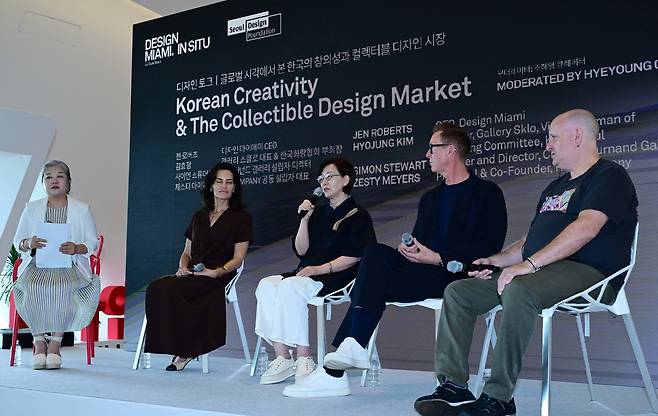
The first Design Talk session of Design Miami.In Situ Seoul on Tuesday brought together gallerists who have spent decades championing Korean design internationally, offering insights into how the country's artists have moved from obscurity to today's social media-driven prominence.
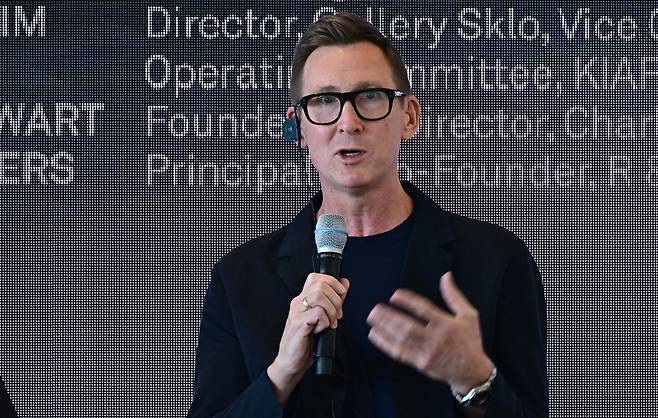
The evolution of Korean design's global standing took center stage as the panelists recalled the early days of limited representation. Design Miami CEO Jen Roberts noted that Korean design's presence at international fairs has grown exponentially. "We're now finding many international galleries exhibiting Korean designers — both the more recognized, established ones, but also many emerging talents," she said.
Zesty Meyers, co-founder of New York-based R & Co., shared his pioneering role in introducing Korean artists to American audiences starting in 1997. "There was no internet, very little access to books to gain history from anywhere," Meyers recalled. His gallery's early representation of groundbreaking Korean artists like Lee Hun-Chung helped connect the Seoul and New York design scenes.
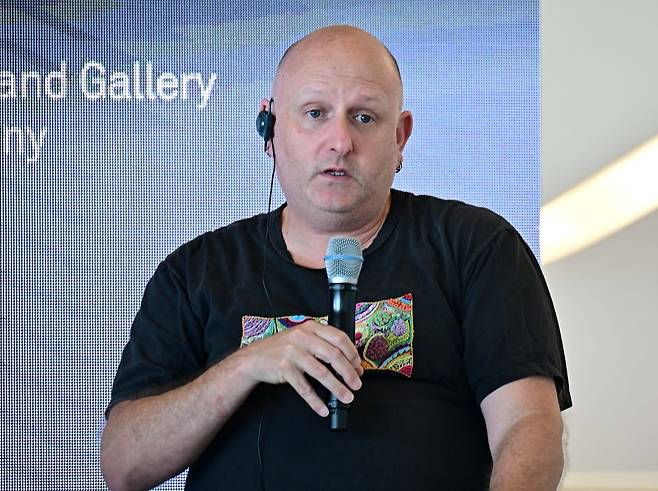
Simon Stewart of London's Charles Burnand Gallery, which represents six Korean artists, highlighted the mastery of materials as a defining characteristic of Korean practice. "These are people who've spent many years mastering their craft," Stewart said. He detailed the extended timeline required for artists to break through internationally, citing New York-based Korean sculptor Kim Hee-chan's 18-month journey to market readiness.
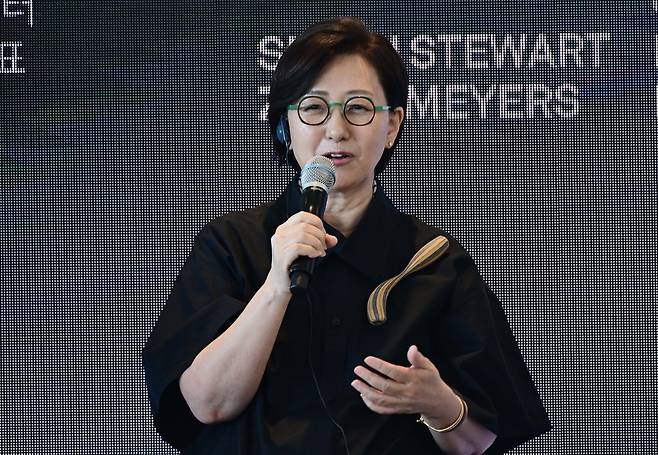
Gallery Sklo director Kim Hyo-jung provided a local market perspective, noting the explosive growth in Korea's art collecting scene even as challenges persist. "The Korean art market has grown tremendously, especially over the past three years with Frieze," she said. However, she noted that many collectors here view art primarily as a means of investment, with design and craft taking a back seat to painting and sculpture.
"There's this mindset where people ask about resale value before anything else. They want to know if a piece will double in value, not whether it speaks to them personally," she observed. "So painting gets all the attention because it seems safer financially, while design and craft — however exceptional — struggle to find buyers who appreciate it for what it is."
The conversation repeatedly circled back to how social media has altered traditional pathways between artists and collectors. Stewart noted that all six of his Korean artists had gained significant traction through social media platforms, though he cautioned against expecting instant results. "You need to understand that building careers takes many years — the commercial aspect requires thoughtful development," he said.
Even the definition of what constitutes a collector has evolved accordingly.
Stewart suggested that collectors these days might be anyone with "three or more of one thing." Roberts observed that today's buyers tend to follow their instincts rather than collect within fixed categories. "Today's collectors are finding objects that resonate personally — sometimes in dialogue with each other, sometimes not," she said.
Then came the big question: In an era when artists can engage audiences directly through Instagram, are galleries even necessary?
Despite the primacy of social media, the gallerists unanimously insisted that galleries still remain essential for institutional validation in the marketplace. Kim offered a particularly candid assessment: "Without galleries, breaking into the international stage is virtually impossible. Major fairs don't invite individual artists — they invite galleries based on trust and track record."
Meyers explained how galleries themselves have evolved beyond commercial transactions over time.
"Our goal is if you want to be a maker, you should be a maker and not a businessperson," he said. "We want to be your talent agency — bringing together legal teams, logistics experts, whatever's needed to help realize dreams." This comprehensive support system, he explained, addresses complex logistical challenges artists face when they try to crack international markets.
Despite the fundamental shifts in how art gets discovered and sold today, everyone seemed to remain optimistic about where Korean design is headed.
"Don't underestimate the power of Korean design," Meyers told the Korean audience directly.
"Culture is always the first representation of change — we have greater importance in driving good out into the world."
Copyright © 코리아헤럴드. 무단전재 및 재배포 금지.