In the wake of falling petals, KNB ballet master contemplates life, seasons, poetry of movement
전체 맥락을 이해하기 위해서는 본문 보기를 권장합니다.
"It is based on the idea that life has no set answers; we move through it, encountering precious moments as they come."
"I hoped my final days would be just as beautiful. I came to accept quietly that life has its seasons, and that all things eventually come to an end."
이 글자크기로 변경됩니다.
(예시) 가장 빠른 뉴스가 있고 다양한 정보, 쌍방향 소통이 숨쉬는 다음뉴스를 만나보세요. 다음뉴스는 국내외 주요이슈와 실시간 속보, 문화생활 및 다양한 분야의 뉴스를 입체적으로 전달하고 있습니다.
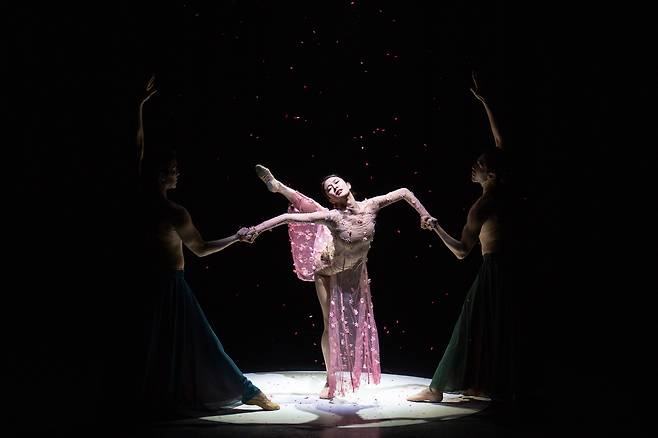
On a small circular dance floor, cherry blossom petals are painted to resemble a lake carpeted with drifting blooms. A female dancer moves daintily, like a single petal falling, her arms and dress fluttering with the grace of the wind. Two male dancers circle her like playful breezes, sometimes hovering like birds or like spirits guiding the petals’ flight.
Set to the sweet, delicate strains of the gayageum, or traditional Korean zither, each note is plucked with deliberate care as the scene from “Season; Spring” unfolds with ethereal beauty.
“This piece is a metaphor for the fleetingly beautiful moments of life,” Lee Young-cheol, choreographer and Korean National Ballet ballet master, said in an interview with The Korea Herald.
“It is based on the idea that life has no set answers; we move through it, encountering precious moments as they come.”
Lee’s intimate piece is one of eight works to be featured this weekend in the Korean National Ballet’s flagship choreographer development program, the KNB Movement Series. Celebrating its 10th anniversary, the History of KNB Movement Series revisits some of the program’s most notable works.
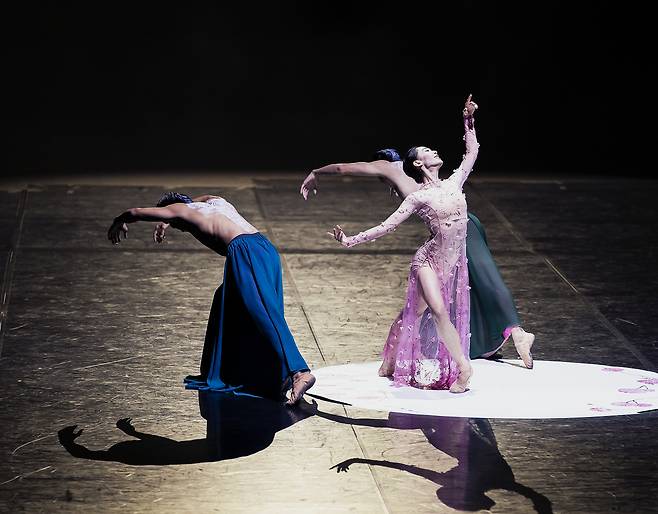
“Season; Spring” was performed as part of the Royal Ballet’s International Draft Works in the UK in 2024, and in Paris for a special KNB gala commemorating the Olympic Games. A former principal dancer who spent 18 years with the company, Lee has served as ballet master since 2021.
He premiered the piece in 2019, during a period when he was contemplating retiring as a dancer. A small lake behind the company's building and the cherry blossom trees lining its banks became a place for reflection. In spring, petals scatter across the water, forming pink-hued surfaces and sometimes creating paths, as if guiding the course of life itself. Lee channeled this meditation into the work.
“I hoped my final days would be just as beautiful. I came to accept quietly that life has its seasons, and that all things eventually come to an end.”
Another source of inspiration he shared was "hwamunseok," a traditional royal dance floor mat adorned with flowers, where a dancer would perform before the king.
Lee said the challenge was balancing the imagery of the blossoms with the elegance of traditional aesthetics, aiming to harmoniously blend tradition with contemporary ballet.
The music, performed by gayageum artist Ju Bora, features the lyric: “You are my season, and I am your flower.”
“I think it expresses the inevitable yet precious moments of our relationships — just as seasons and flowers are intertwined. As a dancer, I hoped that the moments when I performed would be meaningful for someone else, and at the same time, that I could be such a presence for others. That sentiment resonated deeply with the lyric.”
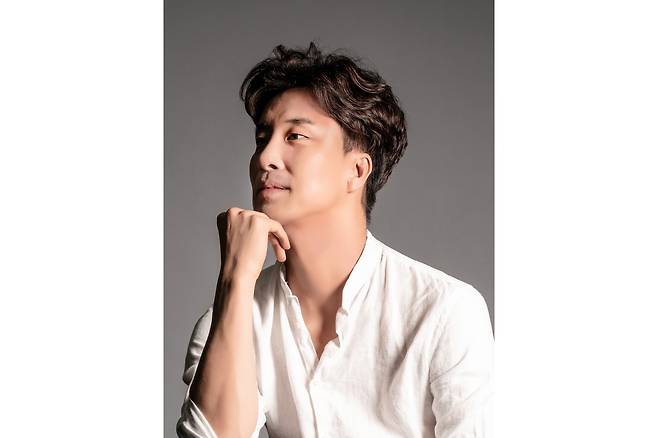
Launched in 2015 under Kang Sue-jin, the company's artistic director, the KNB Movement Series supports dancers’ post-performance careers while nurturing new choreographers. Over the past 10 years, 25 choreographers have created 65 original works. The program has become a platform for dancers interested in choreography to demonstrate their potential. Aspiring dancer-choreographers such as Kang Hyo-hyung, Park Seul-ki and Song Jung-bin have gone on to create works performed internationally.
Lee has participated every year, submitting nine works — more than any other dancer-choreographer in the series.
“When I was a dancer, there were times when I saw the stage entirely as a place to execute the choreography I was given, simply as a ‘player,’” said Lee. “But I came to understand that a performance is not completed by dance alone. It is brought to the stage through the collaboration of countless elements and many people involved.”
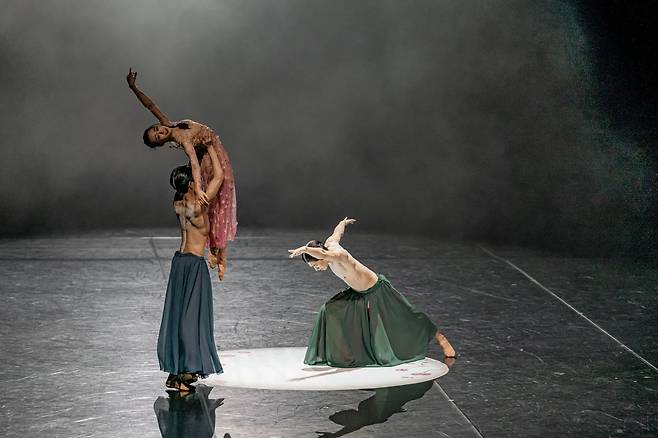
For the 47-year-old choreographer, creating a work has become a process of self-discovery.
“It’s a time when I’m completely alone. It’s ultimately a one-on-one encounter with myself, and an opportunity to study and understand myself more deeply. Even after 10 years, each project feels as difficult as the first. I’ve only grown somewhat accustomed to the challenge.”
“But the happiest moments for me are when the dancers become fully immersed in a piece, moving as one and truly loving the work,” he added. “When that energy reaches the audience and the piece resonates with them, it is deeply rewarding.”
Lee credits his wife, choreographer Jang Hye-rim -- who leads her own company, 99 Art Company -- for much of his inspiration, particularly in deepening his attention to Korean tradition and aesthetics.
“Her choreography process is almost like a prayer. All the dancers immerse themselves fully and share in that experience. I have learned to value the creative journey, and I want to cultivate that same immersive experience for my dancers.”
With “Season; Spring,” Lee has begun to shape his seasonal series. Last year, he created “Fall,” drawing inspiration from a maple tree bathed in autumn streetlight, and earlier this year, he presented “Whisper” with Jang, inspired by a quiet winter landscape of birch trees.
Looking ahead, he is planning a more vibrant piece themed on summer, and, if the opportunity arises, he hopes to create a full-hour performance encompassing all four seasons on a single stage.
Meanwhile, the History of KNB Movement Series runs Friday through Sunday at Seoul Arts Center’s Jayu Theater.
Copyright © 코리아헤럴드. 무단전재 및 재배포 금지.