Lee, Ishiba pledge stronger S. Korea-Japan partnership at Tokyo summit
이 글자크기로 변경됩니다.
(예시) 가장 빠른 뉴스가 있고 다양한 정보, 쌍방향 소통이 숨쉬는 다음뉴스를 만나보세요. 다음뉴스는 국내외 주요이슈와 실시간 속보, 문화생활 및 다양한 분야의 뉴스를 입체적으로 전달하고 있습니다.
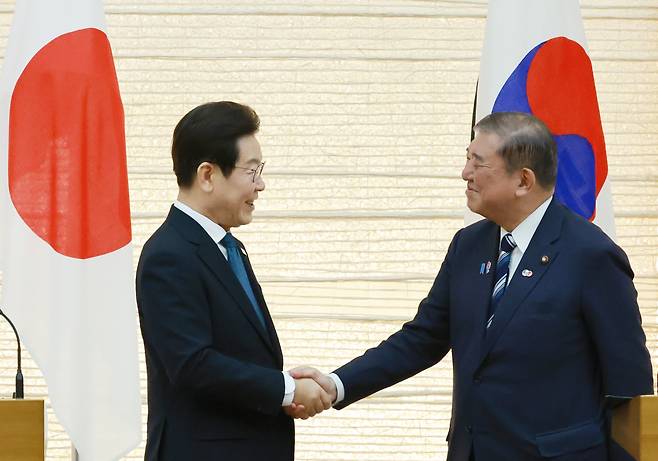
President Lee Jae-myung and Japanese Prime Minister Shigeru Ishiba issued a joint press statement following their bilateral summit in Tokyo on Aug. 23, reaffirming their commitment to the complete denuclearization of the Korean Peninsula and lasting peace, and pledging close coordination on North Korea policy. The statement marks the first joint document between the two countries in 17 years.
At a joint press conference after the summit, Lee and Ishiba emphasized the importance of “future-oriented, mutually beneficial cooperation” and described the meeting as an early resumption of shuttle diplomacy between Seoul and Tokyo. The statement also noted that Ishiba reaffirmed Japan’s commitment to uphold past administrations’ positions on historical issues, including the 1998 Kim Dae-jung-Obuchi Declaration, in which then-Prime Minister Keizo Obuchi expressed “deep remorse and heartfelt apology” for Japan’s colonial-era actions.
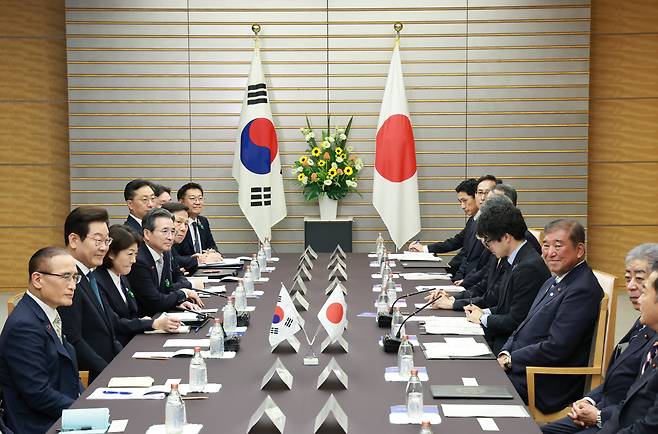
The joint statement outlined five areas of cooperation: coordination on North Korea and regional security, strengthening regional and global collaboration, enhancing exchanges and strategic communication between leaders, expanding cooperation in future industries, and broadening people-to-people exchanges.
On North Korea, the two leaders agreed to work with the international community to ensure full implementation of U.N. Security Council sanctions in response to Pyongyang’s nuclear and missile threats, including its growing cyber activity and closer military ties with Russia. They also emphasized the importance of efforts to resolve the abduction issue.
Regarding regional and global cooperation, Lee and Ishiba stressed the importance of steady South Korea-Japan and South Korea-Japan-U.S. collaboration amid a rapidly changing international environment. They agreed to continue building a positive cycle in which stronger bilateral ties support broader trilateral cooperation and recognized the need to strengthen strategic communication under the evolving economic and trade order, particularly in the Indo-Pacific region.
The two nations also agreed to expand cooperation in future industries such as hydrogen and artificial intelligence (AI) and to establish intergovernmental consultative groups to address shared social challenges, including low birth rates, population aging, urban concentration, and agricultural issues. To further promote people-to-people exchanges, they decided to expand the bilateral “working holiday” program from one-time to two-time participation.
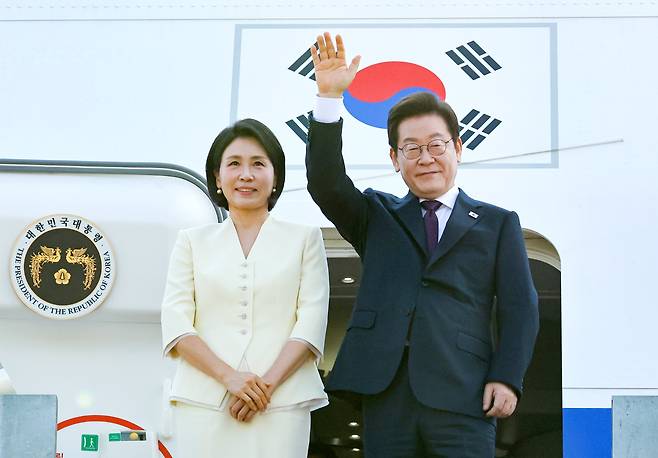
Although some had expected a full joint declaration ahead of the summit, Lee and Ishiba instead issued a joint press statement. A presidential office official noted that preparation time was too short for a declaration, but suggested a formal joint declaration defining a new Korea-Japan relationship could come in the near future. In an interview with Japan’s Yomiuri Shimbun on Aug. 21, Lee expressed his intention to build a forward-looking South Korea-Japan relationship beyond the Kim-Obuchi Declaration.
The joint statement avoided direct mention of sensitive issues, including historical disputes and Japan’s request to ease restrictions on Japanese seafood imports. In remarks during the expanded summit session, Lee emphasized the importance of resolving difficult issues carefully while prioritizing areas where cooperation can provide immediate benefits for both nations. He also highlighted that he is the first South Korean president to make Japan his first bilateral visit after assuming office, underscoring Seoul’s emphasis on the importance of the Korea-Japan relationship.
Copyright © 조선일보. 무단전재 및 재배포 금지.
- 李대통령 “아직도 업무 모르는 기관장 있어...경고 드린다”
- 서울 아파트 매매·전세 가격 75주째 상승…상승률 1위는 수원 영통
- [속보] 행정장관 “장윤기 사건, 국민적 실망... 깊은 유감” ‘내부비리수사대’ 신설 등 제도
- 제헌절 연휴 내내 장맛비...주말에 수도권 최대 120㎜ 물폭탄
- 방미통위, 14세 미만 SNS 가입 제한 추진
- 김정관 “반도체 호황, 전체 기업 호황 아냐… 이익 분배보다 투자해야”
- 경찰, ‘장윤기 사건’ 수사팀장 이어 형사과장도 구속영장 신청
- “삼성전자 40조 성과급, 주총 승인 받아야”... 소액주주, 국민연금에 주주서한 보낸다
- “같이 죽으려 했는데”... 암 진단 아내 살해 60대 ‘징역 2년’
- 신현송 한은 총재 “물가 안정 확인 때까지 대응하겠다”… 추가 금리 인상 시사