Smartphones deploy AI to block voice phishing
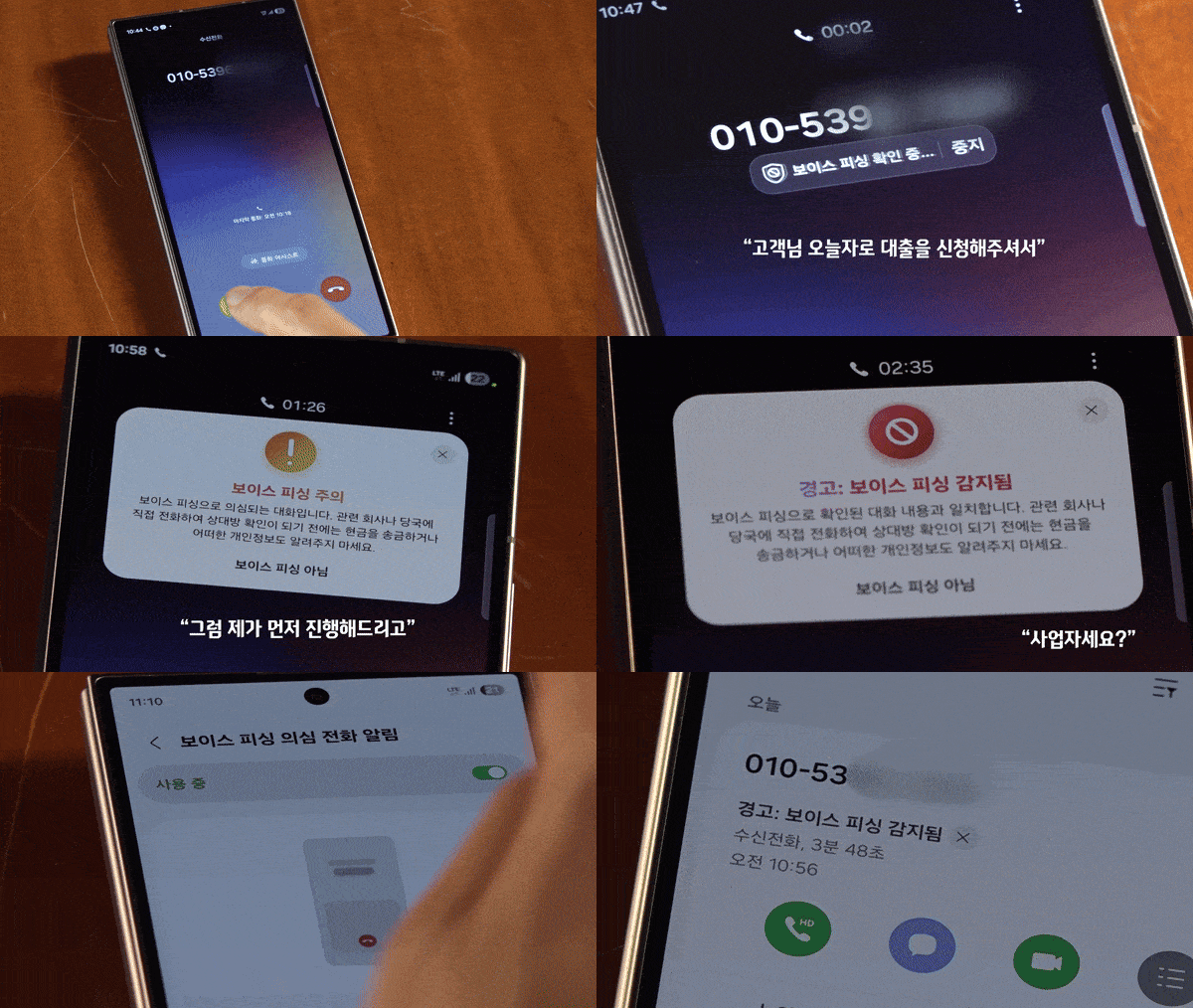
The technology, first introduced by Samsung Electronics Co. in its latest Galaxy Z Fold7 and Flip7, analyzes conversations with unknown callers and alerts users if fraud is suspected.
For instance, a 40-year-old office worker preparing to move recently received a suspicious call from a supposed loan provider. As he hesitated, his phone vibrated with a yellow “voice phishing suspected” alert, followed moments later by a red warning reading “voice phishing detected,” prompting him to hang up immediately.
When an unfamiliar number connects, the smartphone monitors the conversation in real time and issues two levels of alerts: yellow for suspicion and red when a scam attempt is confirmed.
Samsung trained the system on more than 30,000 phishing cases provided by the National Police Agency and the National Forensic Service, enabling it to block both typical fraud tactics and new variations. The feature requires no separate app installation and can be activated in the default phone app settings. The company plans to expand it to all Galaxy devices running One UI 8 or later.
Samsung is also strengthening defenses against spam text messages.
In September 2024, it introduced a “malicious message blocking” function in cooperation with the Korea Communications Commission and the Korea Internet & Security Agency (KISA). Beginning with the Galaxy S25 series in March, the company added an upgraded “intelligence blocking” feature, which uses AI trained on about 5 million monthly reports to automatically filter suspicious texts on-device. By last month, the feature had intercepted more than 100 million messages.
Other measures include displaying a “safe mark” on texts from KISA-certified companies and flagging unknown calls with warnings such as “suspected spam” or “possible scam call.”
Kim Jung-sik, executive vice president of Samsung’s MX business division, said the company will continue to strengthen anti-phishing and spam-blocking technologies to provide Galaxy users with a more secure mobile environment.
Apple Inc., meanwhile, is set to release its own scam-prevention feature this fall with iOS 26. Unlike Samsung’s real-time detection, Apple’s system pre-screens unknown calls: the iPhone answers first, asks the caller for details, and transcribes the response into text for the user to review. If the screen shows a message like “I am calling about a tax refund,” the user can simply press “end” without speaking.
The feature also applies to text messages, routing spam from unknown numbers into a separate folder that automatically deletes after 90 days.
Industry experts noted that while Samsung is actively deploying AI for real-time detection, Apple is taking a more cautious approach by filtering communications before users engage.
Copyright © 매일경제 & mk.co.kr. 무단 전재, 재배포 및 AI학습 이용 금지
- 오늘의 운세 2025년 8월 22일 金(음력 윤 6월 29일) - 매일경제
- ‘유승민 딸’ 유담 씨, 31세 나이로 대학교수 됐다 - 매일경제
- [단독]“보증금은 커녕 수도·전기 끊길 판”…청년 끌어들인 사회주택, 전세사기 늪으로 - 매일
- “삼성전자·카카오 연봉 훌쩍 뛰어넘는 수준”…취준생 ‘꿈의 직장’ 어디길래 - 매일경제
- ‘전과 17범 대선후보’ 송진호 사기 혐의로 구속…수억원 가로챘다는데 - 매일경제
- “18세 되면 국민연금 3개월치 내준다”…정부, 2027년부터 본격 시행 - 매일경제
- “출국심사 대상 아냐”…휴가 중 해외로 달아나는 ‘신종 탈영’ 급증 - 매일경제
- “통행 문제로 말다툼하다 갑자기”…흉기로 행인 찌른 50대 남성 - 매일경제
- 분명 변사 사건 사망자가 착용했는데…사라진 20돈 금목걸이, 범인은 누구? - 매일경제
- 김하성, 허리 부상으로 또 IL행...팀은 유망주 콜업 - MK스포츠