Editorial: Action, not delay, is needed to face Korea’s AI labor shock
이 글자크기로 변경됩니다.
(예시) 가장 빠른 뉴스가 있고 다양한 정보, 쌍방향 소통이 숨쉬는 다음뉴스를 만나보세요. 다음뉴스는 국내외 주요이슈와 실시간 속보, 문화생활 및 다양한 분야의 뉴스를 입체적으로 전달하고 있습니다.
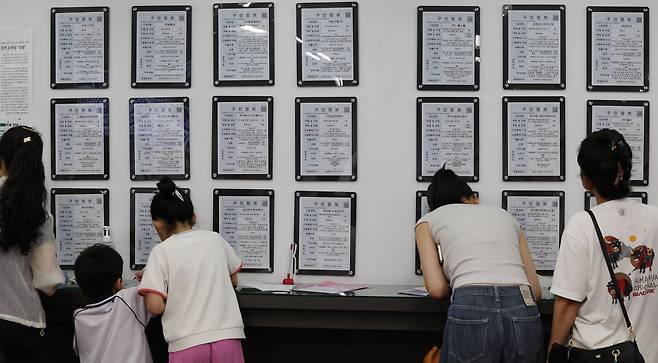
South Korea’s two leading technology firms, Naver and Kakao, long regarded as symbols of innovation, have seen the number of employees in their 20s plunge — down 33% and 28% over the past two years. The decline reflects a sharp pullback in hiring as artificial intelligence takes over work once handled by humans. In 2021, Naver recruited 838 employees and Kakao 994, but by last year each company was hiring only about a third of that number.
Such retrenchment is becoming standard practice at companies undergoing what they call an “AI transition.” Major telecommunications providers SK Telecom Co. and LG Uplus Corp. have cut new hires by 30% and 62% over the past three years. Both have halted recruitment entirely for junior developer positions now deemed replaceable by AI. Samsung SDI Co., the battery-making arm of Samsung Group, and LG CNS Co., the information technology services subsidiary of LG Group, have also reduced intake by 30–40% in the same period.
“Whenever a vacancy arises, the first step is to check whether AI can fill the position,” an industry insider noted. “Under South Korea’s labor law, once a worker is hired there is no mechanism for dismissal, so companies preemptively reduce entry-level hiring.”
That even high-tech corporations are no longer able to offer opportunities to workers in their 20s underscores the labor shock unleashed by AI — a disruption that will only deepen. The failure to anticipate this shift and prepare for what lies ahead leaves the burden squarely on younger generations. Education and labor reforms can no longer be delayed.
Rote memorization and passive instruction cannot cultivate the creativity, problem-solving skills, and cross-disciplinary thinking required in the AI era. For more than a decade, graduates in science and engineering have been in short supply, while those in the humanities and social sciences have faced chronic unemployment. Yet efforts at structural reform in higher education remain blocked by entrenched academic interests. Antiquated systems — the rigid split between liberal arts and natural sciences, the 6-3-3 system, six years of elementary, three of middle school and three of high school — have been in place for more than 70 years and now obstruct the training of talent suited to the demands of AI. With rigid departmental quotas, South Korea falls short of thousands of AI specialists every year, a reality that is increasingly untenable.
The nation’s labor market, often described as the most inflexible in the world, has become an anchor weighing down its competitiveness in the AI age. To compound the problem, lawmakers are pushing ahead with the Yellow Envelope Bill, which would further restrict employers’ ability to respond to labor disputes. As the rest of the world moves toward an economy where fewer workers are needed, South Korea remains shackled by decades-old ideas, with those in power eroding the prospects of younger generations.
What is required is nothing less than sweeping reform. Education and labor policy must be overhauled, and employment strategies fundamentally rethought. Targeted vocational training for jobs at risk of disappearing, coupled with lifelong learning programs, must be put in place. The cases of Naver and Kakao are not anomalies but warnings of what is to come. Action cannot wait.
Copyright © 조선일보. 무단전재 및 재배포 금지.
- 마이클 잭슨 영화 흥행에…‘빌리진’ ‘비트잇’ 역주행
- 일본 유조선 호르무즈 첫 통과... 일본 정부 “이란과 교섭 성과”
- 데뷔 6주년 크래비티, ‘끝’을 삼키고 ‘무한’으로 피어나다
- [김한수의 오마이갓] “논문은 많은데 쉽게 읽을 책은 부족”...‘오대산의 고승’ 총서 펴내는
- [더 한장] 현금거래만 되는 엘살바도르 가축시장
- 전세계가 사활 건 소형 원자로 개발 경쟁, 치고 나간 한국 스타트업
- 무릎 건강에 집중해 17만족 팔린 5만원대 트레킹화, 일상화로도 손색 없어
- 국내 3위 브랜드가 작정하고 만든 노트북, 영상 편집까지 되는 고사양인데 80만원대 초특가
- “오픈AI 내부서 실적 우려”…나스닥 중심으로 뉴욕 증시 하락
- 몸통 내장 풍미가 기막혀, 오늘 새벽 포항에서 잡은 홍게 10마리 2만원대 초특가