National Museum of Korea goods sales surge on ‘KPop Demon Hunters’ boom
이 글자크기로 변경됩니다.
(예시) 가장 빠른 뉴스가 있고 다양한 정보, 쌍방향 소통이 숨쉬는 다음뉴스를 만나보세요. 다음뉴스는 국내외 주요이슈와 실시간 속보, 문화생활 및 다양한 분야의 뉴스를 입체적으로 전달하고 있습니다.
“It’s the most people I’ve seen here in the 20 years since the National Museum of Korea opened.”
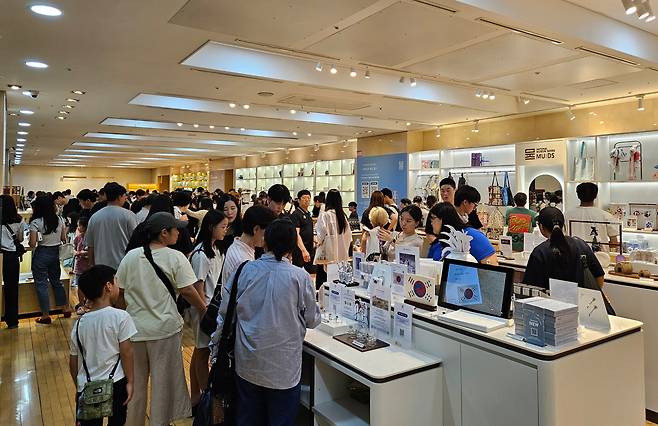
On the afternoon of Aug. 7, the gift shop at the National Museum of Korea in Seoul’s Yongsan District was packed with customers buying MU:DS — short for “museum” and “goods” — including the “Magpie and Tiger badge” and the “Pensive Bodhisattva miniature.”
Shoppers ranged from elementary school children visiting with their mothers during summer break to middle and high school students with friends, as well as adults in their 30s and 40s. Foreign tourists were also among the crowd. Many had come following the popularity of KPop Demon Hunters, a Netflix animated series that blends Korean traditional culture with K-pop themes.
A shop employee said the number of visitors over the past two weeks had been two to three times the usual level. “It’s the first time we’ve seen crowds like this since the National Museum of Korea opened in 2005,” the employee said. “The museum and shop open at 10 a.m., but people start lining up around 9 a.m.”
MU:DS are museum-designed products that reinterpret Korea’s cultural heritage with modern design, creativity, and practicality. Rather than reproducing artifacts exactly as they appear, they are adapted for everyday use.
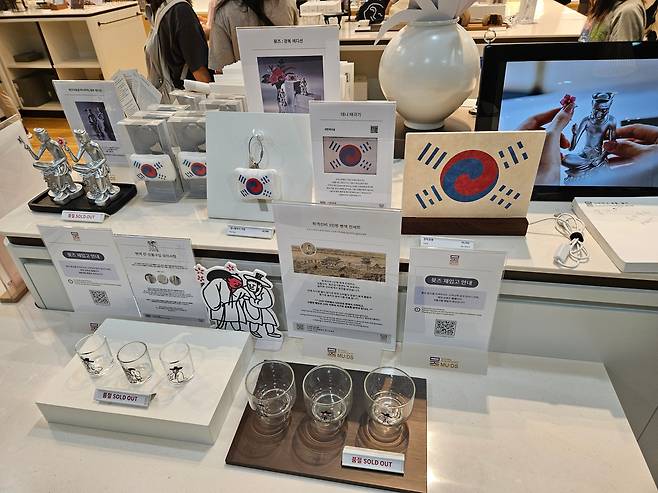
On Aug. 7, roughly one in 10 items on display carried a “Sold Out” sign. Out-of-stock products included the Pensive Bodhisattva miniature, a small white porcelain moon jar, the Three Drunken Scholars color-changing mini glass set, a hand mirror with a tiger pattern, and a Palju-ryeong necklace.
The surge in MU:DS sales is tied to the recent Netflix release of KPop Demon Hunters. The anime’s fusion of Korean heritage and K-pop idols has translated into strong demand for the museum’s goods.
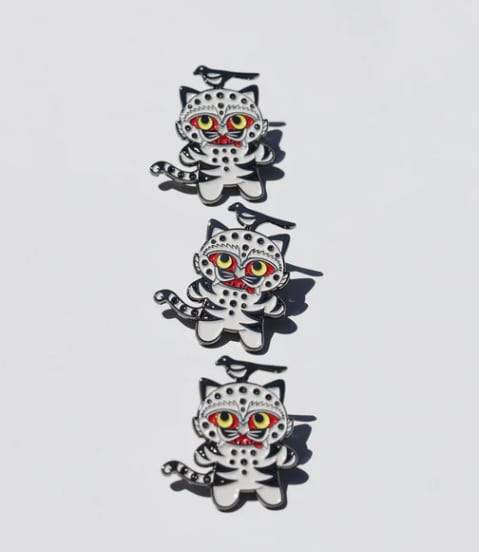
One of the top sellers is the Magpie and Tiger badge, inspired by the traditional folk painting Jak-hodo — depicting a magpie and tiger — and noted for its resemblance to “Derpy,” a tiger character in the series. “The badge is restocked once or twice a week, but not today,” a store representative said. “When it arrives, it sells out by that morning.”
Online sales have followed the same trend. Most items sold out in the shop were also marked “temporarily sold out” on the museum’s online store, which on Aug. 7 was so overloaded with visitors that access was difficult.
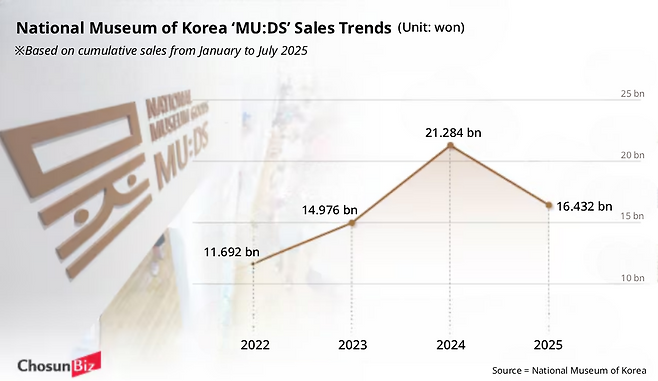
MU:DS sales had been climbing even before KPop Demon Hunters aired, rising from 11.69 billion won ($8.45 million) in 2022 to 14.98 billion won in 2023 and 21.28 billion won in 2024. Sales in the first half of 2025 totaled 11.48 billion won. The anime gave the trend another boost — MU:DS sales in July alone reached 4.95 billion won, up 180% from 1.77 billion won in the same month last year.
The boom in MU:DS purchases has also driven up museum attendance. In July, the museum recorded 742,167 visitors, more than double the 361,493 in July 2024, a 105% increase.
The National Museum of Korea aims to turn the current popularity into sustained interest in Korean culture. Plans include expanding the MU:DS lineup and offering a wide range of exhibitions, educational programs, and events that span both Korean and global heritage, enabling more people to share in the value of the nation’s cultural legacy.

Copyright © 조선일보. 무단전재 및 재배포 금지.
- 토스, 상반기 영업익 2461억원... 59.2% 증가
- 대전 故 하늘양 유족, 장례 지원한 건양대병원에 기부
- 추석 KTX 예매 내달 3일부터... ‘통합회원 전환’ 꼭 해두세요
- 박찬대 인천시장, 대한민국시도지사협의회장 선출
- 백현동·성남FC·법카 의혹... 검찰 미래위, 진상조사한다
- “검찰개혁 지긋지긋”...與 청년당원 74% “당이 우리 목소리 안 들어”
- 선관위 특검 추천위, 특검 후보로 이태한·이혁 추천
- 열사병에 해열제? 골든타임 놓쳐 생명 위험
- 250억원대 횡령 혐의 유병언 차남 유혁기…항소심에서 감형
- 여중생 제자 20여 차례 성폭행… 전북 중학교 교사 구속 기소