Hyundai struggles to boost hydrogen vehicle sales
이 글자크기로 변경됩니다.
(예시) 가장 빠른 뉴스가 있고 다양한 정보, 쌍방향 소통이 숨쉬는 다음뉴스를 만나보세요. 다음뉴스는 국내외 주요이슈와 실시간 속보, 문화생활 및 다양한 분야의 뉴스를 입체적으로 전달하고 있습니다.
Hyundai Motor Group is grappling with how to boost sluggish sales of its hydrogen fuel cell electric vehicle (FCEV), the Nexo. Although hydrogen vehicles remain one of the group’s core future mobility projects, the Nexo has failed to gain traction in the mass market since its launch in March 2018, hindered by a lack of refueling infrastructure and stringent government regulations.
According to the automotive industry, Hyundai Motor Group believes that easing certain regulatory restrictions is critical to increasing demand for hydrogen vehicles. A major concern is the mandatory 15-year replacement cycle for hydrogen fuel tanks. The Nexo is equipped with three such tanks, each costing more than 4 million won (approximately $2,900) to replace. Drivers who wish to keep the vehicle beyond the 15-year threshold face costs of around 13 million won (roughly $9,400) in total.
This issue has made the Nexo unappealing in the used car market, further dragging down new vehicle sales. Hyundai believes the replacement cycle should be extended to at least 30 years to make hydrogen vehicles more viable for consumers.
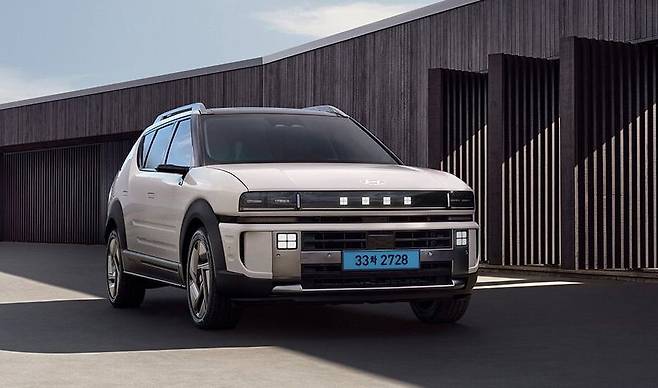
The company also views self-service hydrogen refueling as necessary to spur demand. Under current South Korean law, hydrogen can only be pumped with assistance from trained station staff. Industry officials say this regulation, combined with the shortage of refueling stations, has contributed to the continued weakness in Nexo sales.
From January through July this year, domestic Nexo sales fell 3.7% year-over-year to just 1,726 units. Between April and June, monthly sales fell below 100 units for three consecutive months. It was not until July—following the launch of the second-generation model on June 10—that monthly sales rebounded to 1,001 units.
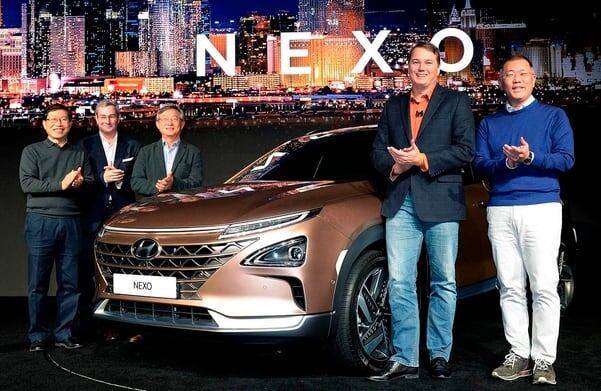
The Nexo was initially unveiled with high expectations in January 2018 at the Consumer Electronics Show (CES) in Las Vegas, with Hyundai Motor Group Executive Chair Chung Eui-sun appearing on stage himself. Annual sales climbed from 5,786 units in 2020 to 8,502 in 2021 and 10,164 in 2022. But volumes plummeted to 4,328 in 2023 and further to 2,751 last year.
The vehicle gained national attention under the administration of Moon Jae-in, who test-drove the Nexo during a visit to Hyundai’s Namyang R&D Center in 2018 and later adopted it as an official presidential vehicle. That June, his government rolled out a hydrogen vehicle promotion policy. The Nexo was widely seen as aligned with Moon’s broader clean energy agenda, which emphasized eco-friendly and renewable energy sources, helping it receive robust policy backing.
That support waned under the administration of President Yoon Suk-yeol. In 2022, his first year in office, the Ministry of Environment cut its hydrogen car and fueling infrastructure budget in the second supplementary spending bill by 25%—from 892.8 billion won to 667.8 billion won. The sharp decline in Nexo sales coincided with the onset of Yoon’s presidency.
The administration of President Lee Jae-myung, however, has adopted a stance similar to Moon’s, once again promoting green energy initiatives. Hyundai Motor Group sees this as an opportunity to advocate for relaxed regulations and increased government support for hydrogen vehicles.
“Even electric vehicles are seeing a slowdown in sales lately,” said an auto industry official. “For hydrogen cars, which are harder to refuel and suffer from steep depreciation in the used car market, it’s even tougher to attract buyers. To grow the hydrogen vehicle sector, we need not only aggressive pricing efforts from manufacturers but also meaningful regulatory reform from the government.”
Copyright © 조선일보. 무단전재 및 재배포 금지.
- 美영주권 신청, 더 까다로워진다… 본국에서만 신청할 수 있게 제한
- [그 영화 어때] 한국에선 좀비도 배워야 산다, K-좀비의 영리한 진화 ‘군체’
- “호캉스는 못 가도 발캉스는 간다”, 3만원대 발 마사지기의 반전
- 트럼프, 장남 결혼식 불참키로... “중요한 시기 백악관에 있어야”
- “롤렉스에 3000원 선글라스” 6080 멋쟁이에 젊은층 외국인까지 터질 지경 요즘 동묘
- 잡자 마자 손질 끝내, 1만5000팩 판매 ‘부산 아귀’ 3kg 2만2000원 초특가
- 트럼프 정부 여성 참모 잔혹사… ‘교체설’ 美국가정보국장도 결국 사의
- 중공군 포로 된 미 군종 신부 에밀 카폰… 다친 적군 병사까지 돌본 ‘형제애’
- ZARA에서 ‘갓’ 사는 시대
- 먹고 살려고, 몸이 아파서, 자연이 좋아… 울릉도에 둥지 튼 사람들