Gulf buyers slow South Korea’s defense export push
이 글자크기로 변경됩니다.
(예시) 가장 빠른 뉴스가 있고 다양한 정보, 쌍방향 소통이 숨쉬는 다음뉴스를 만나보세요. 다음뉴스는 국내외 주요이슈와 실시간 속보, 문화생활 및 다양한 분야의 뉴스를 입체적으로 전달하고 있습니다.
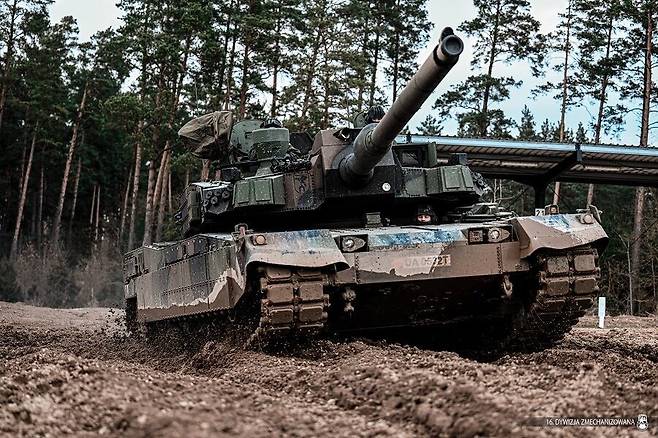
South Korea is unlikely to meet its ambitious $20 billion defense export target for 2025, as major Middle Eastern buyers delay weapons procurement decisions despite a recent uptick in global interest in Korean arms, including a new order for K2 tanks from Poland in the first half of the year.
According to industry sources, Korea’s defense exports have been in decline since peaking at a record $17.3 billion in 2022. Sales fell to $13.5 billion in 2023 and dropped further to $9.5 billion in 2024, raising concerns that the industry’s once-rapid growth is losing momentum.
Companies remain uncertain about key deals that were expected to carry over from last year. Defense officials and executives had placed high hopes on contracts with Middle Eastern countries, but governments in the region are now postponing key decisions into 2026.
Saudi Arabia had been negotiating a $1 billion deal for ground-based weapons systems with South Korea but has yet to finalize any agreement. “We understand the additional export contract for the Cheongung-II medium-range surface-to-air missile system has also been pushed back to next year,” said one industry official.
Another Middle Eastern country, which has previously purchased Korean missiles and aircraft, has also delayed a deal worth an estimated $5 billion. Talks continue, but no final decision has been reached.
By contrast, prospects in Europe are improving. Romania’s Ministry of Defense announced in June that it aims to sign a €2.5 billion ($2.7 billion) contract this year for 246 next-generation infantry fighting vehicles (IFVs). Hanwha Aerospace, the South Korean defense manufacturer, is currently competing with its Redback IFV, which is compatible with its K9 self-propelled howitzer system.
An industry insider emphasized that the delays were not due to competitive failures: “These countries are not turning to other suppliers. They are simply deferring procurement decisions. What we need now is coordinated diplomatic support to maintain momentum and interest in Korean systems.”
Despite the setbacks, some analysts remain optimistic that the $20 billion export target is still within reach. A flurry of large-scale deals in the second half of the year could tip the balance in Seoul’s favor.
In late June, Hyundai Rotem secured a second export contract for K2 tanks with Poland. While the final figures are expected to be disclosed upon formal signing, the deal is projected to be worth between $6 billion and $6.5 billion—potentially making it the largest single arms export in South Korea’s history, and accounting for nearly a third of the annual target.
Korea Aerospace Industries (KAI) also signed a new contract with the Philippine government last month to deliver 12 additional FA-50 light attack aircraft, in a deal worth 975.3 billion won ($700 million). KAI separately reached an 83 billion-won agreement with Indonesia to extend the service life of KT-1B basic trainer aircraft.
Hanwha Aerospace earlier this year secured a deal to export its K9 howitzers to India, while Hanwha Ocean continues to win steady contracts to provide maintenance, repair, and overhaul (MRO) services for U.S. Navy ships.
Copyright © 조선일보. 무단전재 및 재배포 금지.
- “엄마가 사준 SK하이닉스 주식, 9억 됐다”...3000% 수익률 인증글 화제
- 외국인에 ‘물값 2000원’ 판매한 광장시장 노점, 3일 영업정지
- [아무튼, 주말]#AI100대인재권인소#SK하이닉스쇼크
- [산업X파일] 창고·팝업·스튜디오…‘애물단지’ 공실의 재발견
- “엔딩 안 봐도 괜찮아” 게임 속에서 함께 유튜브 보고 또 다른 게임한다
- 美, 이란과 협상 재개하나… 백악관 “협상팀 25일 파키스탄으로”
- “한국 사람들은 이렇게 염색했던 거에요?” 아마존 히트친 40만병 대박 한국 염색샴푸
- 부자들은 알뜰한 소비... 건강 관리엔 돈 안 아꼈다
- 단 물 뚝뚝 떨어지는 성주 꿀참외, 오늘 따는 즉시 단독 최저가로 집까지 배송
- “익살맞은 비틀기, 능청스런 외설”… 역사 극화 붐 일으킨 만화가 고우영