Exclusive: Trump ally warns Seoul over ‘unfair treatment’ of Yoon
이 글자크기로 변경됩니다.
(예시) 가장 빠른 뉴스가 있고 다양한 정보, 쌍방향 소통이 숨쉬는 다음뉴스를 만나보세요. 다음뉴스는 국내외 주요이슈와 실시간 속보, 문화생활 및 다양한 분야의 뉴스를 입체적으로 전달하고 있습니다.
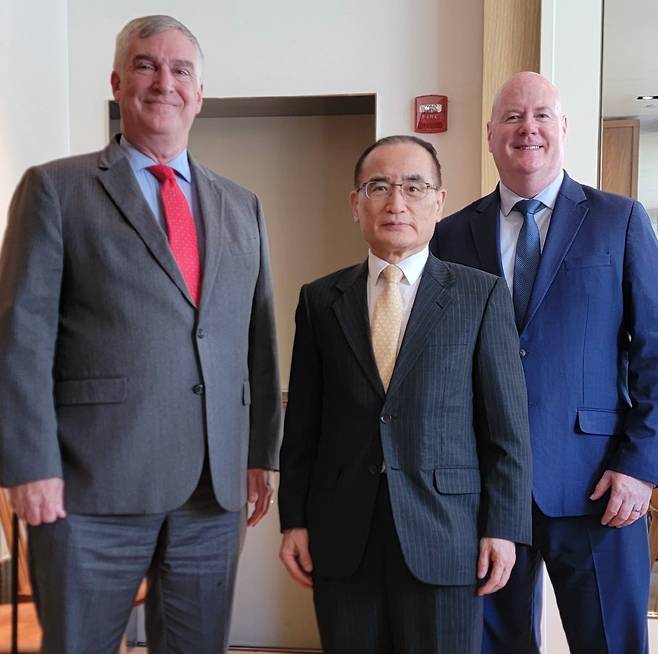
Fred Fleitz, vice chairman of the America First Policy Institute (AFPI), who recently met with members of the Korea-U.S. Parliamentarians' Union in Washington, D.C., said former South Korean President Yoon Suk-yeol “should not be subjected to unfair investigations or trials.” Fleitz reportedly delivered a similar message earlier this month to Wi Sung-lac, national security adviser in President Lee Jae-myung’s administration.
Fleitz, a key figure who served as Chief of Staff of the National Security Council during U.S. President Donald Trump’s first term, wrote on July 28 on X (formerly Twitter), “The perception that former President Yoon is being persecuted or unfairly prosecuted will be received very badly by the Trump administration.”
In a phone interview with the Chosun Ilbo, Fleitz said, “I’ve held multiple meetings with Korean government officials and lawmakers since last month. I won’t go into detail about my conversation with Wi, but I did make the same comment that former President Yoon not being mistreated.”
The meeting with Wi took place earlier this month in Washington, D.C., and was also attended by Steve Yates, a senior fellow at the Heritage Foundation and a well-known China hawk who served as national security adviser to the Vice President during the Trump administration. Wi’s response to Fleitz’s comments has not been made public.
Fleitz told the Chosun Ilbo, “I’m speaking from a personal standpoint since I’m no longer with the Trump administration,” but emphasized, “The perception that former President Yoon is being unfairly treated, persecuted, or given an excessive sentence would be viewed very negatively in the U.S.” He added, “Although the situations differ, Trump also faced political persecution after leaving office. Many in Trump’s circle are closely watching South Korea’s political situation, especially the recent presidential election and its aftermath.” Following Lee’s election last month, the White House issued its first official message unusually warning against “Chinese interference and influence in democracies around the world,” which was seen as unusual by diplomatic standards.
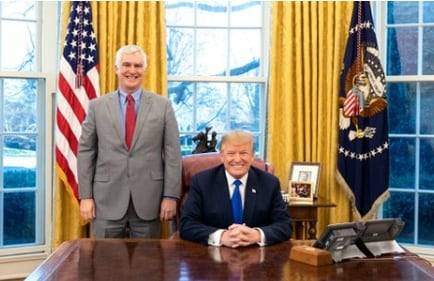
Trump once threatened up to 50% tariffs on Brazil, citing political persecution of former President Jair Bolsonaro—highlighting how domestic political issues can affect foreign policy. When asked if similar dynamics could impact South Korea-U.S. relations, Fleitz said, “In my personal view, the perception that a former president of a close ally is being persecuted would be seen very negatively in the U.S. and by Trump.”
Fleitz made similar points last week during a meeting with the Korea-U.S. Parliamentary Alliance, noting that “some were pleased, while others were quite annoyed.” He expressed concern over recent reports about Yoon saying, “He is not being properly treated in detention,” and warned about the possibility of a death sentence or life imprisonment.
Regarding the Lee government, which is approaching two months in office, Fleitz welcomed Lee’s promise of a practical foreign policy close to the U.S. and a tough stance on China and North Korea. But when asked if South Korea could balance relations with China and Russia while maintaining a strong U.S. alliance, he replied, “Definitely not. The U.S. has maintained a strong and close relationship with South Korea for decades and hopes this will continue under the current government.”
On cross-strait tensions, Fleitz called the Taiwan issue a serious security threat in the Asia-Pacific region, urging close coordination among South Korea, the U.S., and Japan to prevent Chinese military action.
AFPI is a common stop for South Korean officials visiting Washington. This week, Deputy Prime Minister and Finance Minister Koo Yoon-cheol is expected to hold related meetings during his visit.
Copyright © 조선일보. 무단전재 및 재배포 금지.
- ‘군체’ 연상호 감독도 반한 전지현 “클로즈업할 수밖에 없는 얼굴”
- ‘군체’ 전지현, 칸 레드카펫 밟은 소감 “큰 용기 얻었다”
- 유령 무당 ‘조말례’에 속아 66억 횡령한 재력가 실형
- 교육부, 전자칠판 등 납품 비리 없게 ‘물품선정위’ 규정 강화
- 이석연 “靑 행정관에 갑질당해...40년 공직에 이런 무례 처음”
- 발레리노 서민준, 美 ‘유스 아메리카 그랑프리’ 콩쿠르 대상
- 구자열 한일경제인협회장 “한국, CPTPP 신청 가능성 높아”
- 국가권력이 종교단체를 해산시키고 재산을 몰수하겠다고?
- 출근길 서울 지하철 화요일이 제일 ‘지옥’… 하루 승객 수는 금요일이 최다
- 난임 시술은 4년 만에 약 40% 급증... 평균 연령은 37.3세