S. Korean industries on alert as rare earth stocks hit critical low
이 글자크기로 변경됩니다.
(예시) 가장 빠른 뉴스가 있고 다양한 정보, 쌍방향 소통이 숨쉬는 다음뉴스를 만나보세요. 다음뉴스는 국내외 주요이슈와 실시간 속보, 문화생활 및 다양한 분야의 뉴스를 입체적으로 전달하고 있습니다.
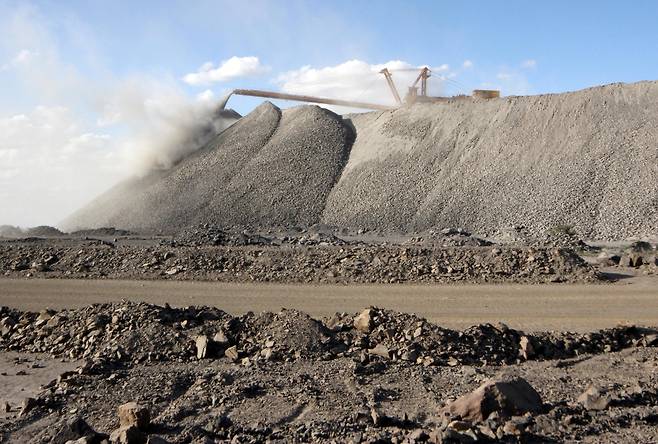
South Korea’s auto industry is facing a dysprosium shortage after China’s three-month export controls depleted domestic supplies of this rare earth element. An industry insider explained, “Dysprosium is sensitive to temperature and humidity, making long-term storage difficult. Inventories are usually low, but supplies have dropped sharply this month.” Typically, companies keep three to six months of rare earth stock, but recent U.S.-China tensions have reduced some supplies to about one month. In response, the government lent reserves from the Korea Mine Rehabilitation and Mineral Resources Corporation to affected companies earlier this month.
Dysprosium is one of seven rare earth elements China restricted in April. It is a key material for permanent magnets used in medical devices, electric vehicle motors, and wind turbines. China produces nearly all of it. The South Korean government has designated dysprosium as one of its 10 strategic core minerals because of its critical role in advanced industries.
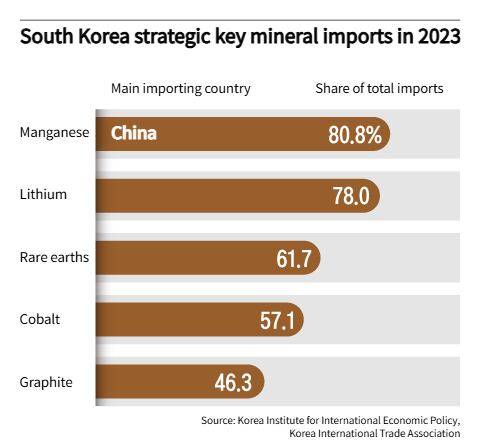
South Korea depends on imports for about 95% of its mineral needs, making China’s export restrictions a serious challenge. Key sectors like semiconductors, secondary batteries, and electric vehicles all require these core minerals. A Ministry of Trade, Industry and Energy official said, “Korea has fewer mineral resources and lower mining profitability compared to other countries, so it relies heavily on imports, mainly from China.”
China has designated 30 of the 33 core minerals identified by the South Korean government in 2023 as either core minerals or export-controlled items, making its actions inevitably have an immediate impact on South Korea’s industrial sector. According to a May report by the Korea Institute for International Economic Policy, import restrictions on rare earths and permanent magnets—both in high demand domestically—could reduce South Korea’s auto parts exports by 24.2% and secondary battery exports by 10.8%, dealing a significant blow.
The demand for core minerals is growing as Korean industries shift toward greener technologies. The ministry’s analysis shows that electric vehicles require six times more minerals than gasoline cars, and wind power needs nine times more than gas plants. “China’s export controls, aimed at the U.S., are hurting South Korea,” said Professor Lee Hee-ok of Sungkyunkwan University. “Korea and China must discuss supply chain stability for advanced industries.”
Copyright © 조선일보. 무단전재 및 재배포 금지.
- 한계 넘은 마라톤, ‘2시간 벽’ 깼다
- 전쟁과 AI ‘대변혁의 시대’… 24國 글로벌 리더의 해법
- 3번째 암살 위기, 기회로 뒤집는 트럼프
- 서울하프마라톤… 2만명이 누린 특별한 봄날
- [바로잡습니다] 4월 22일 자 A26면 ‘중국선 ‘혁명가’ 대만선 ‘국부’ 양쪽서 위인 평가받아요
- 재무장 일본, 둘로 나뉜 ‘후지산 마을’
- 동맹국에 더 거센 ‘트럼프 폭풍’… 한국의 길 찾는다
- 마크 리퍼트, 조셉 윤… 북핵 해법·한미일 협력 논의
- 총격범, 칼텍 출신 30대 교사… “트럼프 행정부 쏘고 싶었다”
- “미국의 안보 분담 요구에 방위력 강화… 日 강해지면 북핵 위협에도 역할 가능”