Google bows to antitrust pressure with YouTube Lite in Korea
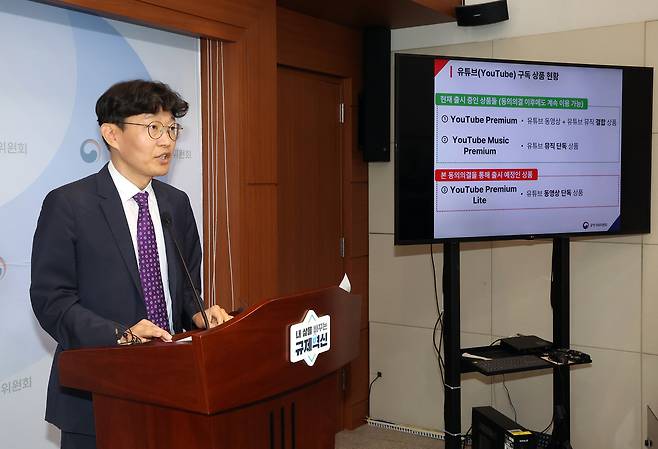
Google will launch a new standalone YouTube subscription in Korea without YouTube Music — a move aimed at addressing antitrust concerns over alleged unfair bundling practices, according to the country’s competition regulator on Tuesday.
The new product, dubbed YouTube Premium Lite, will provide ad-free video streaming without the music streaming service at nearly half the price of the current YouTube Premium plan. Monthly fees are set at 8,500 won ($6.15) for Android users and 10,900 won for Apple customers. The pricing disparity reflects fees imposed by Apple’s in-app payment system, the Fair Trade Commission said.
On Tuesday, the antitrust watchdog unveiled a provisional consent decree outlining these changes as part of its investigation into Google’s potential violation of Korea’s Monopoly Regulation and Fair Trade Act. The regulator will collect feedback from interested parties for 30 days until Aug. 14 before making a final decision. If approved, Google will be required to launch YouTube Premium Lite in Korea within 90 days.
The corrective measure stems from the FTC’s view that Google’s current bundling of YouTube Premium with YouTube Music ― priced at 14,900 won ― unfairly limits consumer choice.
In response, Google agreed to create the new Premium Lite offering, which includes only ad-free video viewing. Compared to the full Premium service, the new plan costs about 57.1 percent less on Android and 55.9 percent less on iOS.
“Even after the launch of YouTube Premium Lite, the existing subscription products ― YouTube Premium and YouTube Music Premium ― will remain unchanged,” said Kim Moon-sik, director general of the FTC’s anti-monopoly investigation bureau. “Consumers who prefer the current packages can continue their subscriptions as before.”
Google has also committed to freezing the prices of both YouTube Premium Lite and YouTube Premium for at least one year after launch, a move aimed at alleviating concerns about rising subscription fees across digital platforms, a trend now dubbed as “streamflation.”
To further incentivize users, Google plans to offer a two-month free trial to both new subscribers and existing Premium users who switch to the Premium Lite plan. This promotional offer will be implemented exclusively in Korea, making it the first such initiative globally.
Additionally, Google will introduce discount plans in partnership with local telecom providers and retailers. These initiatives are expected to benefit up to 2.1 million Korean consumers, the antitrust regulator estimated.
The consent decree includes provisions for fostering the domestic content ecosystem. Google pledged to invest 15 billion won over four years to support emerging Korean artists, selecting up to 48 teams, with at least eight to receive support for global expansion. Chosen artists will benefit from training in composition and vocals, promotional support and overseas performance opportunities.
This case marks one of the first applications of the consent decree process to a global tech platform in Korea. Addressing criticism that the measure may serve as a “free pass” for Google, Kim emphasized that the consent decree allows for faster and more effective enforcement than traditional legal proceedings, which can take four to five years.
“Especially in tying cases, it allows for concrete negotiations on the design and conditions of new product offerings, ultimately enhancing consumer protection,” he said.
Copyright © 코리아헤럴드. 무단전재 및 재배포 금지.