Rethinking cultural policy: Beyond supporting creators to educating audiences
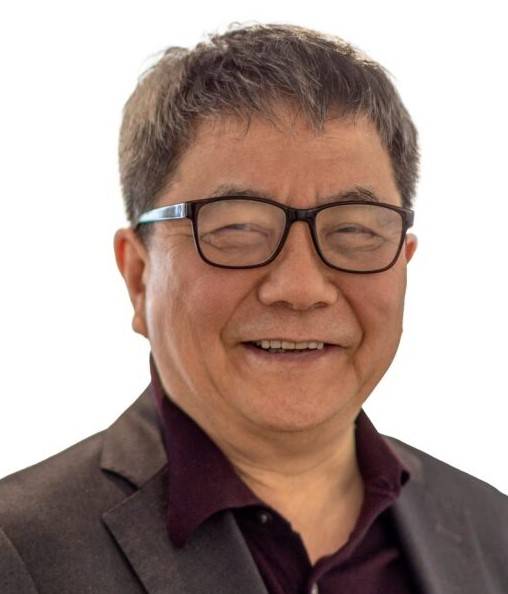
Jeong Gwa-ri The author is a literary critic and honorary professor at Yonsei University.
Culture is the expression of a community’s way of life. Korean culture, then, is the expression of how Korean people live. Such expression may seem natural, something that requires little thought. Many people think this way. That is why playing the stock market or golf is common, while reading or painting remains rare. But if we stop there, we may enjoy life, but we will not reflect on or grow from it.
There are three ways culture expresses life: It can make us feel it, elevate it or transform it. While these may seem similar, they are distinct in nature. Depending on which aspect is emphasized, the direction and quality of a culture can shift significantly. Because culture is inherently communal, cultural policy is essential.
![Novelist Han Kang receives the Nobel Prize in Literature from King Carl XVI Gustaf of Sweden during the 2024 Nobel Prize Award Ceremony at the Stockholm Concert Hall on December 10, 2024. [NEWS1]](https://img3.daumcdn.net/thumb/R658x0.q70/?fname=https://t1.daumcdn.net/news/202507/14/koreajoongangdaily/20250714000445913wxce.jpg)
The goal of cultural policy should not be to dictate a specific form of culture, but to encourage vitality among its elements. When this is done well, it enhances the creative power of culture; when done poorly, it stifles it.
The key components of culture can be summarized as people, narrative, characteristics and quality. This article focuses on two: people and quality.
![People line up to purchase books by novelist Han Kang, winner of the 2024 Nobel Prize in Literature, at the Kyobo Bookstore’s Gwanghwamun branch in Jongno District, central Seoul, on the morning of October 11, 2024. [YONHAP]](https://img2.daumcdn.net/thumb/R658x0.q70/?fname=https://t1.daumcdn.net/news/202507/14/koreajoongangdaily/20250714000447839mnkm.jpg)
"People" refers to both creators and audiences — readers, viewers and listeners. In Korea, cultural policy has leaned heavily toward supporting creators. High-level culture and the arts in Korea are rarely self-sustaining — often attributed to the country’s relatively small population. As national wealth has grown, the government has spent considerable public funds supporting artists, a system that artists abroad frequently envy.
Yet this support system has serious flaws, especially in literature. Authors once honed their work through tension and dialogue with readers. But with public grants now a central focus, many writers pay more attention to satisfying selection committees than engaging with readers. The result is a breakdown in the connection between writers and their audience, and fewer opportunities for readers to form reading habits. In addition, cultural grants tend to be distributed to a small group of artists, leaving many excluded. This calls for a fundamental policy shift. Rather than prize-based support, the government should offer basic living stipends to a broader base of writers.
The problem is not limited to creators. Cultural policies that focus exclusively on production have left the audience’s cultural literacy stagnant. Han Kang's win Nobel Prize in Literature — a first for Korean authors — recently brought renewed interest in her works. Yet rumors persist that few readers actually finished those books, known for their complexity. A lack of investment in audience development means people are unable to fully engage with cultural products. Despite statistics showing that Korea’s reading rates are among the lowest, little more than expressions of regret have followed.
As Pierre Bourdieu argued, cultural taste is a product of education. Cultural education must begin in early childhood. Only those who read as children are likely to reach for books as adults. Telling someone who never built the habit to start reading later in life is a misplaced effort.
More importantly, only a culturally literate audience can demand high-quality literature. Audiences are what give rise to the values and characteristics of a culture. No matter how accomplished a writer may be, if their work is recognized solely as personal achievement rather than as part of Korean literature, the advancement of Korean literature remains elusive. This is the situation we face today.
Even if the foundations for cultural education are not yet in place, we must begin somewhere. Cultural policy must shift from a creator-centered to an audience-centered model. But we must not confuse audiences with producers. Misguided efforts to promote “citizen creativity” through flashy, populist events should be avoided. What is needed first is to develop the audience’s ability to deeply understand and appreciate culture. Once that ability matures, people will naturally be inspired to create as well.
Let us briefly consider quality. Cultural quality consists of two types: technical and spiritual. Technical quality enhances the enjoyment of life, while spiritual quality deepens our understanding of life’s meaning.
Korean culture excels in technical quality. The global popularity of Korean pop music and television dramas testifies to that. Their dynamism and sophistication surpass much of the global entertainment industry.
![Visitors take part in the two-day K-Tourism Roadshow event at the Westfield Forum des Halles shopping mall in Paris on June 22 and 23, 2024. [MINISTRY OF CULTURE, SPORTS AND TOURISM]](https://img1.daumcdn.net/thumb/R658x0.q70/?fname=https://t1.daumcdn.net/news/202507/14/koreajoongangdaily/20250714000449536itkc.jpg)
But spiritual quality remains lacking. Korean culture struggles to offer a deep reflection on the human experience. This stems from the tendency to consume culture for momentary pleasure. Technical quality stimulates the senses, while spiritual quality touches the heart. Sensory stimulation brings dopamine; heartfelt resonance can feel overwhelming, even painful. This leads many to ask, “Why not just enjoy culture?” But if we stop at enjoyment, all we do is endlessly reproduce our current way of life.
True cultural power lies in using the present as nourishment for a future that contributes to humanity’s collective evolution.
Translated from the JoongAng Ilbo using generative AI and edited by Korea JoongAng Daily staff.
Copyright © 코리아중앙데일리. 무단전재 및 재배포 금지.
- Korean youths say they want to be born in a country where people are 'satisfied' with life
- Wife gets suspended sentence for ramming another woman’s car after husband gets out
- Xinyu of tripleS says Taiwan and Hong Kong are China, tells fans who don't agree to 'leave'
- 'S Line': Murder, mystery and red threads of intimate fate
- VCHA's Kaylee exits group
- Why are university graduation albums fading away?
- Son returns to Spurs as questions about with future at club swirl
- Russia warns U.S., South Korea and Japan against forming security alliance targeting North Korea
- Woman hit by falling teen dies a day after 11-year-old daughter in same incident
- Korea's prehistoric petroglyphs receive Unesco World Heritage designation