[Herald Interview] Chairman of Thailand’s Amata eyes Korea to create ‘city of tomorrow’
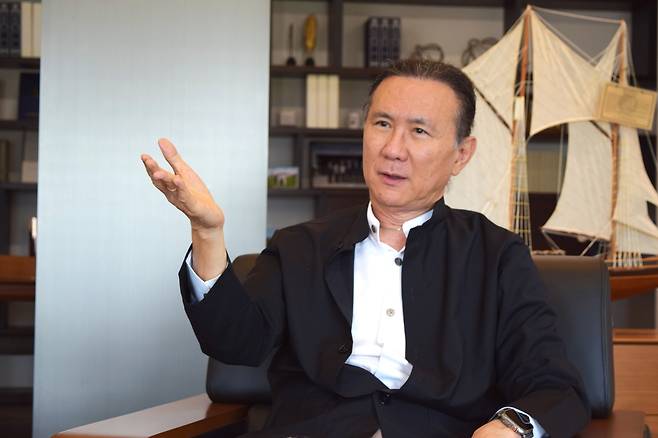
Vikrom Kromadit, founder and chairman of Thailand-based Amata Corp., has placed South Korea at the heart of his vision for the future of Southeast Asia‘s smart cities.
"Korea has shown the world what innovation and determination can achieve in both business and culture," the chairman said during an interview with The Korea Herald at Herald Media Group's office in Seoul on Saturday.
”We are ready to partner with Korean companies and create a bigger future together, step by step. We have the land, the infrastructure and the commitment, and we can build a smart city that reflects Korea’s culture, business strength and aspirations.”
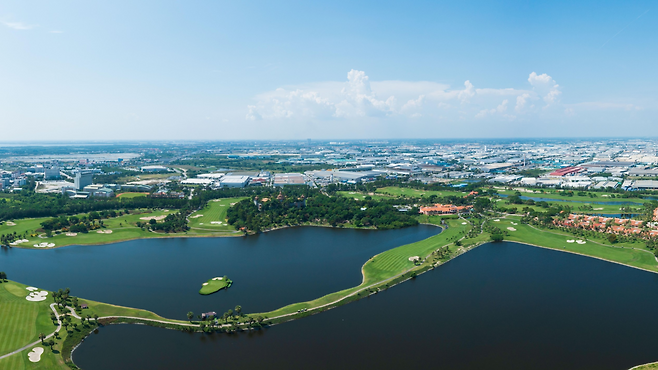
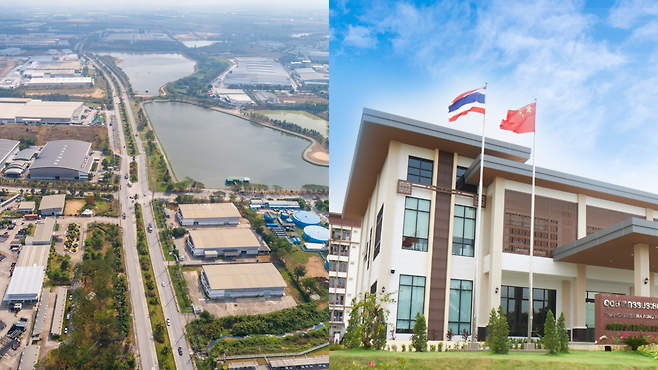
Established in 1989, Amata has steadily grown into one of Southeast Asia’s leading developers and operators of industrial estates, managing more than 11 projects across Thailand, Vietnam, Laos and Myanmar.
The company’s developments now cover over 150 square kilometers and host over 1,600 corporate tenants from 33 countries, including global giants such as BASF, BMW, Bosch, Foxconn, Nestle and Toyota.
The presence of Korean companies, including Posco Coated Steel in Thailand, which has been in partnership with Amata for over two decades, further demonstrates the potential for stronger business ties between Amata and Korea.
“In the early 1990s, I had the opportunity to meet Daewoo Group founder Kim Woo-choong at his residence in Seoul. He gave me a copy of his autobiography, 'Every Street is Paved with Gold,' and discussed his vision for Korea‘s future. Now, more than 30 years later, I have witnessed how the diligence and hard work of the Korean people have borne fruit, and I see Korea standing at the center of Asia, poised for even greater opportunities.”
The Korean Smart City Zone is envisioned by Amata as a platform for Industry 4.0, supporting high-tech industries by leveraging Korean expertise in smart and sustainable urban development.
Since signing a business agreement with Incheon Smart City Corp. in 2017 to create such a model at Amata Nakorn Industrial Estate in Chonburi, Kromadit has visited Seoul multiple times to bring the plan to life.
His recent weeklong visit in July was aimed at building new relationships with Korean conglomerates seeking to build facilities in Thailand. The visit was a success for Amata Group, with three of Korea’s leading conglomerates showing great interest, according to the chairman.
Born in 1953 in Kanchanaburi, Thailand, Kromadit grew up as the eldest of 23 siblings in a Hakka Chinese family, naturally facing responsibility and hardship from an early age. His unique upbringing instilled in him a determination to create lasting value for society.
“I believe in a philosophy I call ‘all win.’ When everyone benefits — whether in business, the environment or community development — there’s no reason for conflict. That’s how we avoid war and reach mutual prosperity.”
After studying mechanical engineering at National Taiwan University, he returned to Thailand and founded V&K Corporation in 1975. In 1988, he launched Bang Pakong Industrial Park, followed by the establishment of Amata City Chonburi in 1989, which became the flagship of Amata Corporation. Amata’s estates differ from typical industrial zones in terms of business sustainability.
“We are proud that 99 percent of our tenants thrive. In other words, we don’t just provide land — we build communities and serve our clients like family.”
As part of the “all win” philosophy reflected in Amata’s commitment to corporate social responsibility, in 1996, Kromadit established the Amata Foundation to support projects in education, the arts and environmental sustainability.
In 2023, Kromadit made headlines by pledging 95 percent of his personal wealth — estimated at over 20 billion baht ($615 million) — to the foundation.
“Why did I make such a decision? Because life has given me more than I ever dreamed. I’ve succeeded not just for myself, but to honor my family, to learn from both my failures and my triumphs, and to make sure others don’t repeat the mistakes I made.”
His bestselling autobiography, “Dream 50 Years,” was adapted into a TV drama, highlighting the challenges he overcame and the wisdom he hopes to pass on.
“I believe it was the first drama in Thailand based on a living person’s story, but the book is all about mistakes, both mine and others. That‘s how people learn, and why I shared it,” he said.
Despite his accomplishments, Kromadit remains grounded.
“People ask why I’m happy and the answer is simple. I work hard, but I never overthink. I simply share what I’ve built with the community, because business to me is not just about money, but the foundation for making dreams real.”
Copyright © 코리아헤럴드. 무단전재 및 재배포 금지.