Samsung stumbles on chip woes, missing Q2 targets by wide margin
이 글자크기로 변경됩니다.
(예시) 가장 빠른 뉴스가 있고 다양한 정보, 쌍방향 소통이 숨쉬는 다음뉴스를 만나보세요. 다음뉴스는 국내외 주요이슈와 실시간 속보, 문화생활 및 다양한 분야의 뉴스를 입체적으로 전달하고 있습니다.
Samsung Electronics reported sharply weaker-than-expected earnings for the second quarter, as persistent losses in its semiconductor and foundry businesses—particularly in high-bandwidth memory (HBM)—overshadowed modest gains elsewhere.
The South Korean tech giant posted 74 trillion won ($53.1 billion) in consolidated revenue and 4.6 trillion won ($3.3 billion) in operating profit for the April–June period, down 0.1% and 55.9%, respectively, from the same quarter a year earlier. The results fell far short of market consensus, which had pegged operating profit at 6.3 trillion won ($4.5 billion). Even after analysts cut their forecasts by about 2 trillion won over the past month, Samsung still underdelivered.
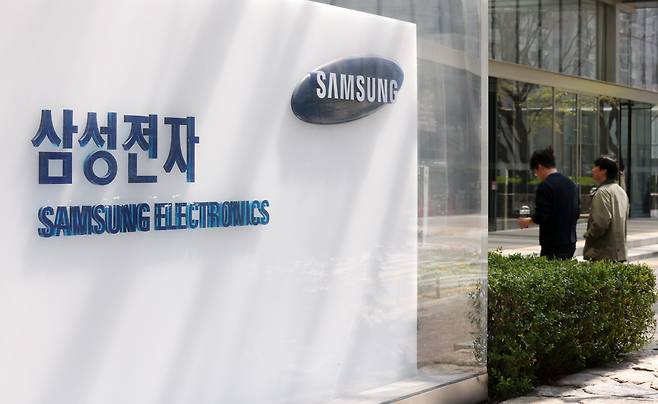
At the heart of the earnings miss was weakness in Samsung’s semiconductor division, long the company’s most reliable profit engine. While the company did not break out segment results in its preliminary guidance, analysts estimate its Device Solutions (DS) unit earned just 400 billion won ($287 million)—a staggering 94% drop from the 6.45 trillion won it posted a year earlier.
HBM, once viewed as a key growth area amid the AI boom, proved to be a major drag. Samsung reportedly failed to secure orders for its 12-layer HBM3E chips from Nvidia, the dominant force in the AI accelerator market. The delay in product certification not only hurt revenue but led to inventory buildup and margin compression. “HBM sales may have actually declined from Q1,” said Kim Sun-woo, an analyst at Meritz Securities, noting U.S.-based clients remain out of reach.
Foundry and System LSI operations were another sore spot. Analysts estimate the two units combined for an operating loss exceeding 2 trillion won ($1.4 billion), marking yet another quarter of red ink amid difficulties attracting orders for advanced nodes. Samsung’s NAND flash memory business also stayed underwater due to ongoing price softness. Further compounding the issue was the won’s depreciation against the U.S. dollar, which pressured margins in a dollar-denominated industry.
In a statement, Samsung acknowledged “one-off costs such as inventory revaluation” in the memory business but said improved HBM shipments and customer evaluations are underway. The company added that it expects losses in its non-memory businesses, including foundry, to narrow in the second half.
The mobile business was a relative bright spot. The division is expected to have posted around 3 trillion won ($2.2 billion) in operating profit, buoyed by the launch of the Galaxy S25 Edge and aggressive cost control. Galaxy smartphone shipments were estimated at 56 million units, slightly exceeding expectations.
Other divisions fared less well. The consumer electronics unit struggled with sluggish demand and tariff-related costs, with analysts estimating operating profit of 100 billion to 300 billion won ($72 million–$216 million). Samsung Display earned an estimated 500 billion to 700 billion won ($360 million–$505 million), down from 1 trillion won last year but up slightly from the previous quarter.
Despite the underwhelming quarter, some analysts see room for improvement. With HBM supply issues expected to ease and seasonal trends favoring mobile and display sales, Samsung’s Q3 operating profit could recover to the 8 trillion won ($5.7 billion) range.
“HBM sales to clients like AMD should pick up, pushing chip profits back into the low 4-trillion-won range,” said Pak Yuak, an analyst at Kiwoom Securities. He added that foundry losses may also narrow, helped by better Exynos chip sales and seasonal tailwinds.
Still, uncertainty lingers. Samsung’s position in the HBM market continues to lag, and broader macroeconomic headwinds could suppress demand for semiconductors and consumer electronics in the months ahead. “Samsung is still trying to get its 12-layer HBM3E certified while rivals like SK hynix and Micron are already moving on to HBM4,” said Chae Min-sook of Korea Investment & Securities. “It’s not a strong position to be the third entrant in a race where others are already pulling ahead.”
Lee Su-rim, a researcher at DS Investment Securities, warned that with the boost from tariff-driven preorders now fading, DRAM prices may face downward pressure in the second half.
Copyright © 조선일보. 무단전재 및 재배포 금지.
- 공식 선거운동 시작…정원오 우체국·오세훈 가락시장서 출발
- “44일간 폐수조에”… ‘청주 실종여성 살해’ 김영우, 징역 23년
- 정동영, 시진핑 방북설에 “성사되면 북미회담 당연히 논의될 것”
- 오세훈, 강북서 출정식 “부동산 실정 심판하는 선거”
- ‘여직원 성폭행 시도’ 김가네 김용만 회장, 1심 징역형 집행유예
- 삼성전자 주주단체들 “삼성 노사 잠정 합의안 위법” “긴급조정권 발동하라”
- BTS, 25일 美 ‘아메리칸 뮤직 어워즈’ 특별 출연
- 포항에 ‘급식대가’ 떴다...포스코 ‘나눔의 집’ 22주년 맞아 특별 배식 봉사
- 中企 대금지급, 현실은 27일인데 법은 50년째 ’60일'
- 왕란이 클까, 특란이 클까? 농식품부 ‘왕란→2XL’, ‘특란→XL’로 중량 규격 변경