A president’s cautious debut and the question of progressive conscience
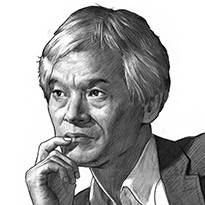
Song Ho-keun
The author is a columnist of the JoongAng Ilbo and a chair professor and director of Doheon Academy, Hallym University.
The month following Korea’s presidential election unfolded with unusual calm. For once, politics retreated into the background. As conservatives fell into disarray, progressives quietly regrouped. Progressive voters maintained a composed demeanor, while conservatives tended to their wounds.
This atmosphere set the stage for President Lee Jae Myung’s first press conference, held to mark his first month in office. He struck a relaxed tone, avoiding sharp political rhetoric and engaging in nimble, sometimes playful, responses. His shift from local administrator to national leader was surprisingly swift.
![President Lee Jae Myung takes question from journalists during his first formal press conference marking 30 days in office at the Blue House’s Yeongbingwan state guest house in central Seoul on July 3. [JOINT PRESS CORPS]](https://img1.daumcdn.net/thumb/R658x0.q70/?fname=https://t1.daumcdn.net/news/202507/08/koreajoongangdaily/20250708000343940tdsq.jpg)
First public encounters between presidents and citizens are often fraught with tension. Former President Roh Moo-hyun once snapped at a prosecutor during a televised debate, asking, “So you want to take this all the way?” The room fell silent. Moon Jae-in promised a new political era from Gwanghwamun, Lee Myung-bak declared the Four Rivers Project, Park Geun-hye pledged “national happiness,” and Yoon Suk Yeol launched four major reforms. These bold pronouncements, from prosecutorial to labor reforms, often became burdens throughout their presidencies.
President Lee seemed to have learned from their missteps. He recognized how early vows often become political liabilities. His language was flexible and evasive, showing a skill for dispersing responsibility. Sensitive issues such as prosecutorial reform were deferred to the National Assembly. Trade negotiations were said to be undecided. His positions on Japan and North Korea straddled the past and present with deliberate vagueness. Housing policy was teased without specifics. He simply said he had “big ideas” in his pocket — though that pocket may well be empty.
Two pledges stood out: a universal 250,000 won payment and the cancellation of high-interest personal debt. The payment — equivalent today to a pair of shoes, or once, rubber slippers — was a populist gesture, more symbolic than structural. As for policy substance, President Lee’s approach resembled a street market — offering samples, delaying commitments and shifting controversial issues to other hands.
![President Lee Jae Myung, center, greets reporters after his first formal press conference marking 30 days IN office at the Blue House compound in central Seoul on July 3. [JOINT PRESS CORPS]](https://img4.daumcdn.net/thumb/R658x0.q70/?fname=https://t1.daumcdn.net/news/202507/08/koreajoongangdaily/20250708000345871elka.jpg)
Still, what is the goal of the Lee administration? After years devoted to a relentless presidential campaign, what vision is written on the proverbial flag of victory? Shouldn’t there be a guiding principle that leads the country out of political dysfunction?
If it were up to me, I would propose this: the dismantling of political polarization. In his press conference, President Lee noted that “perhaps former President Yoon had a hard time,” as if speaking about someone else’s misfortunes. Is he suggesting that his own governing will be smooth due to a legislative majority? What about the shared responsibility for the collapse of bipartisan cooperation? What is the proposed remedy?
In his book "The Conscience of a Liberal" (2008), economist Paul Krugman argues that income inequality is the principal driver of political polarization. This applies across developed nations but is especially urgent in Korea. Despite reaching $36,000 in per capita income, Korea’s income and asset inequality continue to worsen. The resulting sense of deprivation is among the world’s most acute. Yet even in a loosely structured press event, why did the president not confront this hard truth? Is it because he lacks a progressive countermeasure — or is he still withholding it?
Korean politicians on both sides have long sustained themselves on different political nourishment. The left fed on anger, dissatisfaction and injustice; the right on aspirations for success and upward mobility. But the right’s trickle-down promises turned out to be illusions, while the left’s attempts at redistributive policy frequently misfired. And now, the new catchphrase is “pragmatic government.” But did the progressives fight for years only to arrive at such a vague and improvisational notion?
Inequality in Korea is determined largely by housing and employment. The left’s failures in both areas are well known. The youth drifted through unstable jobs, while even full-time workers were forced into multiple side gigs. Despite this, the leftist administration touted “work-life balance.” If the revolutionary generation of 586 activists, now in power, still clings to that illusion, then the nation they govern is “heaven” only for themselves.
Progressive governments in Europe focus intensely on employment stability. If there is such a thing as a golden triangle of growth, welfare and employment, it is a progressive idea. To sustain that cycle, unions in Europe often agree to wage restraint and flexible working hours. Sweden’s “active labor market policy” is a leading example. One wonders if Kim Young-hoon, the former head of the Korean Confederation of Trade Unions and the nominee for labor minister, understands this framework.
The KCTU’s traditional focus on large conglomerates raises doubts about its concern for low-wage workers juggling multiple jobs. Korea’s ambitious 100 trillion won ($73 billion) AI investment may run aground on the rigidity of the 52-hour workweek. In China, the AI push is driven by workers on "007" schedules — midnight to midnight, seven days a week. In contrast, Korea discusses a four-and-a-half-day workweek and legislation that would tether managers and union leaders to year-round negotiations. Under such conditions, how will Korea narrow inequality or lead an AI transformation?
![Elderly people wait in line for a free lunch at a soup kitchen in Jongno District, central Seoul, on Feb. 3. [YONHAP]](https://img1.daumcdn.net/thumb/R658x0.q70/?fname=https://t1.daumcdn.net/news/202507/08/koreajoongangdaily/20250708000347782ljoc.jpg)
If Kim were to propose wage moderation and flexibility — moves aligned with genuine progressive values — he might face impeachment, not from the opposition but from within his own camp. Impeachment, it seems, is now a weapon turned inward.
President Lee’s first press conference was competent but underwhelming. His rhetorical agility was clear, but he offered no strategy for tackling inequality or building policy flexibility. And so, one must ask: Where is the conscience of the true progressive?
Translated from the JoongAng Ilbo using generative AI and edited by Korea JoongAng Daily staff.
Copyright © 코리아중앙데일리. 무단전재 및 재배포 금지.
- Blackpink premieres 'Jump,' first release in over two years, at world tour kickoff
- 'There's no excuse': 'Squid Game' actor Park Gyu-young apologizes for spoiling series plot point
- Democratic Party unilaterally passes supplementary budget at 31.8 trillion won
- Trump's efforts to revive U.S. shipbuilding slowed by inconsistent policies, leadership gaps, funding shortfalls
- SHINee's Taemin apologizes for saying Japan earthquakes could make his concert 'look cool'
- 'I did everything I could': Actor Lee Jung-jae bids farewell to iconic 'Squid Game' character in final season
- HD Hyundai eyes U.S. Navy's Aegis maintenance deal
- Massage parlor operators convicted for attaching GPS trackers to immigration enforcement team vehicles
- One worker missing, one knocked out after underground inspection goes awry
- Exclusive: Korea ups Canadian crude imports amid uncertainties about tariffs and Middle East