Interview: Inside “Jjan” with Chef Cho Young-jae—where sushi meets fermentation
이 글자크기로 변경됩니다.
(예시) 가장 빠른 뉴스가 있고 다양한 정보, 쌍방향 소통이 숨쉬는 다음뉴스를 만나보세요. 다음뉴스는 국내외 주요이슈와 실시간 속보, 문화생활 및 다양한 분야의 뉴스를 입체적으로 전달하고 있습니다.
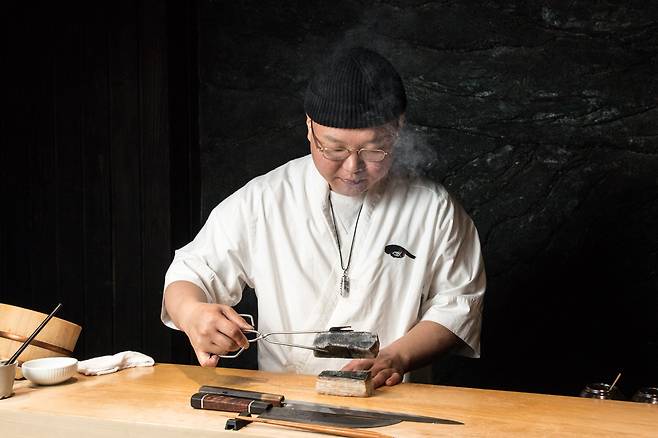
There’s a saying in Korean: Sikyakdongwon (食藥同原)—“food and medicine share the same root.” It reminds us that what nourishes us and what heals us are not so different after all. Medicinal herbs become ingredients, and ingredients, in turn, can become medicine. Ultimately, it all leads to the same conclusion: to live well, one must eat well.
Each of us, in our own way, seeks balance in the body. On a biting cold day, we crave a spicy hot pot to warm the soul. When the heat is unbearable, we reach for something cooling—perhaps a clear chicken broth with golden drops of oil glistening on the surface.
And on days when our throats run dry, a sip of icy Pyongyang naengmyeon broth quenches both thirst and heat. Tending to our health through delicious food—that, too, is a vital part of a good life.
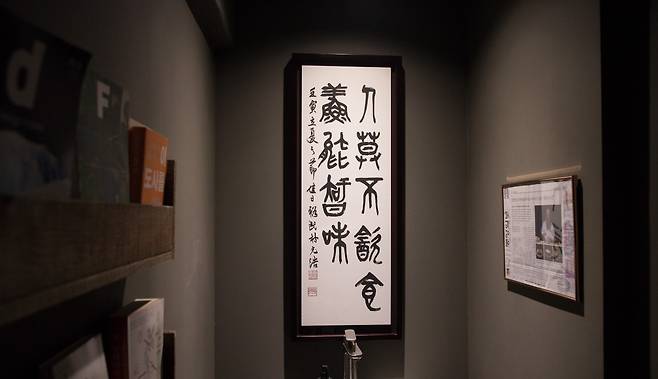
Confucius once said something similar: Inmakbureumsiksaennungjiwi (人莫不飮食鮮能知味)—“No one goes without food and drink, yet few truly understand their flavor.
”Still, keeping to this ideal is no easy feat. The old saying, “If it’s good for the body, it’s bitter to the taste,” didn’t come from nowhere. That’s why our ancestors found a wiser way: fermentation.
Fermentation—powered by time and care—has evolved into many forms in Korea, from jang (fermented sauces) to jangajji (pickled vegetables). These bold, concentrated flavors can elevate even the smallest portion of a dish. One chef has embraced this idea fully: Cho Young-jae, the chef-owner of Jjan in Seoul’s Bangbae neighborhood.
Originally trained in Japanese omakase, Chef Cho broke free from the boundaries of sushi to create a space that feels more like a culinary lab.
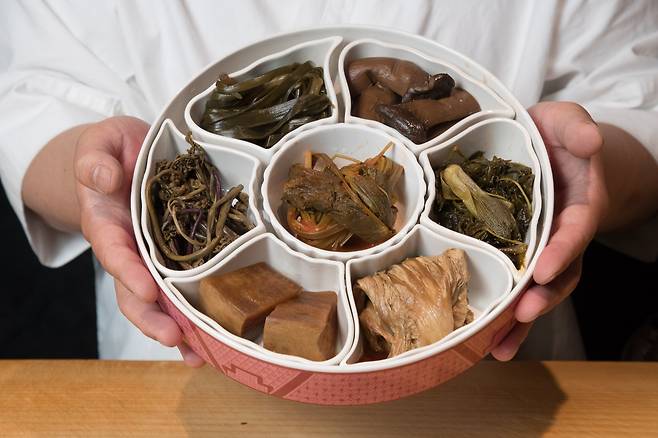
At Jjan, he experiments with Korean fermentation and seasonal ingredients, starting with combinations like sushi paired with jangajji, and expanding into jang, pickling, aging, infusing, and the changing rhythm of the seasons. Though rooted in Japanese technique, the experience gradually leans into a distinctly Korean flavor—one only found at Jjan.
The restaurant’s name itself—Jjan—comes from the Korean word for “salty,” but it also embraces the essence of fermentation: jang, salt, jeotgal (fermented seafood), and preserved foods. Chef Cho calls himself “a maker of jjan,” tying together the entire process—from fermenting jang, to pickling vegetables, to curing fish in pickling brine—into one unified worldview.
Seasonality is sacred at Jjan. Chef Cho believes that ingredients in their prime offer exactly what people need to endure the season. Wild-caught seafood, pesticide-free vegetables, jang, jangajji, aromas of the season, aging, and time—all are woven into the dining experience under the name Jjan.
Dining at Jjan is an experience beyond the plate. As Chef Cho puts it, food is what sustains the body, and jang is what touches the body most intimately. That’s why Jjan seeks to deliver real ingredients, real flavors, and real seasons in every dish. Paired with infused liquors and curated music, the experience engages all five senses. By the end, your body speaks before your mind does: “That was a good meal.”
―Please introduce yourself.
“I’m Cho Young-jae, the owner chef of Jjan in Bangbae. I started my culinary career with Japanese cuisine. I studied at a sushi academy in Japan and later apprenticed at a sushi restaurant in Ginza.
After returning to S. Korea, I worked at a Japanese restaurant for two years, then opened my first space, Towa, in 2020. But it was three years ago, after meeting a teacher in Jeju, that I truly awakened to the idea of ‘delicious health.’ That encounter ultimately led me to open my current restaurant."
―What kind of place is Jjan?
"Jjan is like my personal lab—a space where I blend Japanese culinary techniques with Korean fermentation. It all began with the search for the right pickles to pair with sushi. I realized that the same fish could taste completely different depending on which pickle accompanied it.
For example, Baechu (napa cabbage) or aged kimchi worked well with white-fleshed fish, while sancho or Korean mint paired better with blue-backed fish. That was when I first realized the endless potential of fermented combinations."
―What does the word Jjan mean to you?
“My work is essentially about creating jjan. The word itself encompasses jang (fermented sauces), salt, jeotgal (fermented seafood), and all things preserved.
The use of seasonal ingredients is an extension of that idea. In spring, I’m drawn to ingredients with floral notes; in summer, I naturally think of ingredients like watermelon that embody the season’s energy. I want to channel that kind of sensory awareness into my food."
―What direction does Jjan pursue?
“I want to share the true taste of real ingredients and real seasons, grounded in the philosophy of sikyakdongwon—the belief that eating well is living well. Confucius once said, ‘Everyone eats, but few truly understand flavor.’ Jjan exists to express that ‘true taste.’"
―How do you select your ingredients?
“I insist on wild-caught and seasonal ingredients. In spring, I use shoots like dureup and eumnamu (tree aralia); in summer, seasonal fish, fruit syrups, and fermented jams. I personally select seafood from Jeju, Tongyeong, and Jindo—most of our fish, like flatfish or croaker, is wild-caught. To me, farmed fish often taste artificial due to feed and antibiotics.
For vegetables, I use wild greens from Ganghwa or pesticide-free produce I grow myself. Even the napa cabbage for kimchi is grown through contract farming in Muju.”
―What led you to combine Japanese cuisine with jang and jangajji?
“I didn’t know much about jangajji until I tasted one that had been properly aged through traditional fermentation. I was instantly captivated by its deep flavor.
When I first visited the home of my fermentation teacher—through a friend’s introduction—I dipped my finger into some fish soy sauce and tasted it. That moment felt like a revelation. I knew then what kind of food I wanted to make. It happened in 2022, and since then, I’ve been studying and using jang and jangajji seriously.”
―Why do you use fermented ingredients like jang and jangajji?
“Fermented foods are alive with microorganisms, so they’re easier to digest and gentler on the body. I’ve also heard they don’t spike your blood sugar.
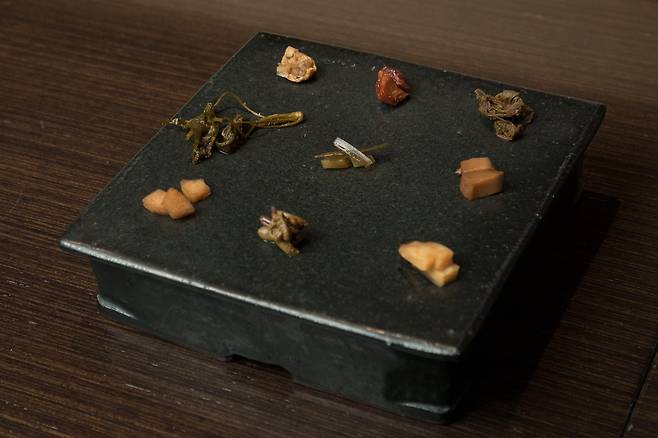
Flavor-wise, jangajji adds another layer to dishes that plain soy sauce alone can’t offer. The aroma and texture of the vegetables help enhance the depth of the sauce.”
―How do you use fermentation, aging, and infusion at Jjan?
“Fermentation is the backbone of everything we serve. We start with staples like doenjang, ganjang, and gochujang. I also ferment seasonal fruits to make jams and fruit-based sauces. To prevent spoilage, fish is aged for up to three days and only salted—not seasoned otherwise. We use a 130-year-old seed soy sauce as a base and brew new batches every year.
For added depth, I use red ginseng in doenjang and maple sap in gochujang. Fish is often cured in pickle brine—for instance, mackerel in chive pickle brine, and white fish in napa cabbage brine. I’ll let you in on a secret—we’re also testing pickle brine in our sushi rice. (laughs)”
―Is there a signature dish at Jjan?
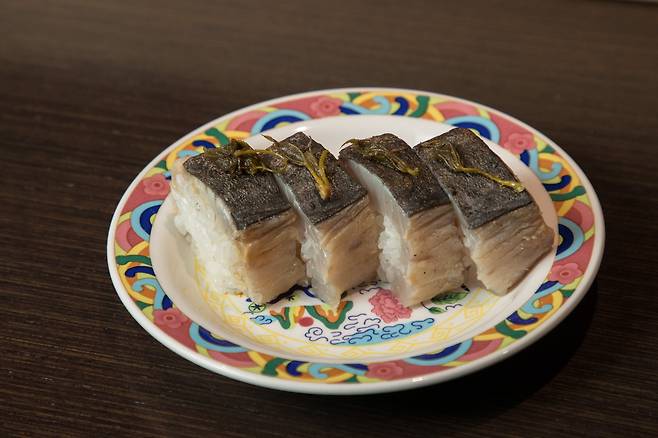
“I’d say our ‘sushi-roll.’ It’s a sushi made by curing mackerel in pickle brine—completely different from traditional Japanese vinegar-cured mackerel. Lately, we’re curing Spanish mackerel and topping it with jangajji. Even people familiar with Japanese sushi are surprised by the depth jangajji adds.
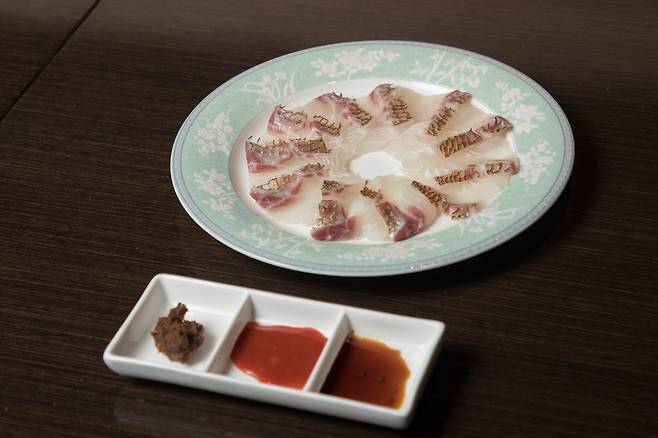
We frequently serve seasonal fish, and we often pair them with Korean elements: spring flounder with napa kimchi, summer snapper with chives, autumn mackerel with sancho and Korean mint, and winter yellowtail with kimchi pickles to cut the fattiness. We also offer sashimi paired with jangajji and a trio of jangs—something unique to Jjan."
―Why did you transition from Towa, a sushi omakase, to Jjan?
“I wanted to break free from the confines of sushi and explore Korean fermented ingredients more deeply. It wasn’t just a rebranding—it was a shift in philosophy. That said, it doesn’t mean Towa is gone for good. Once Jjan reaches a certain level of maturity, I plan to bring Towa back too."
―Besides jang and jangajji, is there anything else you’re interested in right now?
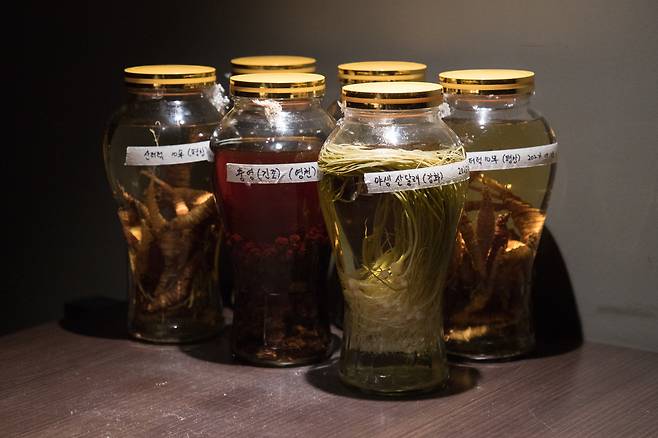
“Yes, I’m really into infused liquors at the moment. I’ve been experimenting with ingredients like deodeok, wild chives, and hardy kiwi. I try to create a progression with the drinks: a mild deodeok infusion before the meal, sancho in the middle, and a sweet silver vine spirit to finish.”
―What’s your ultimate goal?
“I want to create a culinary school grounded in the philosophy of fermentation and nourishment. I’d like to run it alongside a restaurant where graduates can work. My dream is to build a space where food protects health and carries on our culture.”
―If you had to describe your life as a single ingredient or dish, what would it be?
“Fish soy sauce. If you look at how it’s made, raw crustaceans ferment until they dissolve beyond recognition, but over time they return as a deeply flavorful liquid. It takes time. It’s not flashy, but it’s strong and rich—that’s the kind of life I want to live.”
―What would you like to say to guests who visit Jjan?
“I want them to experience what I call the ‘true taste.’ Through seasonal ingredients, naturally grown vegetables, and sauces crafted with time and care, I hope people come away with a deeper understanding of real food. Eating well is ultimately living well. Of course, it’s hard to change your eating habits overnight—but even just being curious is enough for your body to start reacting.”
Copyright © 조선일보. 무단전재 및 재배포 금지.
- 美 판매상의 악평에 정몽구 회장이 조용히 내린 결단
- 가수 홍지윤, SM C&C 전속계약...새로운 도약 예고
- 현장 찾아가는 ‘디자인 가방’...교육 환경 바꾼다
- 6월 서울 부동산, 직전 거래 대비 상승 57%... 5월보다 9.4%포인트 늘어
- [속보] 코스피 6%대 급락, 장중 7000선 무너져
- 정부 “‘최대 9개월’ 스토킹 잠정조치 연장”
- 판례 6만건에 즉답… 공무원이 직접 만든 ‘AI 법령 비서’ 개시
- 경찰에 침 뱉고 욕한 40대 여성, 잠실 참정권 집회 구속 기소 1호
- 홈플러스, 오늘부터 대형마트 임시 휴업한다
- 오타니, 美日 통산 350홈런…마쓰이 이어 두 번째