Most subway sexual assaults occur in carriages, not stations: report
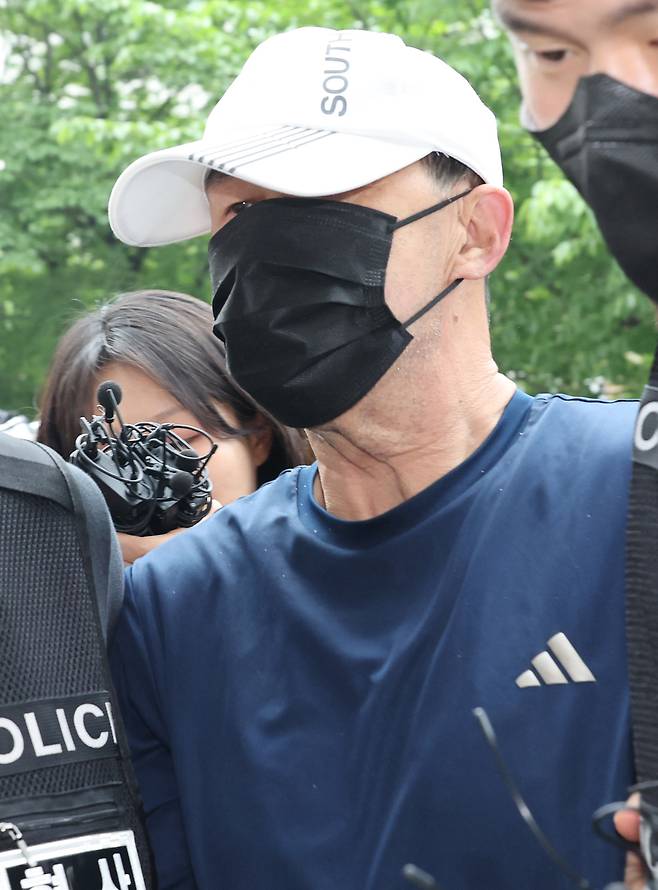
A recent report released Tuesday revealed that sexual assaults occur most frequently inside subway trains, where surveillance cameras are installed but not monitored in real time.
According to police data submitted to Rep. Park Jeong-hyeon of the ruling Democratic Party of Korea and reported by the local daily Hankook Ilbo, a total of 632 cases of sexual assaults — rape and other unwanted sexual contact — were recorded in 2024 on trains or at stations along Seoul Subway Lines 1 through 9. Nearly 70 percent of these incidents occurred inside trains, with the remainder taking place at stations.
The statistic does not distinguish between rape and other forms of sexual assault, but given the nature of the setting, most of the reported cases are are thought to be unwanted touching.
Authorities in the past did not separate the figures for subway-related sex crimes depending on the location, but started keeping separate tallies for such crimes inside the subway station and inside the car since 2023. Even then, 634 of the 1,271 sex crimes occurred inside the subway cars.
This includes 457 cases of sexual assault, but also other crimes, such as illegal filming and indecent exposure.
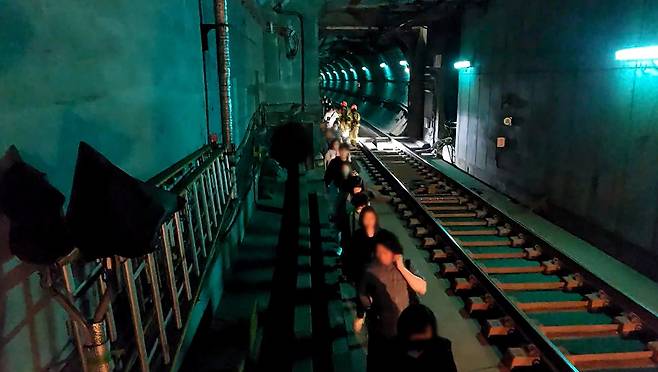
The report highlighted blind spots in the Seoul subway network's surveillance system.
On May 31, an arson attack occurred on a moving train on line No. 5, forcing passengers to evaculate through the tunnel. A total of 152 suffered minor injuries while three cars were partially or completely destroyed.
The incident touched off an ongoing discussion about establishing a real-time monitoring system for the security cameras inside the subway trains. Currently, surveilance footage from inside trains is mainly used to keep a video record, and are not transmitted to the control centers in real-time.
The conductors of each train have real-time access to the footage, but they have to operate the train and thus cannot allocate much of their efforts to monitor the situation in the passenger section. Lines No. 5 through No. 8 are particularly vulnerable to this issue because each of the trains on these lines are operated by a single conductor.
Seoul Mayor Oh Se-hoon said on June 2 that it would be impossible to implement this measure immediately, since the overhaul would cost about 120 billion won ($88.92 million), but vowed to find a countermeasure to address this issue.
Copyright © 코리아헤럴드. 무단전재 및 재배포 금지.