Three murders in one room - how 'Capone Trilogy' found greater success in Seoul
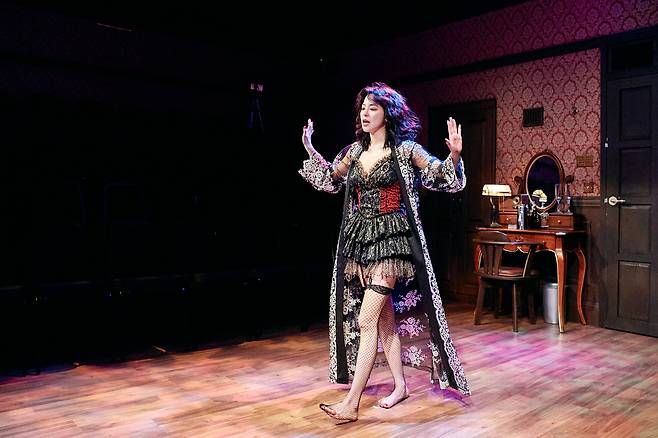
Room 661 of Chicago’s Lexington Hotel bears witness to three murders -- each a decade apart.
In 1923, 1933 and 1943, blood is spilled behind the same closed door. These crimes unfold in "The Capone Trilogy," a trio of interconnected noir plays -- “Loki,” “Lucifer” and “Vindici” -- that together form a chilling omnibus.
Though the infamous mob boss Al Capone never steps onstage, his shadow lingers over the blood-soaked carpet and in every corner, as heavy, oppressive air hangs over the room.
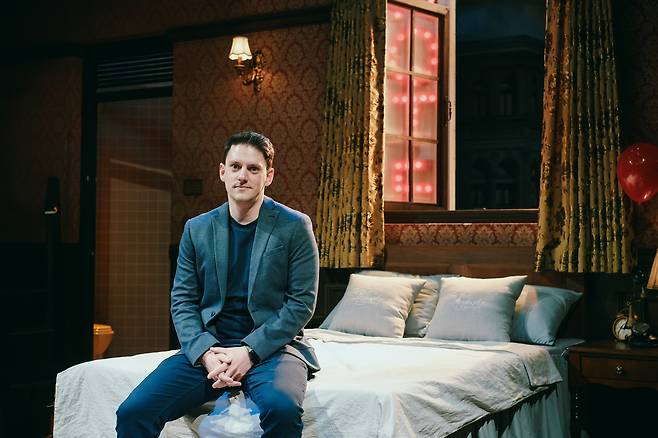
British writer-director Jethro Compton, who created the trilogy over 10 years ago, recently visited Seoul to see the Korean-language production, now in its fifth run, where it has surpassed its original UK success with consistently sold-out performances.
“I think it’s a testament to the incredible work the team here has done," Compton told The Korea Herald. "I think audiences are drawn not just to the stories, but to the whole experience of stepping into that world.”
Kim Tae-hyung, who directed all Korean productions of the trilogy from its premiere here in 2015 to its most recent run at Hongik Daehakno Art Center from March to June, has also brought Compton’s Bunker Trilogy and Frontier Trilogy to the Korean stage.
Three murders, one room
The three plays in the trilogy are connected but stand alone -- distinct in tone and narrative.
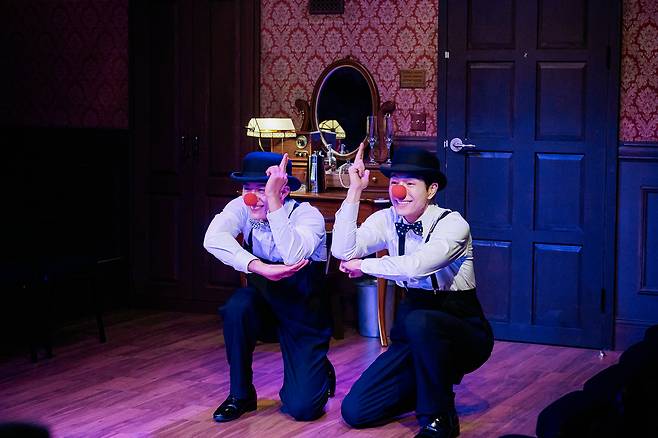
“Loki” is a dark comedy about showgirl Lola whose wedding day turns bloody. “Lucifer” follows mob lieutenant Nick's fall from grace as he fights to protect his wife. “Vindici” is a hardboiled revenge tale of a young cop avenging his wife’s murder.
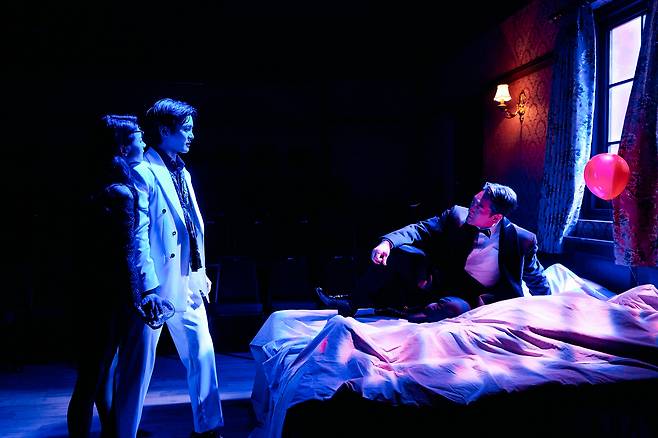
Kim said the adaptation strengthened links between the plays using recurring lines and motifs -- especially a red balloon that drifts, floats and bursts through the trilogy.
“I think it’s a very beautiful addition," said Compton. "The red balloon seems to represent innocence and hope, and in such a violent, brutal world, to see this pure, innocent image is incredibly moving and powerful.”
Hotel room turned theater
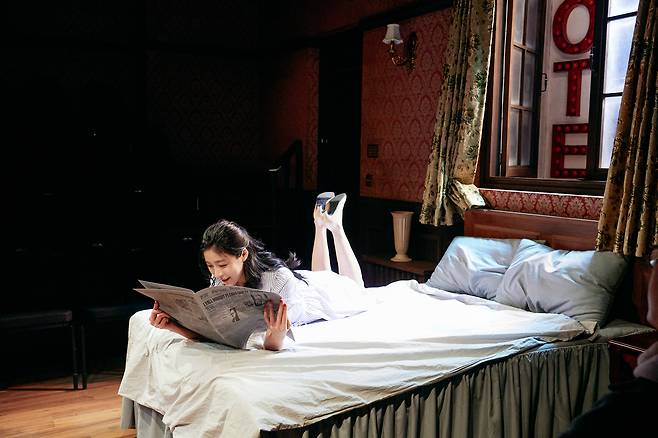
Both Compton and Kim pointed to the intimacy of the confined space as one of the production’s greatest strengths, calling it a “shared experience” that draws the audience deeply into the story.
The small black box theater, transformed into a vintage hotel room, seats only 100 people. The distance between the actors and the audience is as close as 50 centimeters. The result is an experience of intense immediacy, where intimate scenes of action, romance and revenge unfold mere feet away -- evoking the suspense of a tightly plotted detective novel.
“Also, it’s not just about the connection with the actors,” Compton said. “It’s about being in an environment with fellow audience members. That makes it unique -- a human experience that goes back to sitting around a campfire and listening to stories.”
Message of hope
Beneath its crime story and immersive staging, "The Capone Trilogy" hits a contemporary nerve.
“I find it fascinating how easily violence can erupt in what seems like an ordinary room. You want to escape that room desperately but some people leave and some can’t. That’s where the story begins," said Kim.
Compton said the 1920s–’40s setting was chosen to evoke a “cinematic time,” not to focus on Capone, but to convey a broader message.
“I don’t know if audiences see the connection, but those kinds of men still exist today. They’re not carrying guns or wearing cool hats anymore, but they’re still among us,” he said.
“They were violent times that revealed the worst of humanity but also the best (though good intentions can sometimes go wrong). That’s why the red balloon was so powerful to me: it carries a message of hope in a time and place that feels utterly hopeless and brutal.”
Copyright © 코리아헤럴드. 무단전재 및 재배포 금지.