South Korean teens' happiness comes from wealth: study
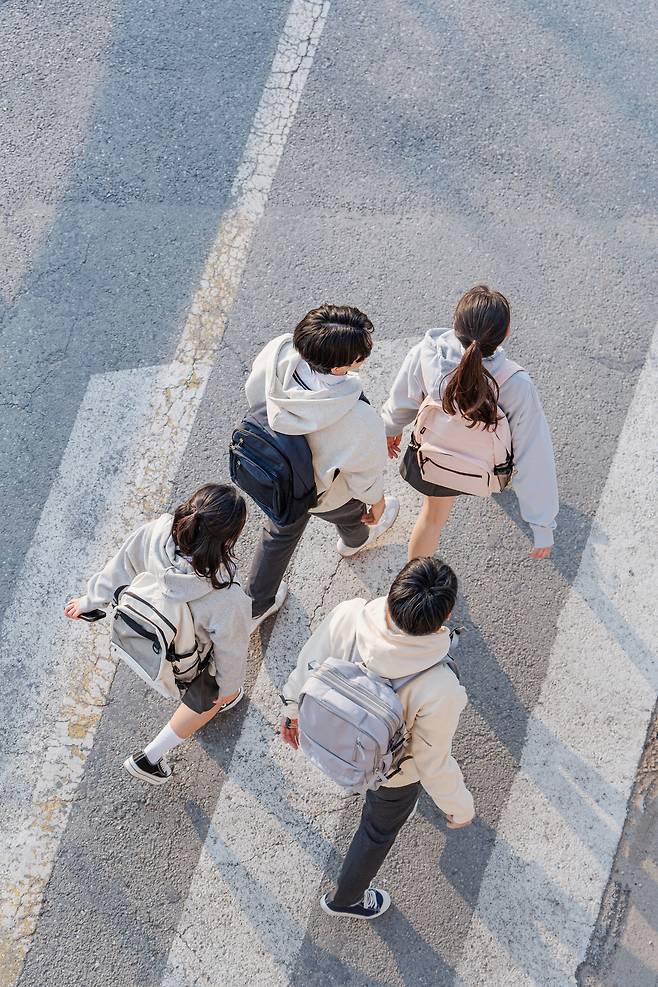
For South Korean teenagers, happiness no longer hinges on dreams or close friendships. It’s wealth that tops the list.
A new report released by the college student-focused think tank Daehaknaeil 20s Lab found that over half of 800 surveyed teens aged 14 to 18 cited “wealth and property” as the key condition for happiness, far outpacing other answers like parents (39.5 percent), close friends (34.6 percent), rest (32.8 perecent), appearance (32.1 percent), hobbies (30.8 percent) and life goals (30.3 percent). Multiple answers were allowed.
The report, based on a survey of teenage attitudes toward spending and future careers, also revealed a generation acutely aware of economic realities and uncertain about upward mobility.
When asked which economic class they expect to belong to by the age of 30, more than half (50.6 percent) believed they would be in the middle class, followed by upper-middle (22.4 percent), lower-middle (18.4 percent), upper (6.5 percent), and lower class (2.1 percent).
The survey showed limited faith in socioeconomic mobility. Teens from wealthier households tended to expect to remain in the upper or upper-middle tier, while those from lower-income families largely expected to stay in the middle or lower tiers.
Academic performance was seen as a strong predictor of future economic status, with 49.1 percent of high-achieving students expecting to reach upper-middle class or higher by 30, while 40 percent of lower-performing students expected to stay in the lower-middle or lower class.
Copyright © 코리아헤럴드. 무단전재 및 재배포 금지.